


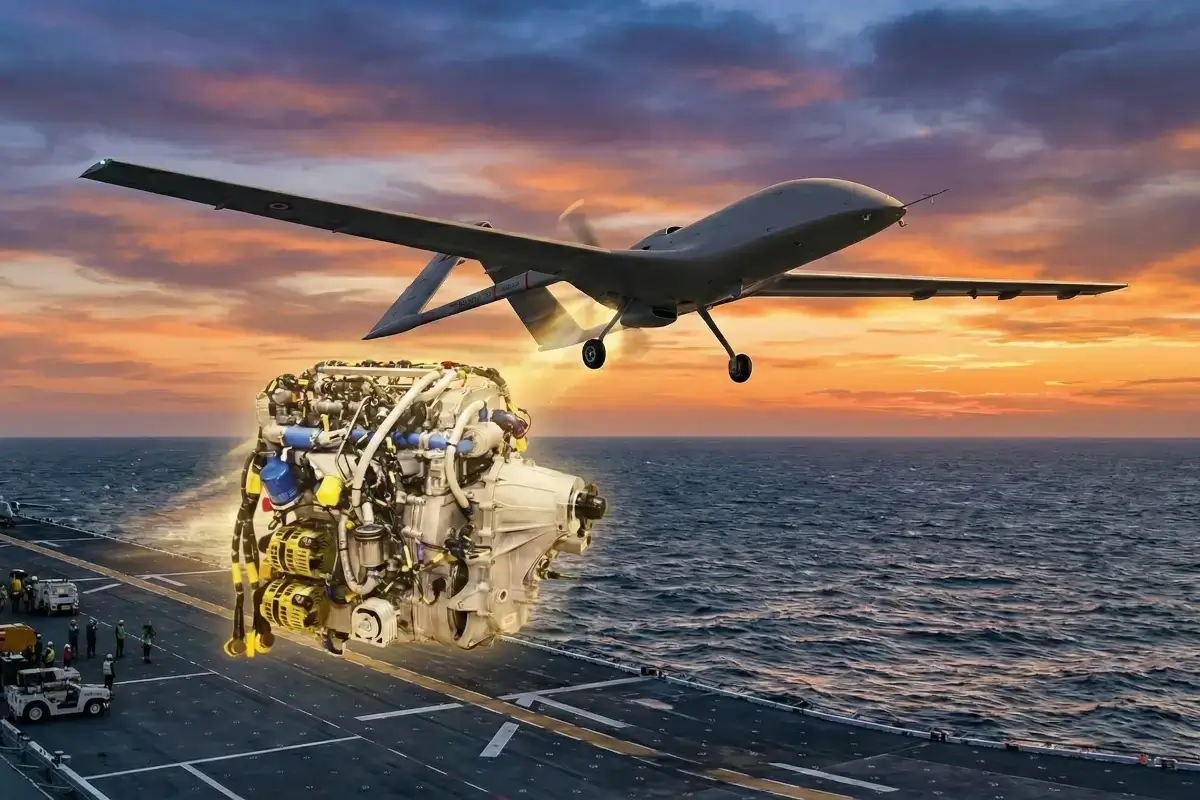
During the Steadfast Dart 2026 NATO Exercise, all eyes were on the Bayraktar TB3 as it challenged harsh weather conditions to take off from the deck of TCG Anadolu and destroyed its target with a salvo fire. However, behind this operational success lies another marvel of technology that deserves as much attention as the TB3: the TEI-PD170, a product of Turkish engineering, and its naval sibling, the TEI-PD200. This engine family, which operates flawlessly even at 40,000 feet altitude and stays airborne longer on less fuel than its competitors, is making history in the skies as the heart of Turkish UAVs.
There is a rule in aviation: no matter how good the platform, its performance is limited by the capabilities of the engine that flies it. As the Bayraktar TB3 took off from TCG Anadolu, carried out its mission during the NATO exercise, and safely returned to the ship, the power giving it life within its fuselage certified the level reached by the Turkish defence industry in engine technology. Developed indigenously and with national resources by TEI, these engines are not merely power sources but strategic declarations of independence.
The Technology That Breathes Life into Bayraktar TB3: The Twin-Turbo Advantage
During the Steadfast Dart 2026 exercise, the harsh weather conditions over the Baltic Sea posed a serious test for both pilots and engines. However, thanks to the TEI engine technology under its wings, the Bayraktar TB3 successfully passed this test.
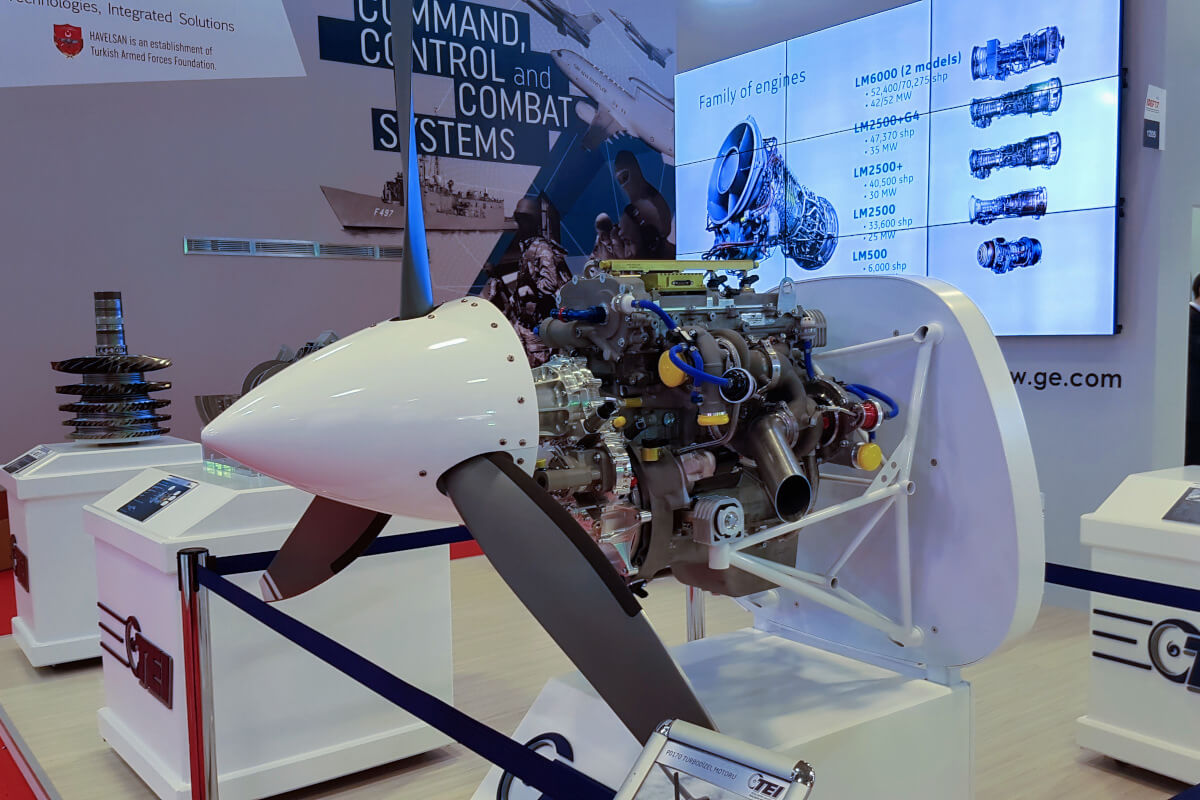
TEI Genel Müdürü Prof. Dr. Mahmut Faruk Akşit’in vurguladığı gibi, PD170 sıradan bir motor değil. MALE sınıfı İHA’lar için özel olarak tasarlanan bu motor, 172 HP güç üretme kapasitesine sahip. Ancak asıl farkı, bu gücü irtifa arttıkça koruyabilmesinde yatıyor.
Atmosfer fiziği gereği irtifa arttıkça hava incelir ve motorların performansı düşer. 30 bin fitte oksijen oranı deniz seviyesinin %30’una iner. Sıradan motorların stop ettiği bu yükseklikte, PD170’in özel çift turbolu sistemi havayı sıkıştırarak motora ihtiyaç duyduğu oksijeni sağlıyor. Bu sayede motor, 30.000 fitin üzerinde dahi 130 HP güç üreterek kesintisiz görev yapabiliyor.
Specially Designed for the Blue Homeland: The 197 HP TEI-PD200
For the Bayraktar TB3 to take off fully loaded with ammunition from short-runway ships (STOBAR) such as TCG Anadolu, it requires additional take-off power.
TEI mühendisleri, PD170 platformu üzerinden geliştirdikleri TEI-PD200 ile bu ihtiyaca cevap verdi:
- Power Increase: The power of the PD170, which was 172 HP, was increased to 197 HP with the PD200.
- Saltwater Resistance: The engine block and components were marinised to prevent corrosion during operations over the sea.
- Aynı Ağırlık: Güç %15 artmasına rağmen motor ağırlığı (162 kg) korunarak muazzam bir güç/ağırlık oranı yakalandı.
A Flying Power Plant
Modern UAVs do more than just fly; they require significant electrical energy for the electro-optical cameras (such as ASELSAN CATS or ASELFLIR-500), SAR radars, and electronic warfare systems they carry.
TEI-PD170 ve TEİ-PD200, bu ihtiyacı karşılamak için adeta uçan bir elektrik santrali gibi tasarlandı. Motor üzerinde her biri 4.5 kW güç üreten iki adet alternatör bulunuyor. Toplamda 9 kW (yaklaşık 12 beygir) gücündeki bu elektrik üretimi, standart bir binek otomobilin ürettiği elektriğin yaklaşık 6 katına denk geliyor. Üstelik bu sistem yedekli yapısıyla, bir alternatör arızalansa bile diğerinin görevi devralmasını sağlayarak İHA’nın kör veya sağır kalmasını engelliyor.
A 162 kg Technology Package
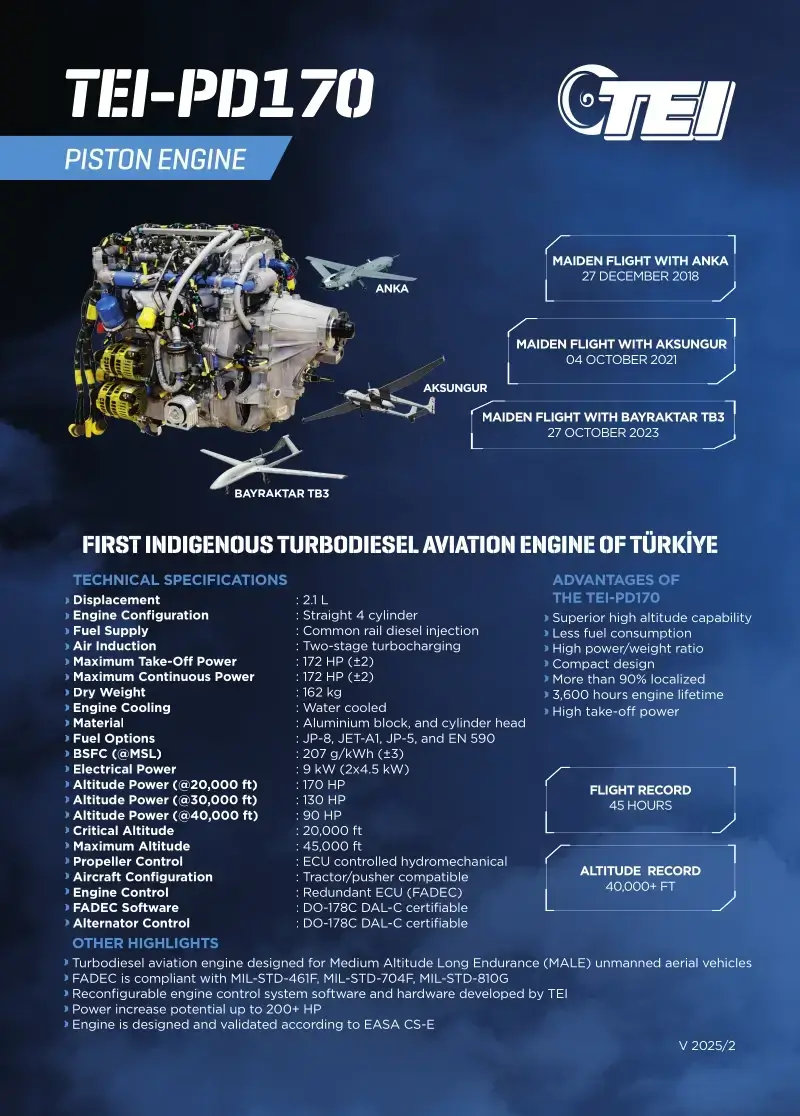
The TEI-PD170 packs all these capabilities into a compact dry weight of just 162 kg. Lightened thanks to its aluminium block and head construction, the engine, in terms of its power-to-weight ratio, can provide the instant thrust (172 HP Take-off Power) required for the Bayraktar TB3 to take off without a catapult from ships with short runways (STOBAR), such as TCG Anadolu.
The Name Behind the Records
TEI engines power not only the Bayraktar TB3 but also TUSAŞ's strategic UAVs, the ANKA and AKSUNGUR. The engine's efficiency has been confirmed by records broken in the field:
- 45 Hours of Flight Time: The TUSAŞ AKSUNGUR, powered by the PD170 engine, remained airborne for 45 hours on a single sortie, conducting missions for nearly two days without landing. This is the most concrete evidence of the engine's fuel efficiency (207 g/kWh at sea level).
- 40,000+ Feet Altitude: The altitude record broken again with the AKSUNGUR confirmed the engine's high-altitude capability.
- TCG Anadolu Operasyonu: TCG Anadolu Operation: The Bayraktar TB3, capable of taking off from ships with short runways, can take off from the ship fully loaded thanks to the high take-off power provided by the PD200.
Peak Localisation: Over 90%
In the defence industry, the engine is one of the most critical embargo items. With the PD170 project, TEI has largely broken this dependency. The engine's local content ratio is over 90%. The FADEC (Full Authority Digital Engine Control) system, considered the brain of the engine and vital for flight safety, operates with software and hardware completely developed by TEI engineers. Designed in compliance with civil aviation standards (EASA CS-E), the engine can compete in the international market.
From a Team of 100 to the Big League
This success story of TEI was not written overnight. Prof. Dr. Mahmut Faruk Akşit states that the engineering team, which was limited to 100 people before 2014, has transformed into a giant R&D army of over 1,500 people thanks to the state's strategic support. This journey, from the first petrol UAV engine developed for urgent needs during the Hendek operations to the PD170 and the PD200 showcasing its capabilities in NATO exercises today, is the most concrete indicator of Turkey's goal to become not just a player but a game-changer in engine technologies.
