
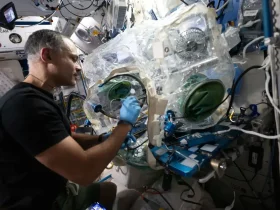
The second phase of TÜBİTAK UZAY's MİYOKA experiment has been completed. The module, on which lead-free soldering was carried out in space, will be brought to Earth aboard SpaceX CRS-35. Türkiye has proven its in-space manufacturing capability.
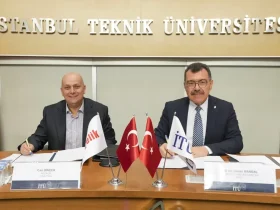
Arçelik and İTÜ have signed a three-year cooperation protocol. The agreement, covering joint R&D, technology transfer, internships, mentorship and graduation projects, brings 253 years of scientific accumulation together with industry.
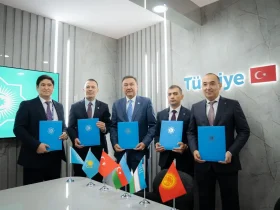
Azerbaijan, Kazakhstan, Türkiye and Uzbekistan have signed the Space Industry Framework Agreement within the framework of the OTS. The agreement constitutes a continuation of the joint cube satellite project.
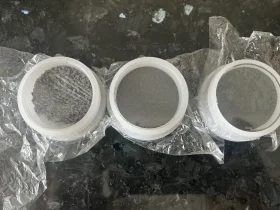
Kürşat Ar-Ge has succeeded in producing tungsten at 99.88 per cent purity. Türkiye has risen to become the world's 5th country in tungsten refining. Sintering has been completed, and the final product stage has been reached.
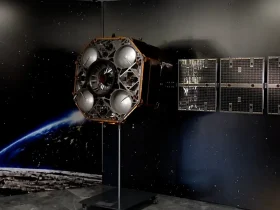
The 3.5-tonne spacecraft developed for Türkiye's first lunar mission has completed production. Set to launch in the first months of 2027, the vehicle is embarking on its journey with the goal of making Türkiye the 9th country to reach the Moon.

Türkiye's indigenous Rubidium Atomic Clock RAFS has been launched into space aboard SpaceX's Transporter-17 mission. Developed under the leadership of TUA, with TÜBİTAK UME as prime contractor, the clock is of critical importance for the Regional Positioning System.

ASELSAN Makes Quantum Computing Move: First Signatures Signed for "QPU" Quantum Processor Production
ASELSAN has signed the first agreements for the Superconducting Quantum Processor Unit (QPU) – the heart of quantum computers. The project, which involves Sabancı University, Koç University and TÜBİTAK UME as stakeholders, will see production carried out at a domestic facility.

The MIYOKA Phase-2 experiment hardware, developed by TÜBİTAK UZAY, is being launched into space with the SpX-34 mission to test lead-free soldering technologies in orbit.

TEI and TÜBİTAK MAM have signed a contract for single crystal casting and EB-PVD coating for Türkiye's first turbofan engine, the TEI TF10000. The engine is counting down to real-world tests.

The project by TENMAK and Gazi University aimed at strengthening rail steel with boron has received 12.4 million TL in R&D support from UDHAM. Technical details of the project.
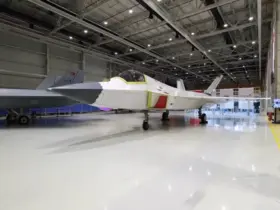
Ergün Kırlıkovalı, who developed the stealth material for F-35 aircraft, announced that they have produced a new radar-absorbent material for KAAN together with TAI and universities.

TEI has successfully developed the production technology for single crystal turbine blades, the most critical component of aircraft engines, using domestic resources.