


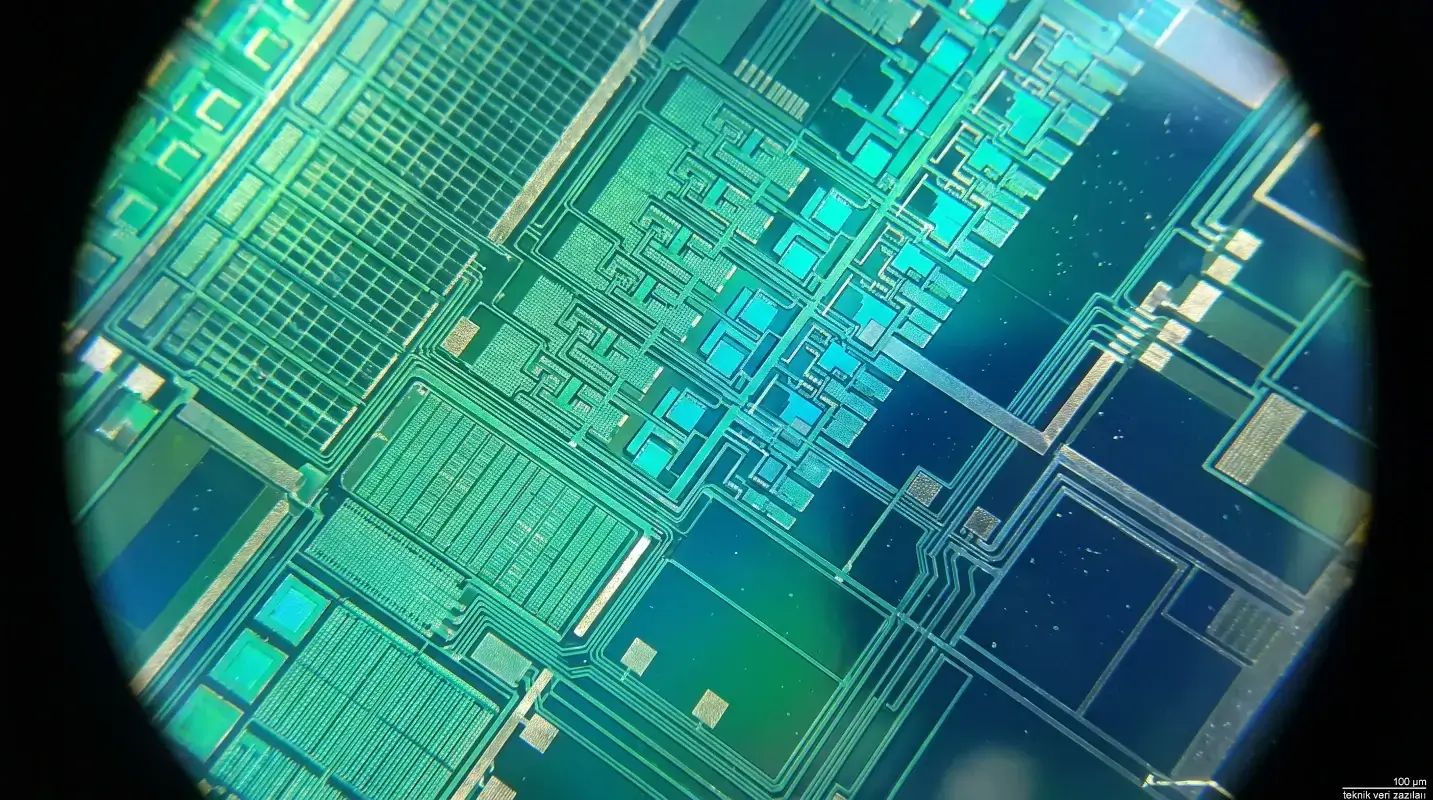
Türkiye's expertise in semiconductor design continues to attract attention on international platforms as well. AnkaSys, operating in Gebze, demonstrates that domestic engineering strength is opening up to foreign markets by providing design and verification services to global semiconductor giants.
Design and Verification Services for Global Giants
According to information on the company's official website, AnkaSys provides ASIC and FPGA design and verification services to companies such as Renesas Electronics, Intel, Infineon, Qorvo and IMEC. The company states that it possesses full-turnkey design capability extending from RTL to GDSII. In AnkaSys's official announcement in 2014, it was disclosed that the company would serve as a subcontractor on Renesas Electronics' 40-nanometre physical design projects. This cooperation stands out as one of the concrete examples showing a domestic design house establishing a direct working relationship with an international semiconductor manufacturer.
Türkiye's Design Strength in International Analyses
AnkaSys was mentioned in an analysis published in EE Times in July 2026 and authored by Prof. Dr. Oğuz Ergin, a faculty member at TOBB University of Economics and Technology. The article stated: "AnkaSys, as a design house near Istanbul, provides design and verification services to Renesas, Intel, Infineon and Qorvo." The analysis emphasises that Türkiye has a strong base in chip design, but that production is largely carried out abroad.
From the ÇAKIL Processor to TÜBİTAK BİLGEM
AnkaSys is one of Türkiye's first System-on-Chip design companies, founded in 2013 with TÜBİTAK support. Engineers make up 90 per cent of its team of approximately 30 people. The company also made critical contributions to the National Processor ÇAKIL project, which will reduce Türkiye's external dependency in the defence industry, and transferred ASIC design and verification knowledge to TÜBİTAK BİLGEM. In addition, it demonstrated its success in services exports by being included in TİM's list of Türkiye's Top 500 Service Exporters.
Design Strong, Production Lacking
Experts note that strengthening design capability is a critical step for the domestic semiconductor ecosystem. The AnkaSys example shows that Turkish engineers can compete on a global scale and can export high value-added services. However, sector representatives frequently emphasise that, alongside design, developing domestic production infrastructure is also important for strategic independence. The Türkiye-Qatar chip production cooperation project, one of Türkiye's first concrete moves in this field and planned to be established in Gebze, is regarded as one of the most important steps in the vision of crowning design strength with physical production.
Designing a Chip or Producing One?
AnkaSys's success lays bare Türkiye's most important reality in the semiconductor field: Türkiye can design chips but cannot yet produce them serially. This picture points to a shortcoming that gives pause for thought in terms of strategic independence. Providing design services to giants such as Renesas, Intel, Infineon and Qorvo proves the quality of Turkish engineering, but does not change the fact that a significant portion of the added value is generated abroad at the production stage. Indeed, this dilemma is clearly emphasised in the EE Times analysis as well.
It is precisely at this point that the $5 billion-backed HIT-30 programme, launched by the state to establish domestic production infrastructure and allocating billion-dollar budgets, represents a historic turning point for the establishment of domestic chip infrastructure at 65nm and more advanced technology nodes.
The steps Türkiye takes in chip production could carry the competence of design houses such as AnkaSys to a far more strategic level. Indeed, in the recent period, Yongatek's domestic chips ÇELİK and SAKA successfully emerged from the design house, were physically received from the fab and moved on to the silicon testing stage. Alongside this, TÜBİTAK UME's superconducting production facility investment and ASELSAN's quantum processor unit project are also early signals of steps in this direction. However, for a genuine breakthrough, Türkiye needs to reach wafer production capacity at 65 nanometres and more advanced technologies.
If Türkiye combines its design strength with production, companies such as AnkaSys could cease to be design houses that merely export services and become part of an ecosystem that produces its own chips and sells them to the world. This transformation would mean strategic independence across a broad field, from the defence industry to automotive, and from white goods to artificial intelligence. Whether Türkiye can cross this threshold in the coming decade remains the most critical question in the semiconductor field.
Sources
- AnkaSys Official Website
- EE Times, "Turkey Needs to Make Its Own Chips, Not Just Design Them", 2 July 2026 (Prof. Dr. Oğuz Ergin)
Note
If you have any photos or video footage to support our news story, please share them with us using the information provided on our contact us page.
