


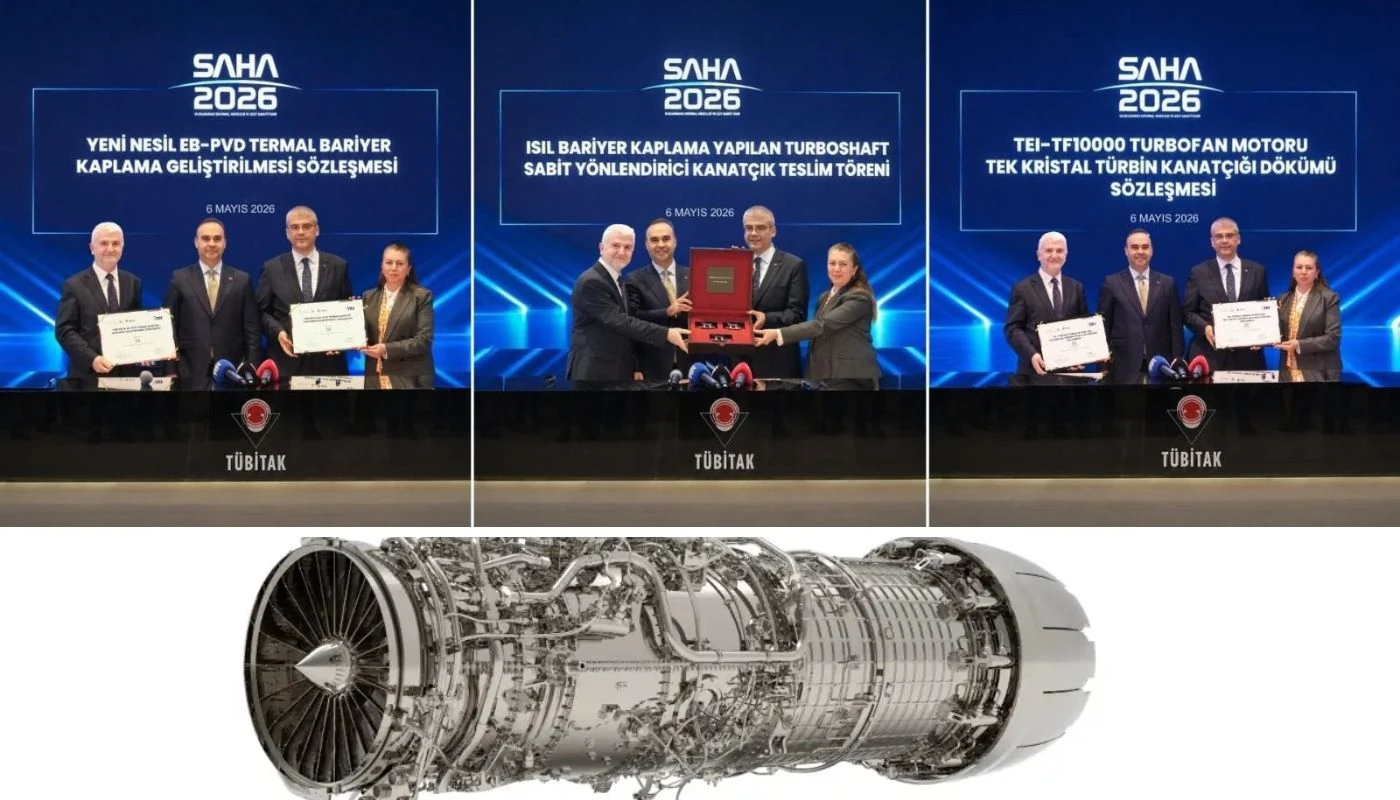
The Turkish aviation industry is turning paper-based designs into reality in engine technologies vital for fighter jets and unmanned combat platforms. A historic step was taken for the TEI-TF10000 project, Türkiye's first indigenous turbofan jet engine, at the SAHA EXPO 2026 fair held in Istanbul. At ceremonies attended by Minister of Industry and Technology Mehmet Fatih Kacır, strategic contracts were signed between TUSAŞ Engine Industries (TEI) and TÜBİTAK Marmara Research Centre (MAM) for the production of the engine's most critical, high-temperature components. These agreements, covering the "Single Crystal Turbine Blade Casting" and "Next-Generation EB-PVD Thermal Barrier Coating" projects, prove that the TEI TF10000 engine has moved beyond the concept and design phase and is entering the physical part production necessary for real-world testing.
A Metallurgy Revolution in the Heart of the Turbine: Single Crystal Technology
The main factor determining how much thrust a turbofan jet engine can produce and how efficiently it can operate is the high-pressure turbine blades struck by the gases exiting the combustion chamber. Temperatures in this region far exceed the melting point of standard metals. Furthermore, rotating at tens of thousands of revolutions per minute, these blades are subjected to immense centrifugal force.
Metals produced with conventional casting methods contain microscopic grain boundaries. Under high heat and stress, these boundaries can cause the metal to tear, leading to engine failure. The "Single Crystal Turbine Blade Casting Project" signed by TEI and TÜBİTAK MAM at SAHA EXPO 2026 represents aviation's highest level of metallurgy technology, eliminating this problem. With this casting method, the blade is produced with its atomic arrangement as a single entity, without any grain boundaries. Performing this casting technology, possessed by only a few countries in the world, in Türkiye ensures that the intellectual property and high added value of the TEI TF10000 engine remain entirely within the country.
EB-PVD Thermal Barrier: The Armour That Prevents Melting
Single crystal casting technology alone is not sufficient to combat these extreme temperatures. The surfaces of these blades in the engine's core also need protection to prevent liquefaction. The second critical contract signed, the "Next-Generation EB-PVD Thermal Barrier Coating Development Project," represents the development of this very armour.
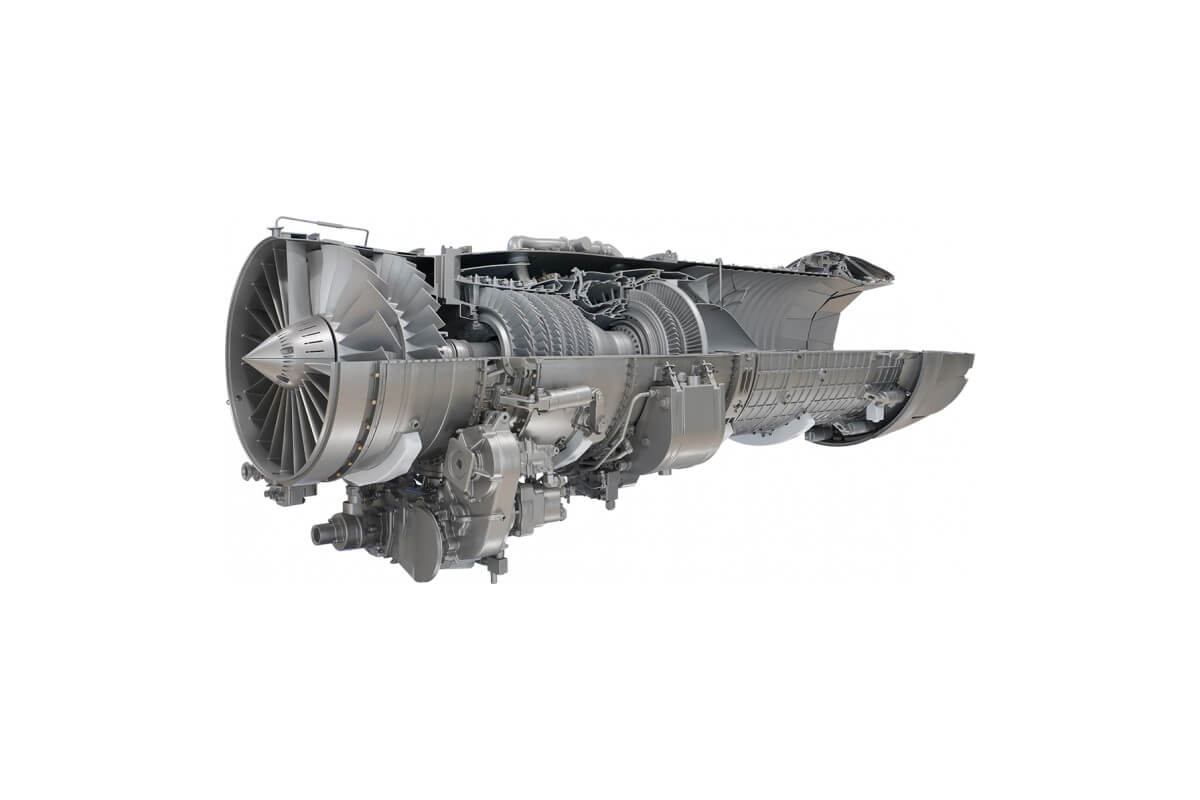
EB-PVD (Electron Beam Physical Vapour Deposition) is a process that coats turbine blades with a micron-thick, ceramic-based special insulating layer. Thanks to this process, the blades can withstand thermodynamic gas flows far exceeding their own melting temperatures. This point, where TÜBİTAK MAM's deep expertise in materials science combines with TEI's engine design expertise, represents the final metallurgical barrier to be overcome for the engine to reach its maximum thrust of 10,000 pounds-force (lbf).
How Close is the TEI TF10000 to Real-World Testing?
According to aerospace engineering standards, reaching the stage of single crystal casting and EB-PVD coating for the high-pressure turbine blades in an engine project indicates that the engine is very close to completion. The design is frozen, aerodynamic calculations are finished, and computer simulations have been approved.
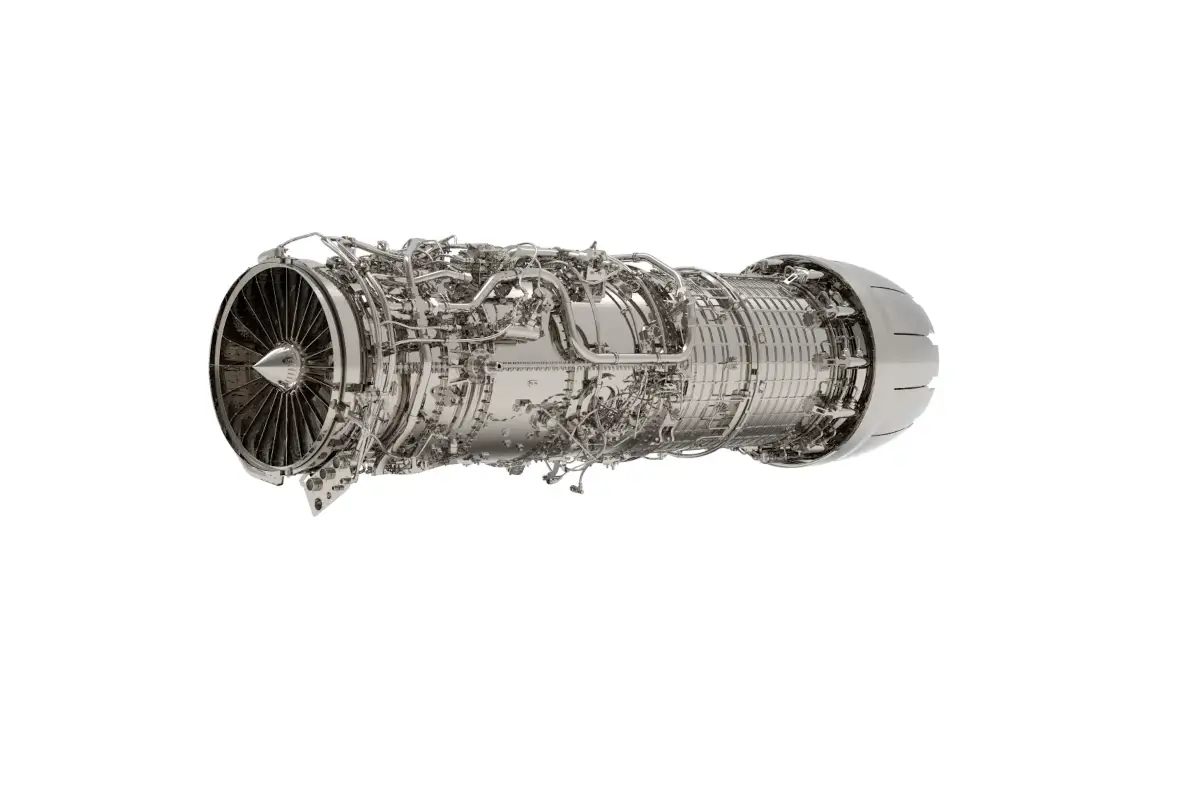
The process currently underway by TEI and TÜBİTAK MAM involves the production and assembly of the physical parts of the design, known as the "hot section." These produced blades, once placed in the engine block, will form the final prototype destined for the test cell. In light of this data, we can clearly state that the TEI TF10000 engine has left the laboratory phase behind and is preparing to be ignited for ground tests within the coming months, followed by sky tests on a flying test bed.
Full Independence in Asymmetric Strike
The signatures made at SAHA EXPO 2026 are strategic moves beyond ordinary industrial cooperation, securing Türkiye's military aviation doctrine. The TEI TF10000 engine is the primary powerplant intended for integration into Türkiye's most critical asymmetric strike assets, such as the Bayraktar KIZILELMA, ANKA-3, and HÜRJET.
These platforms, which have so far flown with foreign-origin engines, will be completely free from export restrictions upon completion of the TEI TF10000. The localisation of the single crystal blade at the engine's heart and the thermal coating with the support of TÜBİTAK MAM demonstrates that Türkiye is a country possessing competence not only in engine design but also in the production of components requiring advanced materials science knowledge.
Note
If you have any photos or video footage to support our news story, please share them with us using the information provided on our contact us page.
