


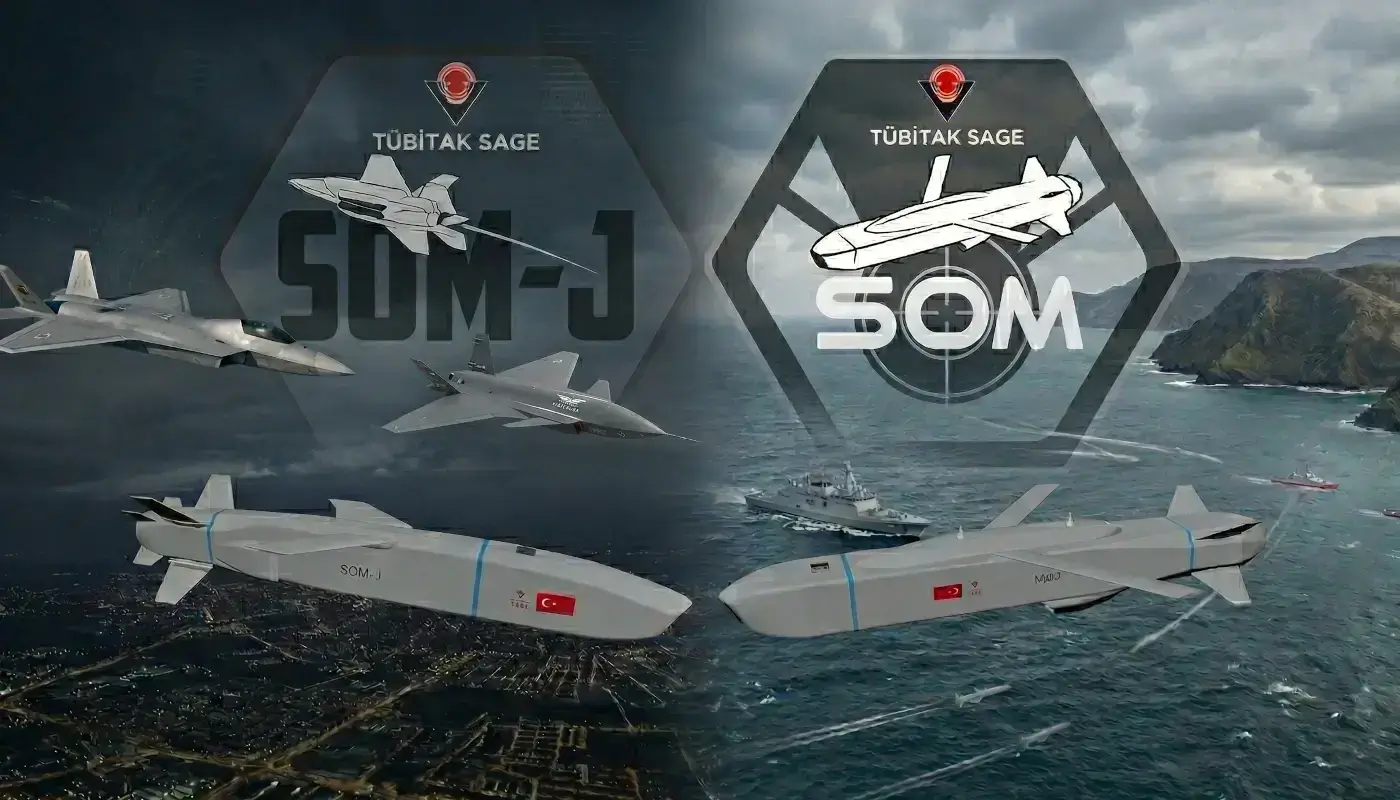
The Turkish defence industry is reshaping the deep strike capabilities of the air forces with fully domestic and national systems. The SOM (Stand-Off Missile) cruise missile family, designed by TÜBİTAK SAGE and mass-produced by ROKETSAN, constitutes one of the most strategic weapon systems on the modern battlefield. Developed with the concept of destroying critical targets without entering the range of enemy air defence systems (Stand-Off), the system operates across a wide spectrum, from fixed land installations to moving surface targets. In service with the Turkish Armed Forces since 2011 and proven in the field (TRL-9), the SOM family directly responds to all technical requirements of asymmetric warfare with its developed variants.
Protecting valuable combat aircraft and experienced pilots is always the top priority for air forces. Penetrating deep into enemy airspace carries immense risks due to advanced air defence missiles and early warning radars. The Stand-Off concept was developed precisely to overcome this operational barrier. Combat aircraft launch SOM missiles from hundreds of kilometres away without entering the visual range of enemy radars or the lock-on distance of defence missiles. Subsequently, the missiles penetrate at low altitude without being detected by radars, using their autonomous algorithms for terrain-following. This low-altitude flight capability makes it almost impossible for the enemy to detect and intercept the missile.
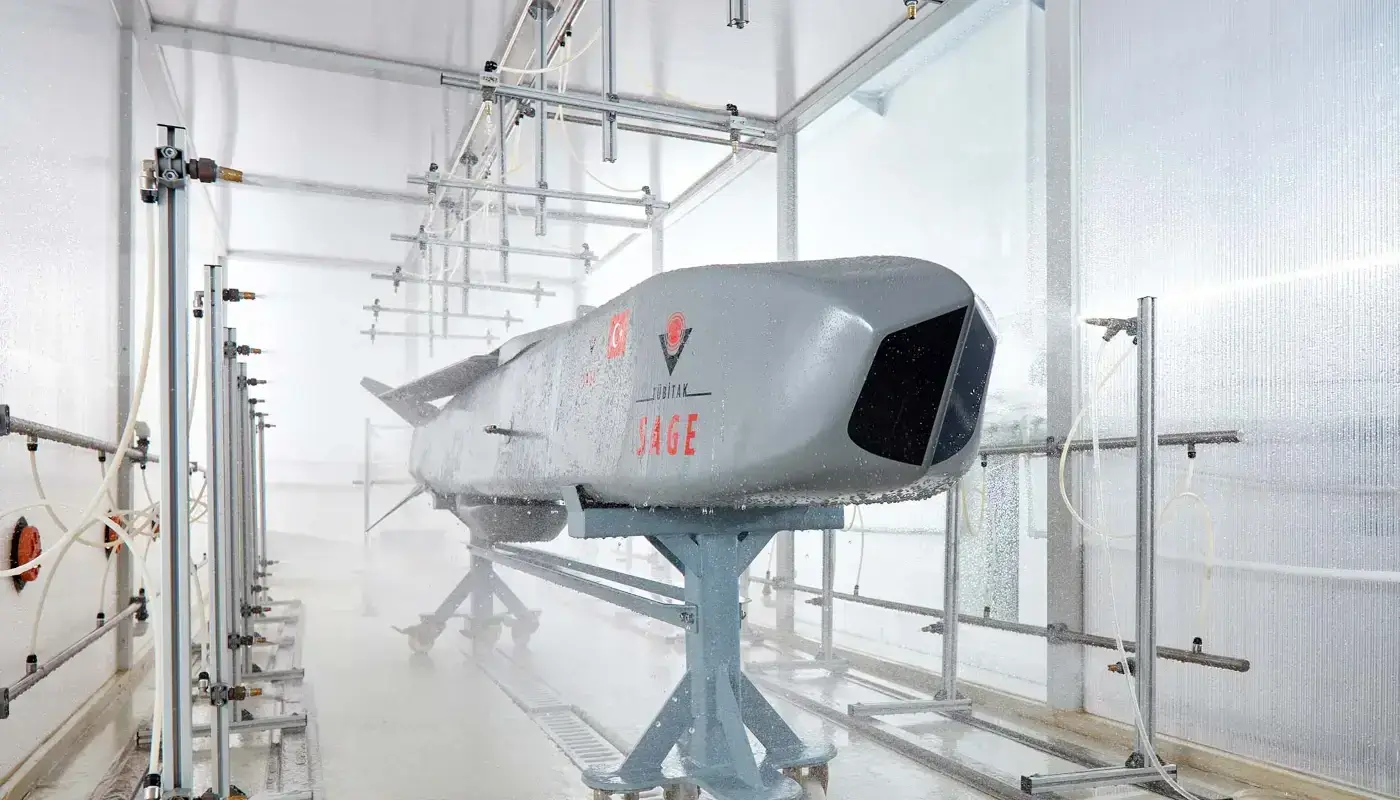
TÜBİTAK SAGE engineers developed the missile family not as a single type but in different variants (A, B1, B2, C1, C2, and J) specialised according to the nature of the target to meet various mission requirements. In this article, we deeply analyse all aerodynamic, speed, range, and warhead details of the SOM cruise missile family, a source of pride for the Turkish defence industry.
Range, Speed, and Propulsion System: The Safe Distance of 250+ Kilometres
Bir seyir füzesinin taşıdığı harp başlığı, hedefe ne kadar uzaktan ve ne kadar hızlı ulaştırabildiği onu stratejik kılan en önemli unsurlardır. SOM füze ailesinin tüm varyantları, yayınlanan resmi verilere göre 250+ kilometre (135+ deniz mili) operasyonel menzile sahiptir. Bu menzil, Türk savaş uçaklarının düşman hava savunma şemsiyesinin (örneğin S-300 veya Patriot gibi uzun menzilli bataryaların) ölümcül angajman bölgesine girmeden, tamamen güvenli bir hava sahasından atış yapabilmesini sağlar.
Hız tarafında ise SOM füzeleri Yüksek Sübsonik (High Subsonic) yani ses hızına çok yakın bir sürat olan Mach 0.9 (Saatte yaklaşık 1.000 – 1.100 km) hızla uçar. Havacılık mühendisliğinde seyir füzelerinin süpersonik (ses üstü) yerine yüksek sübsonik hızlarda tasarlanması bilinçli bir tercihtir. Ses üstü hızlar muazzam bir yakıt tüketimi gerektirir ve füzenin ısıl (kızılötesi) izini büyüterek radarlarda daha kolay tespit edilmesine neden olur. Mach 0.9 hızı ise hem yakıt verimliliğini arttırarak 250+ kilometrelik menzili garanti eder hem de füzenin vadiler arasında radar altı uçuş (sea-skimming / terrain-following) yaparken ihtiyaç duyduğu keskin manevra kabiliyetini sağlar.
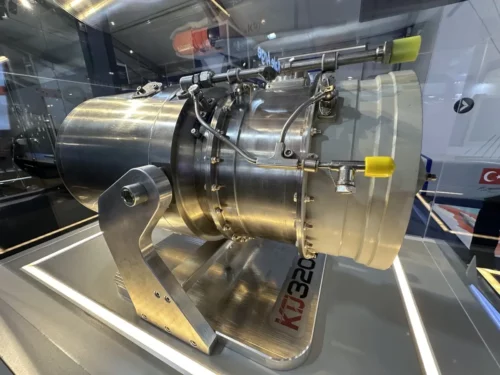
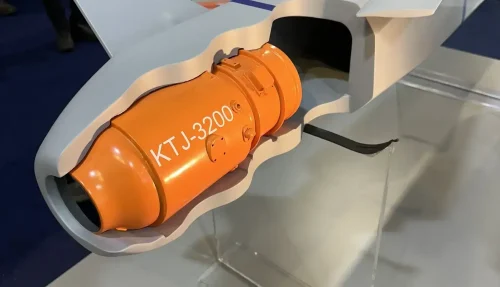
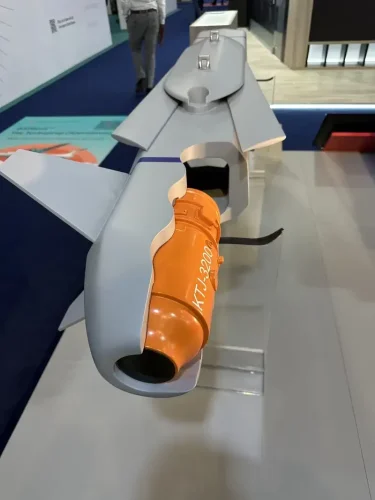
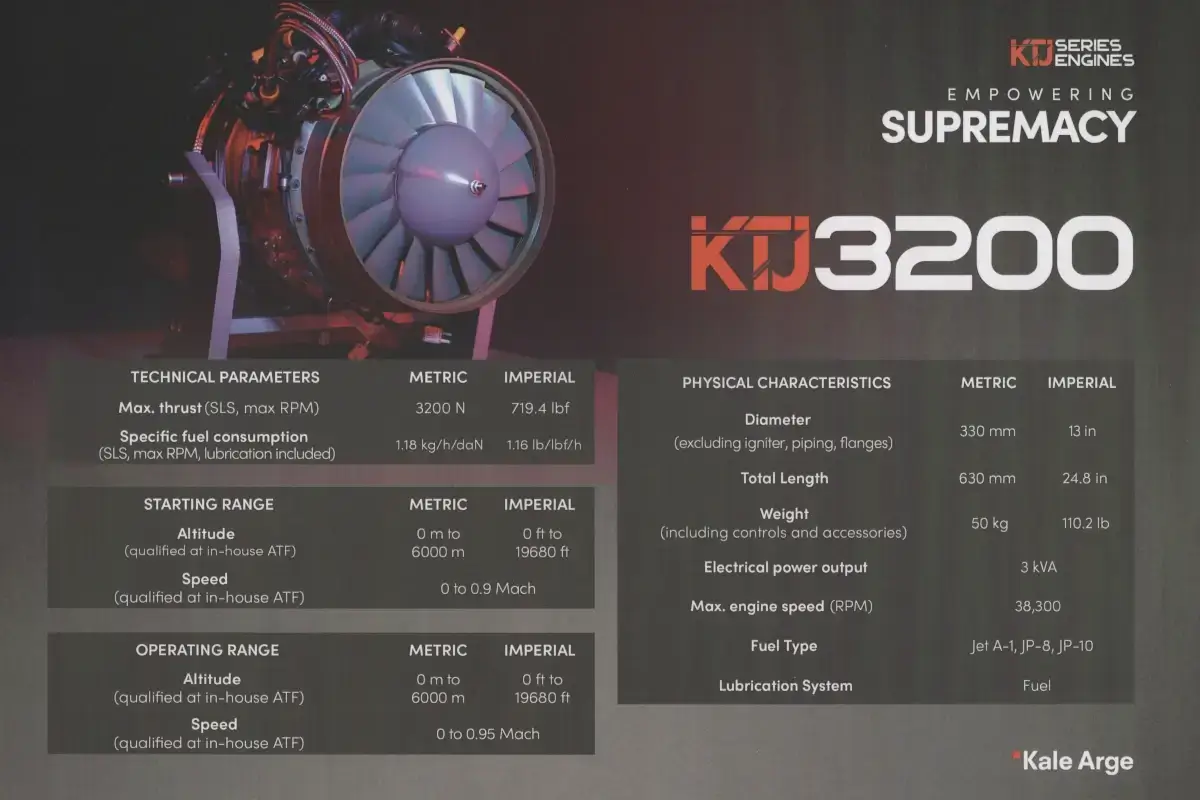
Geçmişte bu itki gücü yabancı menşeli turbojet motorlarla sağlanırken, günümüzde Kale Arge tarafından tamamen yerli imkanlarla geliştirilen KTJ-3200 turbojet motorları füzeye entegre edilmektedir. Bu sayede SOM, motor ambargosu riskini de tamamen ortadan kaldırmıştır.
Navigation and Autonomy: How Do SOM Missiles Find Their Way?
The biggest vulnerability of cruise missiles is intense electronic jamming applied by hostile forces and the cutting off of GPS signals. However, the SOM family uses a multi-layered navigation architecture to avoid being blinded in such electronic warfare environments.
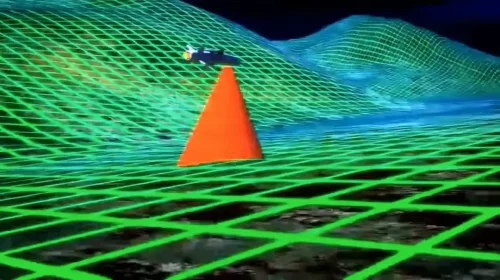
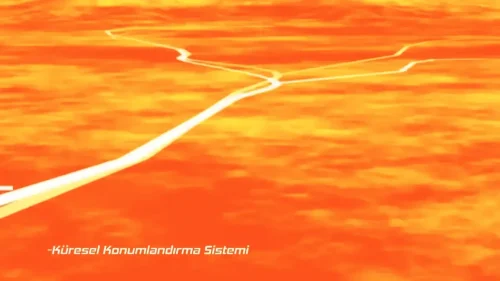
The missile's flight control computer continuously blends Global Positioning System (GPS) data with the Inertial Navigation System (INS). If the enemy jams GPS signals, the missile continues on its course by calculating its own acceleration and direction using INS. However, the system's major capability lies in Terrain Referenced Navigation (TRN) technology. The missile reads the terrain features in real-time using its radar altimeter. The system compares this altitude data with the 3D digital terrain map pre-loaded into the missile's memory. Therefore, the SOM reaches its target perfectly by simply recognising mountains and valleys, without needing any external signals.
SOM-A: The First Hunter of Soft Targets
SOM-A, the first variant of the SOM weapon system family, is designed to destroy standard land targets (radar sites in open areas, parked aircraft, logistics centres). This missile, weighing approximately 1,350 lb (620 kilograms), carries a High Explosive Blast-Fragmentation warhead.
When the missile reaches its target from over 250 kilometres away, this special warhead creates a massive blast wave and thousands of fragments, instantly destroying soft targets over a wide area. SOM-A relies solely on pre-loaded coordinates (GPS/INS/TRN) for terminal phase guidance. Therefore, the missile offers a cost-effective and highly destructive solution for fixed targets whose coordinates are precisely known.
SOM-B1: Imaging Infrared and Automatic Target Acquisition
Some targets on the battlefield change coordinates or may not have GPS coordinates with sufficient accuracy. TÜBİTAK SAGE engineers developed the SOM-B1 variant to solve this problem. Sharing the same weight (620 kg) and high explosive warhead as SOM-A, this model differs sharply from its predecessor with the addition of an "Imaging Infra-Red Seeker" (IIR) in the nose section.
When the missile approaches its target, it activates the IIR seeker and takes a high-resolution thermal image of the target area. Then, the Automatic Target Acquisition (ATA) algorithm is activated. The flight computer pixel-by-pixel matches the target template loaded into the missile's memory before launch with the real-time thermal image coming from the camera at Mach 0.9 speed. Consequently, SOM-B1 destroys the real target precisely at its most vulnerable point without being deceived by enemy decoys or camouflage nets.
SOM-B2: Tandem Warhead for Underground Bunkers and Hardened Concrete Targets
Modern armies build strategic command and control centres and ammunition depots under metres of reinforced concrete bunkers. The fragmentation warheads of SOM-A and SOM-B1 cannot provide the kinetic energy needed to penetrate these thick concrete structures. This is where the SOM-B2 variant comes into play for this challenging mission.
Weighing approximately 1,450 lb (660 kilograms), one of the heaviest members of the family, SOM-B2 is equipped with a Dual Stage Tandem Penetrating Warhead. This system is a perfect engineering combination of physics and chemistry. In the first milliseconds after the missile hits the concrete target, the initial charge detonates, creating a hole in the armour. Immediately after, the main penetrating body enters through this hole and detonates in the centre of the bunker. Supported by the IIR seeker and ATA capability, SOM-B2 provides the Turkish Air Force with strategic deterrence in the bunker buster class.
SOM-C1 and SOM-C2: Network-Enabled Warfare and Surface Targets
Classic cruise missiles typically cut off communication with the outside world after launch and autonomously proceed towards their predetermined target. However, moving surface targets (warships) constantly change position. Maintaining communication between the launching fighter aircraft and the missile is essential for transmitting the target's current position.
TÜBİTAK SAGE removed this operational obstacle by integrating bi-directional Data Link capability into the SOM-C1 and SOM-C2 variants. These missiles, weighing approximately 620 kilograms, receive real-time target updates during flight from AWACS early warning aircraft, UAVs, or command centres. If necessary, the missile can be redirected to a completely different target mid-flight or the mission can be aborted.
- SOM-C1: Features a High Explosive Blast-Fragmentation warhead. Used to destroy the decks and superstructures of moving ships.
- SOM-C2: Features a Dual Stage Tandem warhead. Designed to penetrate the hulls of heavily armoured warships and detonate in critical internal compartments such as ammunition depots or engine rooms.
From F-35 to KAAN and KIZILELMA: The Genesis and Evolution of the SOM-J Project
The most strategic, compact, and newest member of the SOM family is the SOM-J model. The development story of this missile is a summary of global defence industry dynamics and technological imperatives.
Fifth-generation stealth fighter jets must carry their munitions in internal weapons bays within their fuselages, not under their wings, to maintain a low radar cross-section (RCS). Standard SOM missiles were too large to fit into the internal bays of aircraft like the F-35. In line with this technical necessity, Roketsan and Lockheed Martin Missiles and Fire Control signed a Collaboration Agreement on October 22, 2014, for SOM-J, a new-generation air-to-surface cruise missile for the new-generation aircraft F-35 Lightning II.
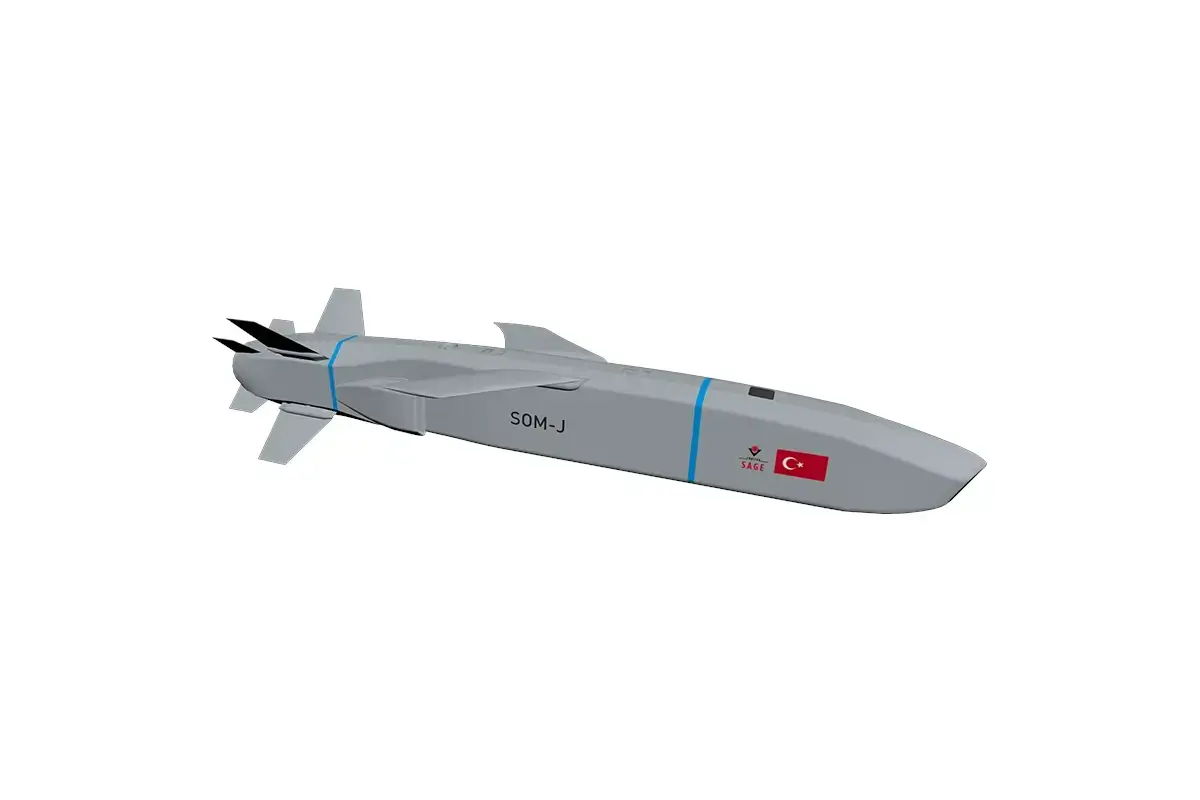
Within the framework of this agreement, TÜBİTAK SAGE and ROKETSAN engineers completely redesigned the missile's aerodynamic structure. The missile was given a slimmer profile and foldable wings that deploy after launch to fit into the internal bay. Its weight was optimised to approximately 1,100 lb (500 kilograms), equipped with a Semi-Armor Piercing warhead, while successfully retaining its 250+ km range capability.
However, political developments and Türkiye's removal from the F-35 programme in subsequent years completely changed the fate of SOM-J. Turning crises into opportunities, the Turkish defence industry decided to integrate this unique munition into its own national platforms. Today, with verification efforts rapidly ongoing, SOM-J has risen to become the primary cruise missile for the internal weapons bays of the National Combat Aircraft KAAN and the unmanned fighter jet KIZILELMA, as well as for the backbone F-16s of the Turkish Air Force. Additionally, heavy-class Armed Unmanned Aerial Vehicles (UCAVs) like AKINCI and AKSUNGUR also have the capability to carry this strategic missile under their wings.
Transition to Network-Centric Warfare
In conclusion, the SOM Cruise Missile family, designed by TÜBİTAK SAGE and produced by ROKETSAN, represents the engineering zenith reached by the Turkish aviation industry in deep strike capabilities. With their high subsonic speeds, ranges exceeding 250 kilometres, and domestic KTJ-3200 engines, these missiles symbolise the era of full independence in Türkiye's striking power.
With the induction of the C-series with data link and the J variant into the inventory, the Turkish military gains unique tactical flexibility. The Network-Enabled Weapon capability of the missile family directly prepares the Turkish Armed Forces for the future doctrine of Network-Centric Warfare. In short, Türkiye is not only producing smart, long-range munitions but also proving to the world that it is a leading technology hub that enables these missiles to communicate with each other and with other platforms, rewriting global asymmetric warfare doctrines.
