


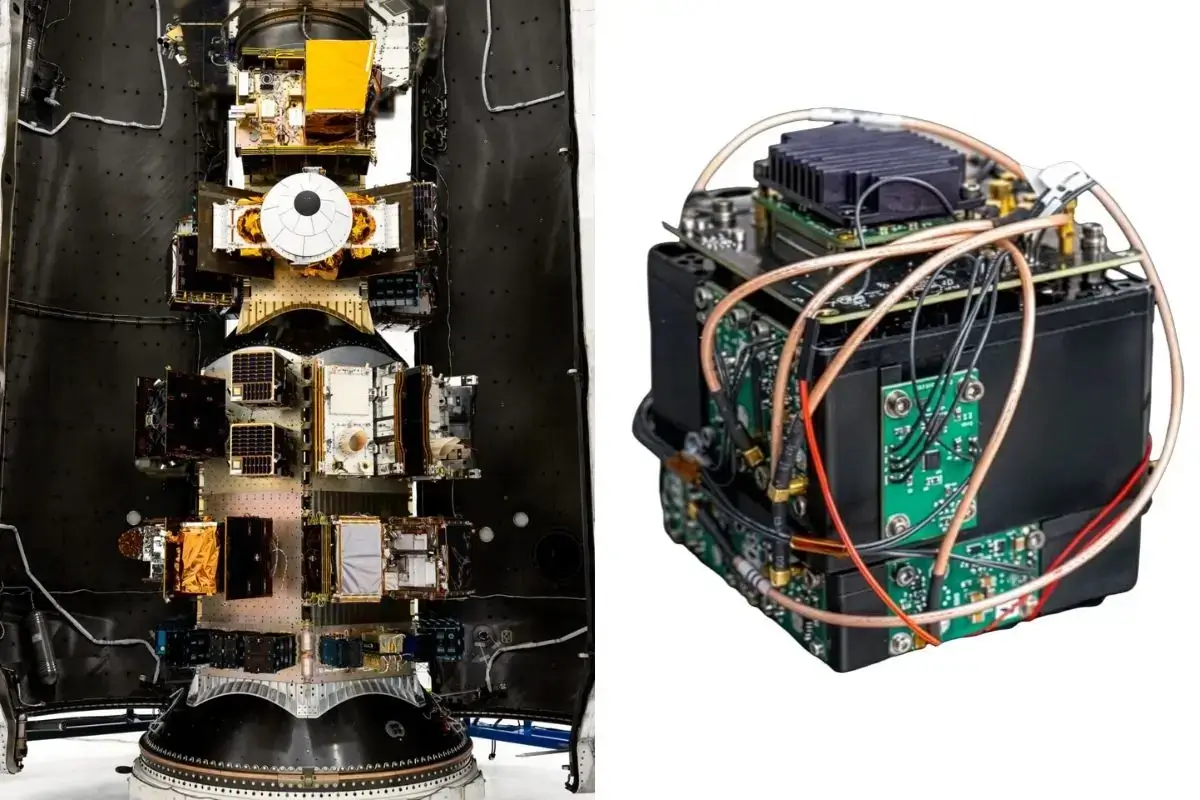
Türkiye's space and advanced technology ecosystem has achieved another historic success that transcends borders. Domestic deep tech venture Qubitrium launched its quantum-secure communication payload, QubitCore, into space aboard a SpaceX Falcon 9 rocket. Launched from California as part of the Transporter-16 mission and successfully placed into Low Earth Orbit (LEO), this payload elevates Türkiye into the space-based quantum encryption league. This historic launch, celebrated simultaneously at its Istanbul and Delft offices, represents a critical threshold on the path to building the unbreakable communication networks of the future.
A Definitive Solution Against the Quantum Threat
Today, code-breaking processes that would take classical computers decades can be solved in seconds by developing quantum computers. Cybersecurity experts define this major threat with the concept of "harvest now, decrypt later." Malicious actors simply store encrypted data they cannot break today, planning to decrypt it instantly once quantum computers become commercially available. The only way to eliminate this massive risk is to encrypt communication directly with the fundamental laws of quantum physics. The QubitCore hardware developed by Qubitrium precisely forms an unbreakable shield extending from space to Earth against this global cybersecurity threat.
What is QubitCore and 1U QKD Hardware?
Quantum Key Distribution (QKD) uses the quantum states of photons to encrypt data. If a third party (a hacker) intercepts the transmission, the quantum state of the photons is instantly disrupted, alerting the communicating parties that they are being monitored. Therefore, this system provides a communication infrastructure that is theoretically impossible to break due to the laws of physics.
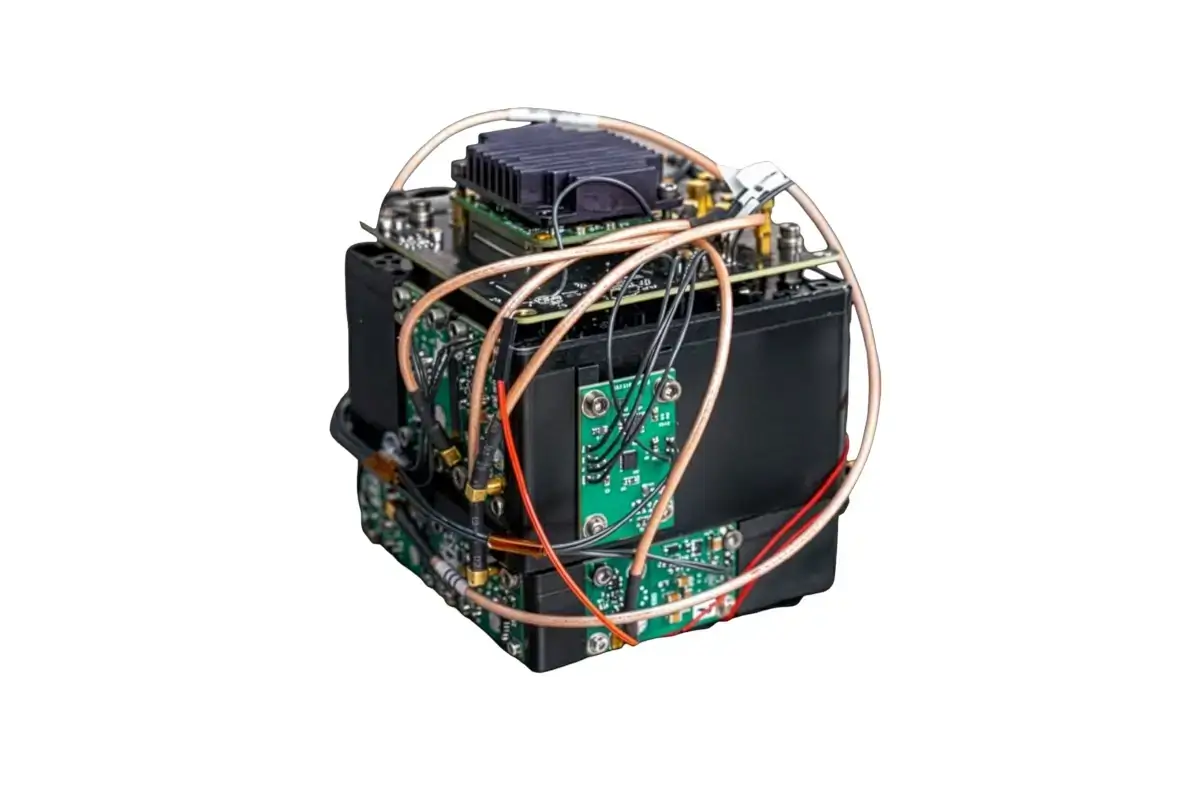
Qubitrium engineers succeeded in fitting this complex optical architecture, developed in a laboratory environment, into the standard 1U (10x10x10 cm) CubeSat form factor. This hardware, launched into orbit aboard a SpaceX Falcon 9 rocket, has proven itself under the harsh radiation and temperature conditions of space. Thus, a visionary scientific project has transitioned from the lab to a physical, validated space infrastructure.
Why Space? The Strategic Role of Satellites for a Global Quantum Network
Why is this encryption hardware located in space rather than on Earth? Quantum communication can also be conducted on Earth via fiber optic cables. However, a physical limit arises here. Photons experience significant signal loss as they travel through fiber cables. Moreover, the fundamental laws of quantum physics (the no-cloning theorem) absolutely prohibit these photons from being copied or amplified by a signal booster as in classical internet networks. Therefore, quantum communication established with terrestrial fiber networks is typically limited to very short distances of 100 to 200 kilometres.
Qubitrium engineers are sending the QubitCore hardware into space precisely to overcome this distance barrier. With no friction or signal absorption in the vacuum of space, photons transmitted from a satellite travel thousands of kilometres to Earth without any loss. A quantum satellite rapidly orbiting in Low Earth Orbit (LEO) can distribute encryption keys between a ground station in Ankara and one in Washington, D.C., creating an unbreakable intercontinental bridge. In short, the only way to build a global-scale quantum internet is to integrate this optical technology into space-based satellites.
From Academia to a Global Space Company
Behind Qubitrium's global success lies a very strong academic and engineering foundation. The company was founded in 2020 by Dr. Kadir Durak, a graduate of the Physics Department at Middle East Technical University (METU). Dr. Durak earned his doctorate in atomic and molecular physics at the National University of Singapore. Throughout his career, he conducted in-depth research on satellite-to-ground quantum communication. Later returning to Türkiye and continuing his academic work at Özyeğin University, Durak transformed this deep technological expertise into tangible products under the Qubitrium umbrella.
Today, operating simultaneously from offices in Istanbul and Delft in the Netherlands, the company produces the fundamental building blocks of the quantum internet. The firm develops entangled photon sources, single-photon detectors, and time-tagging modules. Additionally, together with strategic partners in Europe and the United States, the company conducts advanced R&D work on diamond defect-based sensors and quantum Positioning, Navigation, and Timing (PNT) solutions.
A New Supply Chain for Satellite Operators
In the space industry, a hardware component successfully operating in space (gaining space heritage) is the most critical requirement for it to be sold on the global market. Qubitrium's achievement with the Transporter-16 mission goes far beyond being a mere scientific test. Following the launch, the company's management officially announced that the QubitCore hardware is now ready for commercial integration.
This strategic development shows that Türkiye has created a new global supply chain for space-based quantum missions. Satellite operators worldwide, when seeking to equip their own satellites with quantum encryption capability, can directly purchase this ready-made, space-qualified hardware from Qubitrium. Thus, Turkish engineering rises to the position of a high-value-added hardware provider in the global space economy.
Future Vision: The Quantum Internet
The successful placement of the QubitCore payload into Low Earth Orbit (LEO) proves that Türkiye is strongly present in the era of the "second quantum revolution." In the future, the critical communications of states, banking data, and military communication networks will be conducted entirely over space-based quantum internet.
