


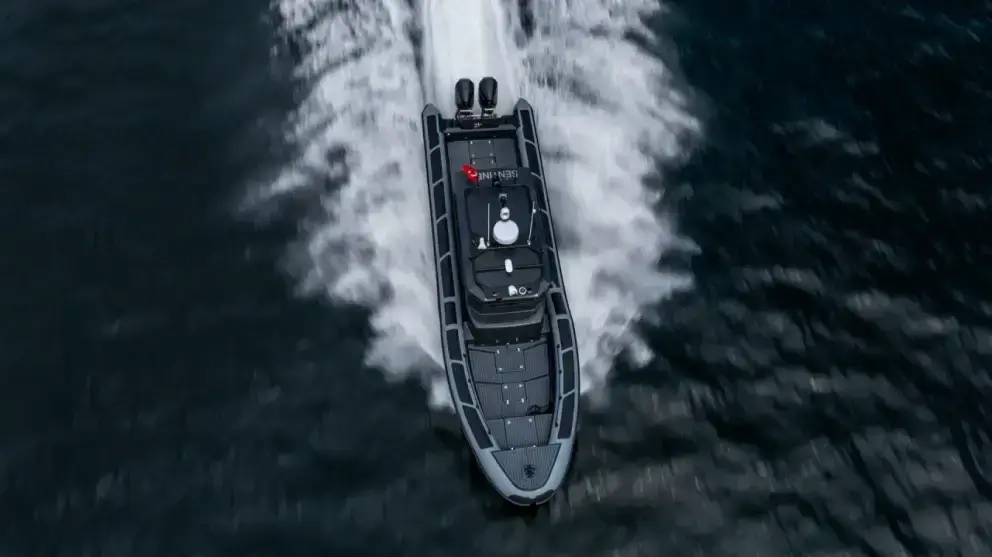
The Turkish defence industry is rapidly expanding its footprint in the European market through direct production agreements. HAVELSAN has moved into the production phase in its strategic partnership with VN Maritime Technologies and Italy's Piloda Defence. Announced in Naples in March, this major collaboration covers the construction of next-generation marine vehicles for operation in Italian waters. Within the scope of the project, the physical production of the platforms is taking place directly at facilities in Italy (Naples, Brindisi, and Torre Annunziata). Consequently, Turkish engineering's autonomy and command-control software are being directly integrated into one of Europe's largest navies.
Hybrid Concept and ÖK Hull Technology
At the heart of the agreement lies an innovative hybrid concept. Thanks to this structure, marine platforms can operate in manned or unmanned modes without needing structural modification. The vehicles are used in a wide range of missions, including autonomous surveillance, coordinated swarm operations, search and rescue, and maritime intervention.
The physical architecture of the platforms is based on the ÖK Hull technology, licensed from Iceland's Rafnar and developed by VN Maritime. This special design reduces wave slamming effect by 95 percent compared to traditional V-shaped hulls. Therefore, this architecture extends the platform's service life while radically reducing maintenance costs. Furthermore, the high stability offered by the hull directly enhances the performance of the vehicle's sensors. Thus, electro-optical cameras and underwater sonars collect flawless data even in choppy seas.
HAVELSAN constitutes the brain of this powerful hardware. The company successfully integrates advanced technologies such as command and control, autonomous navigation, and sensor fusion into these Italian platforms.
From a Fleet of 40 Boats to an Autonomous Future
This strategic industrial collaboration between the parties is not entirely new. Piloda Shipyard and VN Maritime had signed a major project for the Italian Coast Guard in 2025. Teams had begun the joint production of 40 15-metre boats at that time.
With the new phase announced today, this collaboration is expanding to include hybrid and unmanned marine vehicles (UMVs). The Italian Financial Police (Guardia di Finanza) is among the main potential users of these next-generation vehicles. Furthermore, other public security agencies are closely following the project. Indeed, teams had displayed a functional prototype at the La Spezia Naval Base during the Seafuture 2025 fair. Italian institutional delegations personally examined and successfully tested this vehicle in the field.
Why is the Hybrid Architecture Preferred?
The legal status and regulations of fully autonomous unmanned marine vehicles in international waters have not yet been fully clarified. Therefore, the hybrid structure offers a highly flexible usage model that considers the evolving regulatory process. Italian security forces can put personnel on board and perform duties when required by international law or the operation. For routine patrol missions, the vehicle transforms completely into an unmanned and autonomous robot.
First Contract Underway
HAVELSAN's strategic move in Italy clearly proves Türkiye's role in the defence industry. Türkiye now not only sells platforms but also stands out as a global software integrator.
The consortium members aim to sign the first official procurement contract in the first half of 2026. Within the framework of the collaboration, the development of platforms of various sizes for use in defence, maritime security, and environmental monitoring is planned. Ultimately, Italian state agencies are preparing to strengthen their naval fleets with new-generation hybrid platforms equipped with the autonomous intelligence of Turkish engineering.
