


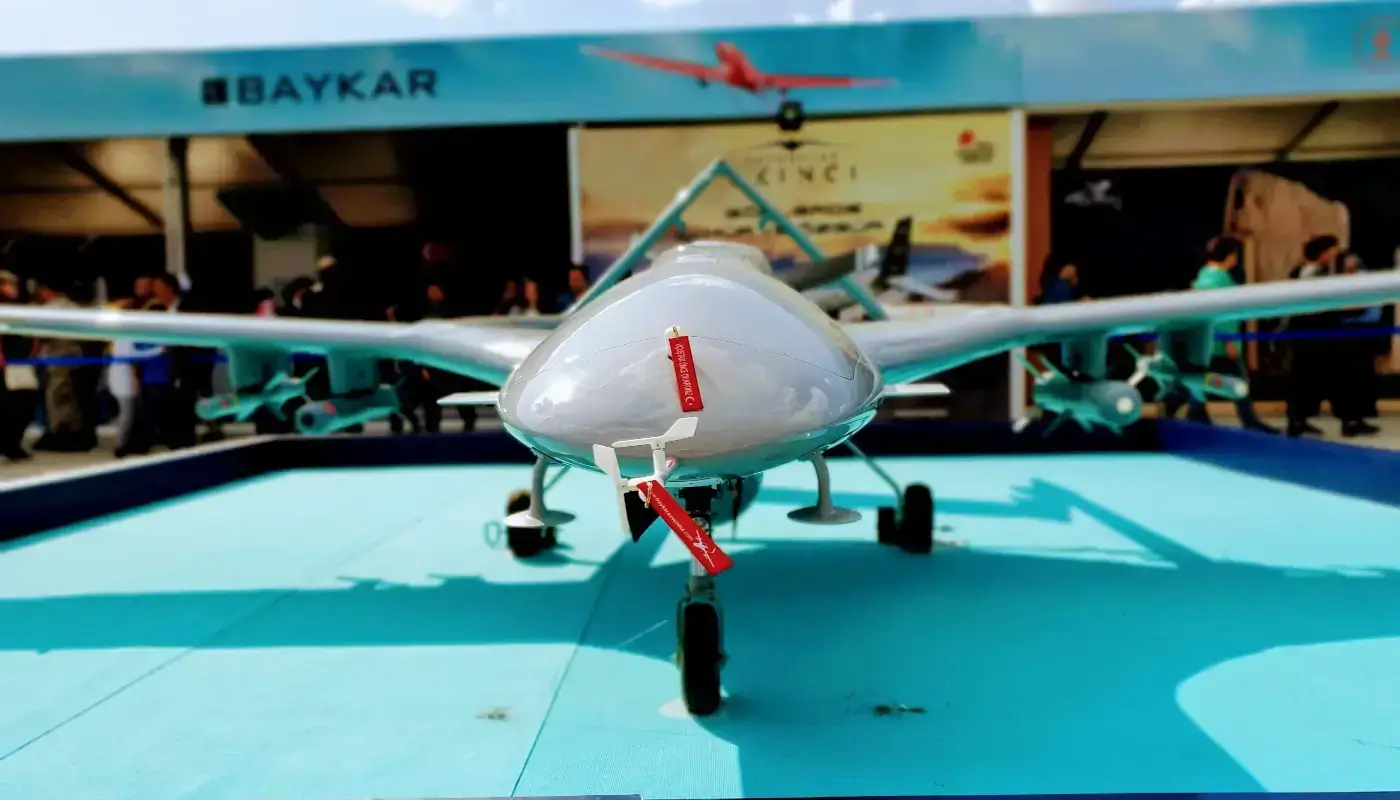
Colombia's Deputy Minister of Defence, Angelica Verbel, made a critical official visit to Türkiye in February 2026. The main agenda item of this visit was to enhance the surveillance, reconnaissance, and precision strike capabilities of the Colombian Armed Forces. The South American country plans to replace the unarmed Israeli-made Hermes drones in its inventory. In this context, the combat-proven Bayraktar TB2 and the next-generation TB3 systems stand out as the strongest candidates.
Turkish Superiority Against Israeli Systems
The Colombian Air Force currently uses Hermes 450 and Hermes 900 models produced by Elbit Systems. However, these systems can only perform intelligence and reconnaissance missions. The lack of armed operation capability creates a major vulnerability in Colombia's fight against terrorism and smuggling.
In contrast, the Bayraktar TB2 offers an immediate strike capability with its structure equipped with smart munitions such as MAM-L and Kemankeş. It also provides a strategic advantage with its flight endurance exceeding 27 hours. On the other hand, the other option on the table, the Bayraktar TB3, offers a payload capacity of 280 kilograms. Furthermore, the TB3 takes operational flexibility to the highest level with its foldable wing structure and beyond line of sight (BLOS) communication capability.
Expodefensa 2025 and the Sirtap Dilemma
The Expodefensa 2025 fair, held in the capital Bogotá in December 2025, had given the first signals of this change. The active presence of Turkish companies at the fair directly influenced the Colombian military's modernisation strategy. However, the Colombian government is experiencing a strategic dilemma in this procurement process.
The Technology Race with Europe
Colombia is among the participants in the Sirtap (Atlante-II) tactical UAV project, conducted in partnership with Spain and Airbus. However, the Sirtap project is still in the development phase. The system requires a maturation period that will take years. On the other hand, the Bayraktar TB2 is ready for immediate delivery as a combat-proven platform. Therefore, Turkish systems are positioned far ahead of European projects in meeting urgent operational needs.
A New Era in Latin America
Colombia's final decision represents more than just a military procurement transaction. Abandoning Israeli drones and turning to Turkish UCAVs would completely change the rules of the game in the Latin American defence market. This development will permanently expand Türkiye's technological export footprint in the region. Consequently, high-performance and cost-effective Turkish unmanned systems continue to dethrone traditional European and Israeli manufacturers in the global market.
