


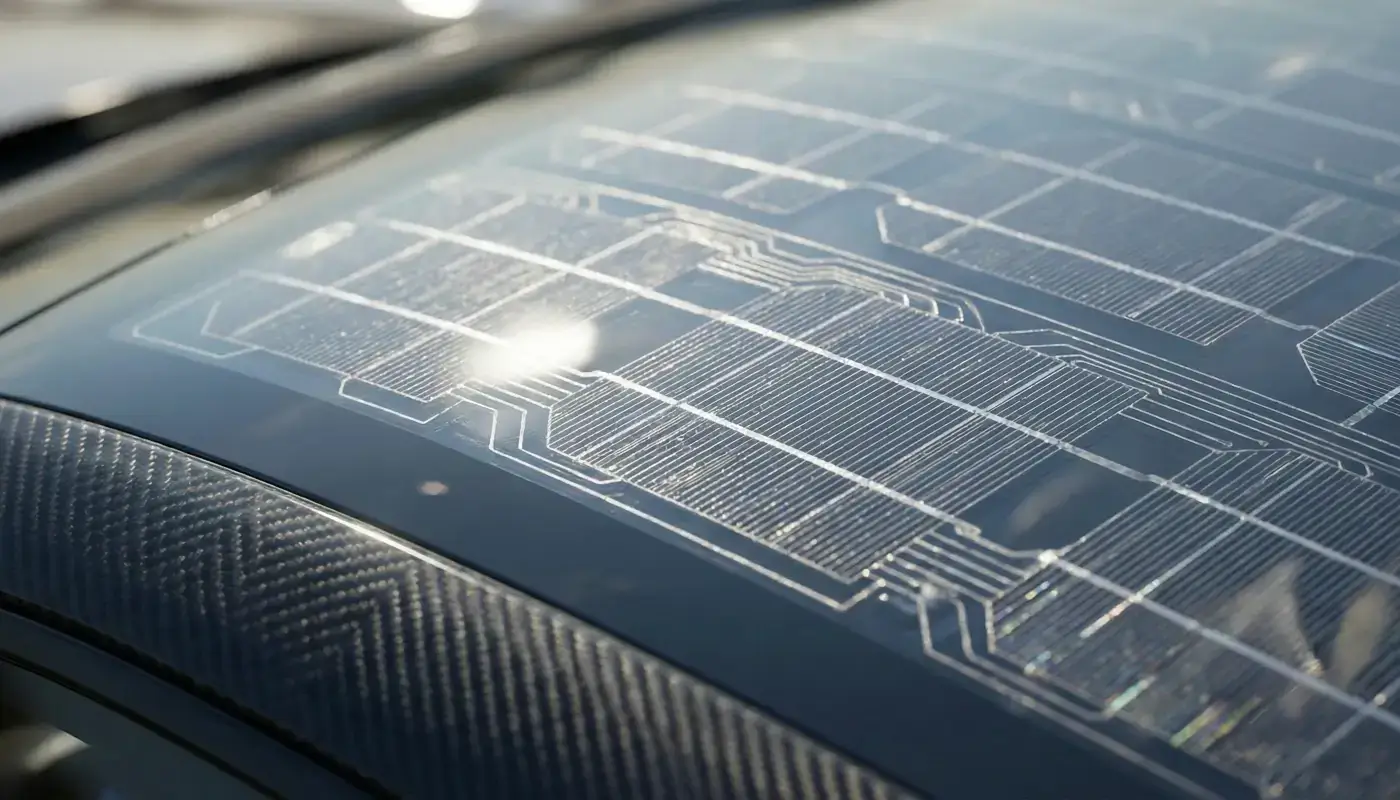
As the electrification revolution continues unabated in the automotive industry, the roles of vehicle components are also undergoing a radical transformation. Passive car windows, previously used only to block the wind and see outside, are now turning into active energy sources. Türkiye's global industrial giant, Şişecam, has announced that within the scope of the major EU-supported ZEvRA Project, it will develop special roof glass that will power the batteries of new generation electric vehicles with solar energy.
Reducing range anxiety in electric vehicles and maximising energy efficiency is the greatest challenge currently facing automotive technologies. One way to gain an advantage in this challenge is for the vehicle to generate its own energy. Şişecam, one of the world's largest glass manufacturers, has rolled up its sleeves for a technology that will effectively turn vehicle roofs into solar panels as part of the ZEvRA (Zero Emission vehicles with hArmonised and circularity) project, which is shaping Europe's future automotive vision.
The ZEvRA Project: 28 Global Giants and One Turkish Company
The European Union is pushing the automotive industry to transition to a circular economy model to achieve its zero carbon emissions target by 2035. The ZEvRA project, funded by the Horizon Europe Research and Innovation Programme and launched in early 2024, serves precisely this purpose.
Coordinated by the Fraunhofer Institute, one of the world's most prestigious research institutions, this project involves 28 global partners, including world-renowned automotive brands. In this league of giants, Şişecam has undertaken the responsibility for glass technology, one of the most critical external components of electric vehicles.
Glass is No Longer Just a Surface, but an Energy Module
The innovation developed by Şişecam within this project completely redefines the role of glass in automotive. The roof of the circular vehicle prototype designed for the ZEvRA project will be equipped not with standard glass, but with solar energy glass specially manufactured by Şişecam.
Benefits of the Technology:
- Direct Support for the Battery: Solar cells integrated into the roof glass will transfer the electricity they generate, whether the vehicle is parked or in motion, directly to the vehicle's battery. This will contribute to the range, particularly by offsetting the energy consumed by equipment such as air conditioning or infotainment systems.
- Circularity and Low Carbon: The glass developed by Şişecam will be produced in accordance with circular economy principles, using minimum natural resources and chemicals during the manufacturing phase.
- Active Component Concept: Glass will cease to be a passive material adding weight in vehicle design and will transform into an active piece of equipment supporting the vehicle's powertrain.
The Prototype of the Future Will Be on the Roads in 2026
The ZEvRA project, which aims to establish a common circularity methodology across Europe, will continue until the end of 2026. The new generation circular vehicle prototype, featuring Şişecam's battery-supporting solar panel glass, is expected to be completed and introduced to the technology world in the second half of 2026.
This move by Şişecam, transitioning from traditional manufacturing to smart technologies, demonstrates that Turkish engineering is not merely keeping pace with the change in the global automotive ecosystem, but is also guiding this transformation.
