


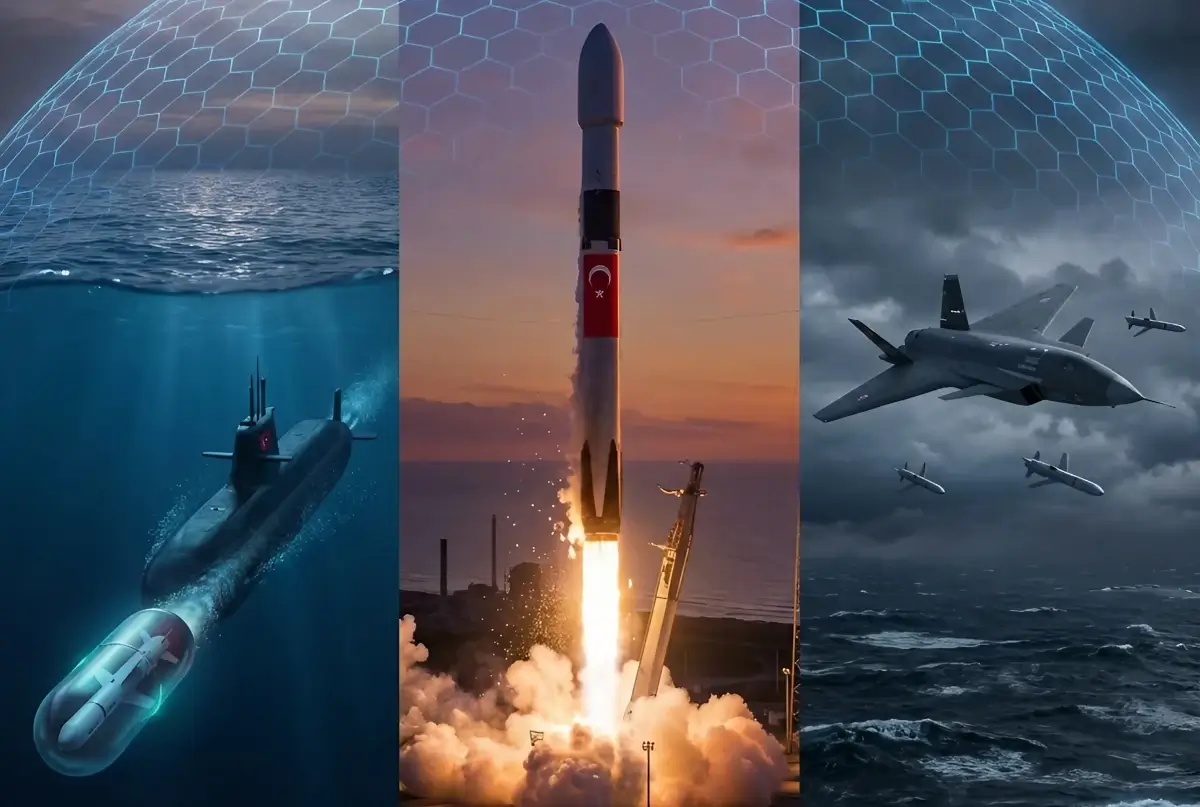
In recent years, the Turkish defense industry has not only increased its domestic production rate but has also risen to a game-changing position on a global scale. One of the flagship companies of this sector, which not only meets the needs of its own army but also exports technology to friendly and allied countries, is undoubtedly Roketsan. Speaking at the gdh Stage event, Roketsan General Manager Murat İkinci shared the company's future vision, lessons learned from field experience, and details of strategic projects such as "Steel Dome." In this analysis, we examine the roadmap of the Turkish defense industry in rocket and missile technologies in light of İkinci's statements.
Lessons Learned from the Field and Evolving Defensive Doctrines
The Ukraine-Russia war, the Karabakh victory, and the recent conflicts in the Middle East have shown that conventional methods of warfare have undergone a radical transformation. Murat İkinci emphasizes that, in light of the data obtained from these conflicts, defense strategies have been reshaped along three main axes.
Firstly, there is the long-range and precision strike capability. Eliminating the threat at its source or neutralizing enemy elements from a safe distance has become the most critical element of modern warfare. Secondly, there are layered air defense systems. It is vital not only to attack but also to destroy incoming threats (from ballistic missiles to cruise missiles) in the air. Thirdly, and perhaps the fastest developing, is drone and swarm technology. The ability of unmanned systems to attack in swarms and in a coordinated manner provides the capability to saturate air defense systems.
Typhoon and Hawk: Long-Range Deterrence
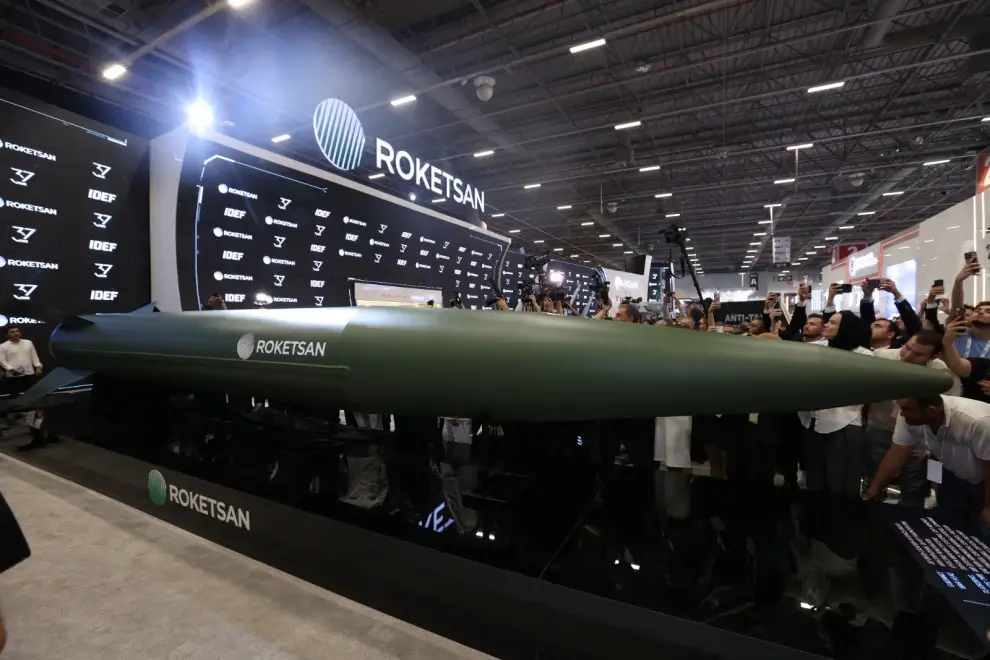
When Türkiye's long-range strike capability is mentioned, one of the first platforms that comes to mind is the Tayfun Ballistic Missile. According to İkinci, the Tayfun project is not just a single missile; it represents a constantly evolving family of technologies consisting of different blocks. The goal, particularly with Tayfun Block-4, is to achieve hypersonic speeds and hit targets with pinpoint accuracy from kilometers away.
The greatest advantage of ballistic missiles is their speed. However, if this speed cannot be maintained during the terminal phase, the moment of impact, there is a risk of being intercepted by enemy air defense systems. Roketsan, with the technologies it has developed, enables missiles to maintain hypersonic speeds even during the impact phase. This minimizes the reaction time of the enemy, maximizing the probability of destruction.
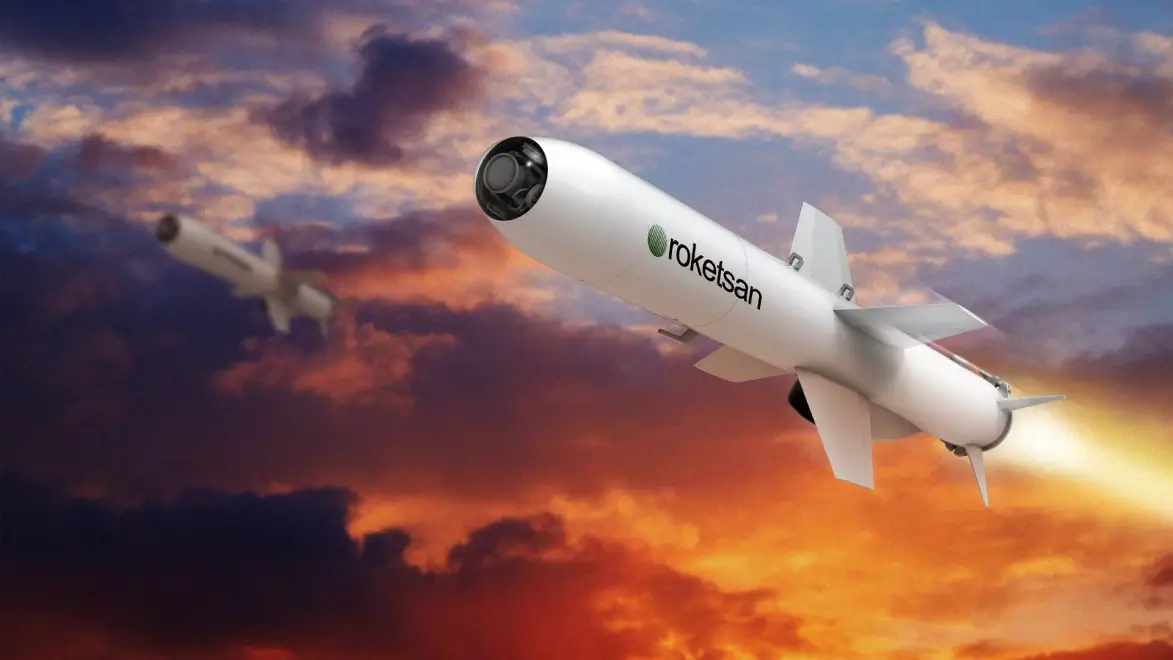
On the other hand, Atmaca and Çakır stand out in the cruise missile category. The fact that the Atmaca missile is launched from a submarine torpedo tube is a strategic force multiplier for the Turkish Navy. Submarines, one of the quietest and most difficult-to-detect platforms in the world, can emerge from underwater and strike a land or sea target hundreds of kilometers away, posing a threat that is difficult for enemy forces to anticipate.
Revolution in Navigation for Cruise Missiles
A missile's ability to find its target is usually reliant on satellite-based positioning systems such as GPS. However, in the modern electronic warfare environment, GPS signals can be easily jammed or interrupted. Murat İkinci states that one of Roketsan's biggest investments is in GPS-independent navigation systems.
Thanks to these developed "inertial navigation systems" and "terrain-referenced navigation" technologies, missiles can determine their location by looking at the terrain. Sensors, radar altimeters, and cameras on the missile allow it to autonomously correct its course. This enables cruise missiles like Atmaca and Som to reach their targets without being detected by radar, flying just a few meters above the sea or land.
Çakır Missile: More Than a Missile, an Electronic Warfare-Enabled Technology Platform
One of the most strategic elements that stands out in Murat İkinci's statements is, Cakir Cruise Missile‘It is the operational concept of [the missile]. Secondly, it defines Çakır not just as a munition with striking power, but as a "technology platform" that can perform different tasks thanks to its modular structure. Especially the missile's LIR (Electronic Warfare) Secondly, emphasizing this version, states that this variant does not carry a warhead, but is instead designed to suppress and blind enemy air defense systems. Operating with swarm intelligence, Çakır missiles move towards the target in groups of 5-6; while the LIR version presents itself as a target on radar, drawing or confusing enemy defenses, other missiles carrying warheads take advantage of this confusion to reach the target. This "teamwork" capability and swarm attack concept distinguishes Çakır from conventional cruise missiles, providing the Turkish Armed Forces with a unique advantage in penetrating layered air defense networks.
Submarine-Launched Cruise Missiles: Invisible Strike Power
One of the most remarkable developments in terms of strategic depth is the ability to launch cruise missiles such as Atmaca and Gezgin from submarines. The launch of the Atmaca cruise missile from a submarine torpedo tube has had a significant impact on the Turkish Navy's strike power.
Possessing one of the world's most advanced submarine fleets, Turkey combines the "stealth" advantage of these platforms with long-range missiles. The ability of a submarine, extremely difficult to detect, to fire cruise missiles at targets over 200 kilometers away from a depth of 40-50 meters without being detected by enemy forces, changes all the equations in the operational field. This capability represents an unpredictable threat to enemy naval and land targets, coming from anywhere at any time. Furthermore, modular munitions like the Çakır cruise missile can be integrated into different platforms and used in swarm attack concepts, saturating and neutralizing air defense systems.
MIDLAS: Strategic Resilience and Scalable Strength Developed in Response to Embargoes
Murat İkinci emphasizes that MİDLAS (National Vertical Launch System), developed to overcome supply restrictions and embargoes faced by Türkiye in naval platforms, is not only a domestically produced launch system but also a strategic area of freedom for the navy. According to İkinci, MİDLAS allows the Turkish Naval Forces to shape the ammunition load on their ships as desired, according to operational needs. Currently, air defense missiles such as HİSAR and SİPER have been successfully integrated into the system, and the goal is to add cruise missiles and even ship-launched ballistic missiles in the near future. İkinci also underlines that the system will not be limited to large-tonnage frigates; thanks to MİDLAS's scalable architecture, tactical and portable versions will be developed, equipping small patrol boats and unmanned surface vessels (USVs) with vertical launch capability. This move aims to spread the navy's firepower across the sea surface, achieving an asymmetrical superiority.
Steel Dome: AI-Powered Layered Air Defense
The development of offensive capabilities necessitates the evolution of defense systems. Türkiye's "Steel Dome" project represents not a single system, but a massive network structure where sensors, command and control centers, and weapon systems work together in an integrated manner.
The most critical component of the Steel Dome is its "decision support mechanisms" and artificial intelligence algorithms that surpass human reaction speed. In modern warfare, threats such as hypersonic missiles, ballistic missiles, and swarm drones can reach their targets in seconds. It may not be possible for human operators to detect, analyze, and select the appropriate weapon for the threat in such a short time. Steel Dome analyzes the type of incoming threat and ensures that the most appropriate and "cost-effective" weapon is used to respond.
The concept of "cost-effectiveness" is vital here. Responding to a kamikaze drone costing a few thousand dollars with a multi-million dollar SIPER or Patriot missile is not a sustainable defense strategy. Steel Dome manages the defense economy by deploying more economical missiles such as Laser Weapon Systems (ALKA) and Sungur, or electronic warfare methods, depending on the nature of the threat.
Red Apple and Gokbora: The Unmanned Era in Air Warfare
Turkey, one of the world's largest producers of unmanned aerial vehicles (UAVs), is beginning to use these platforms not only for reconnaissance and ground attack, but also for air-to-air combat. The successful firing of beyond-visual-range air-to-air missiles during tests conducted with the Kızılelma unmanned combat aircraft has opened a new chapter in aviation history.
The Gökbora missile, developed by Roketsan and equipped with ramjet engine technology, will be one of Kızılelma's main weapons. The biggest advantage of unmanned platforms is that they are not limited by the physiological limits of the pilot (G-force, etc.). This allows them to enter risky areas that manned aircraft cannot and perform much sharper maneuvers. A Kızılelma fleet equipped with long-range missiles like the Gökbora will have the capacity to destroy enemy elements even before they are detected.
Space-Independent Access and Supply Chain Strength
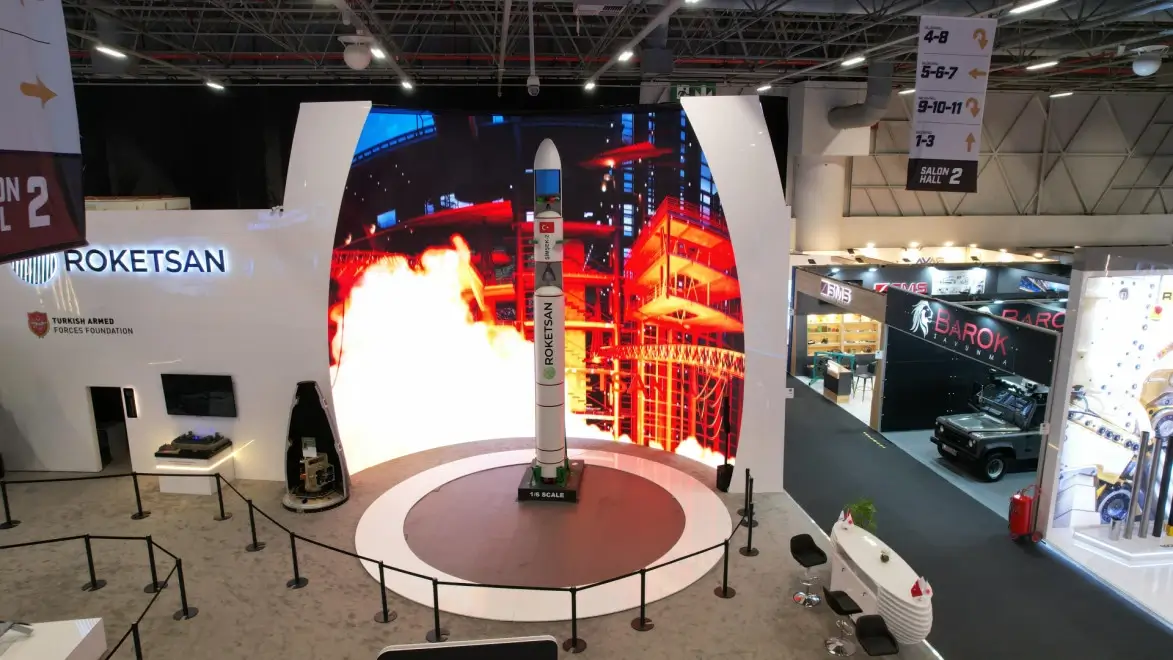
The final link in a country's path to having a fully independent defense industry is independent access to space. The ability to place intelligence, communication, and positioning satellites into orbit without relying on launch pads or permission from other countries is a critical security issue. Roketsan's investments in its Şimşek launch vehicles and liquid-fueled engine technologies serve Türkiye's goal of launching its own satellites into space from its own territory.
Behind all these technological achievements lies a massive "supply chain." Roketsan, working with more than 2,000 subcontractors, functions not just as a missile factory, but also as a technology school. Unlike its European competitors, Türkiye's vibrant, dynamic, and young engineering force provides a significant advantage in increasing mass production capacity and rapidly deploying new technologies.
Young Engineers
One of the most promising points highlighted in Murat İkinci's speech was the human resources. The fact that Roketsan's average age is 32 shows how dynamic and youthful the sector is. The ability of engineers from different disciplines (computer, electronics, mechanical, materials) to come together and solve complex problems through teamwork is seen as Türkiye's greatest asset.
Investing in the Future
Murat İkinci's vision demonstrates that the Turkish defense industry is not only meeting today's needs but also building the future through investments in areas such as quantum sensors, hypersonic technologies, directed energy weapons, and advanced materials technologies. AI-powered autonomous systems are reinforcing Türkiye's deterrent capability across a wide spectrum, from submarines to space. These combat-proven systems are transforming Türkiye from a mere "market" into a game-changing "actor" in the global defense arena.
Key words: Roketsan, Murat İkinci, Tayfun Missile, Steel Dome, Atmaca Missile, Kızıl Elma, Turkish defense industry, ballistic missile, cruise missile, UAV technologies, Gökbora, Midlas, hypersonic missile, laser weapon, Alka.
