


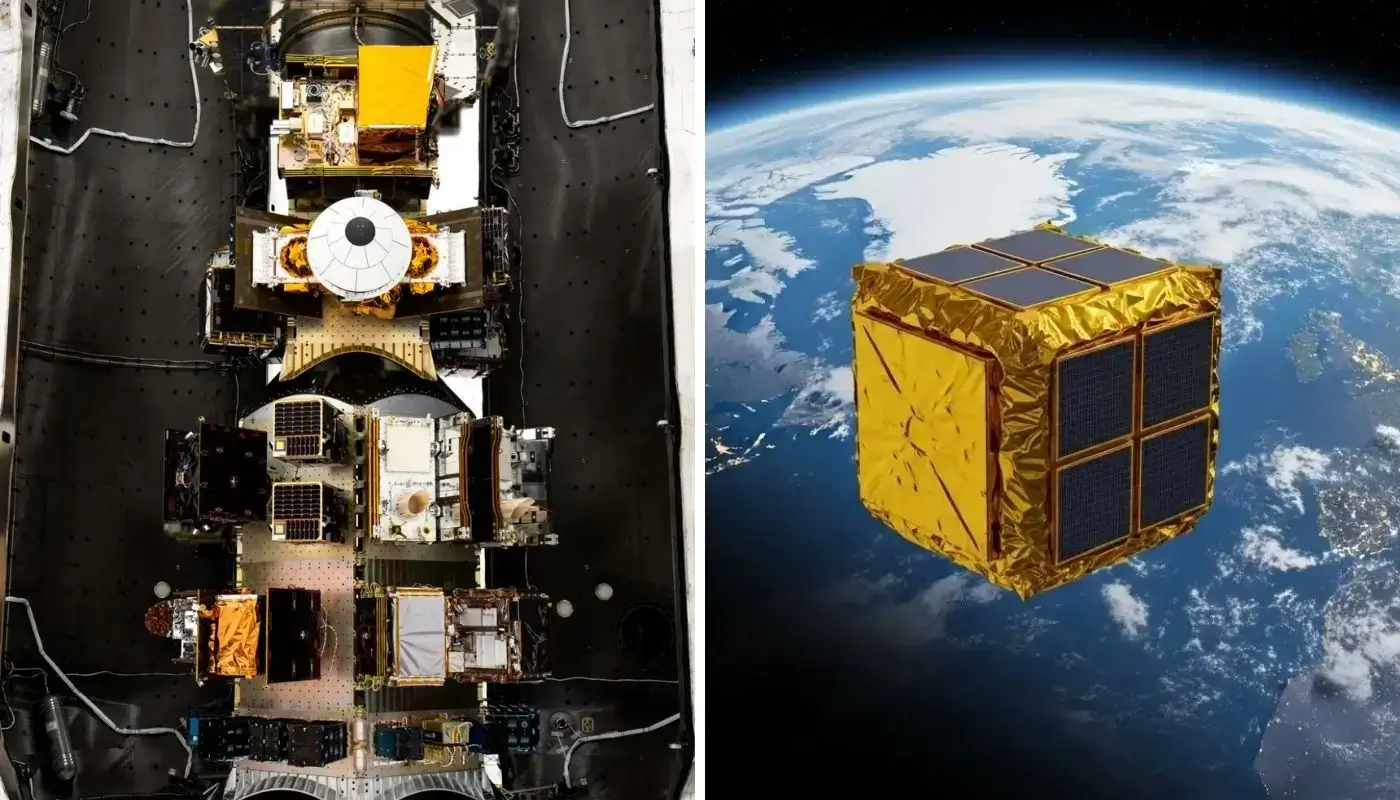
The Turkish defence and technology industry is steadily expanding its strategic presence in space with new-generation cube satellites. ASELSAN successfully launched LUNA-2, the second member of the satellite constellation it is developing with the goal of establishing a Space-Based Internet of Things (IoT) network, on March 30, 2026, aboard a SpaceX Falcon 9 rocket from California, USA. This critical launch mission, announced by ASELSAN General Manager Ahmet Akyol via his official social media accounts, marked a very significant milestone in the vision of providing low-energy (LoRa-based) sensor and data access to the most remote regions unreachable by terrestrial communication networks. As a result, following LUNA-1, the LUNA-2 satellite, placed into orbit by a SpaceX rocket, concretely demonstrates Türkiye's determination to build its own space-based communication infrastructure.
Today, terrestrial cellular networks (4G/5G) established by mobile operators cover only a small portion of the Earth's surface. The middle of oceans, vast agricultural lands, mountainous borders, and long energy pipelines often lie outside this coverage area. ASELSAN engineers are using Space-Based IoT architecture to fill this significant communication gap.
Space-Based Internet of Things
The LUNA-2 cube satellite is designed to collect data directly from space from smart devices and sensors on Earth. The vehicle houses specialised data communication hardware with low power consumption and wide coverage. Thus, a sensor on Earth (e.g., a tracking device on an offshore cargo ship or a moisture meter in a field) communicates directly with LUNA-2 without needing high battery power. The system instantly transmits this data to ground stations in Türkiye over a highly secure and encrypted infrastructure.
The LUNA Constellation is Being Built
In the aerospace industry, establishing a seamless global network with just one or two satellites is impossible. To avoid blind spots in data transmission, it is necessary to build a constellation of many satellites placed in the same orbit.
As will be recalled, ASELSAN successfully placed its first satellite, LUNA-1, into orbit earlier as the initial step of this strategic vision. The launch of LUNA-2 demonstrates that the company is transforming this project from an experimental study into the construction of an operational satellite network. With new satellites to be launched in the coming period, the frequency of the system's passes over a given sensor on Earth will gradually increase, and delays in data transmission will eventually be completely eliminated.
Civilian and Military Use Potential
This Space-Based IoT network, once completed, will create a massive multiplier effect in both civilian and military domains. In the military field, the system will enable secure data exchange for unmanned ground vehicles across borders, seismic sensors at border outposts, and MİLGEM corvettes on the high seas. In the civilian domain, it will allow sensors for early forest fire detection, earthquake monitoring stations, and global logistics tracking devices to operate without needing terrestrial internet.
Full Independence from the Seas to Space
The launch of LUNA-2 certifies that Türkiye is now a game-changer producing its own hardware and its own communication network in the space race. As ASELSAN General Manager Ahmet Akyol emphasised, the company provides domestic engineering solutions in every domain, from acoustic systems beneath the seas to cube satellites in orbit.
With new satellites to be added to the LUNA series in the coming years, Türkiye will build a secure global IoT data network. This vast network will continue to provide high added value to the national economy as one of the greatest commercial and strategic achievements of the National Technology Move in space.
