


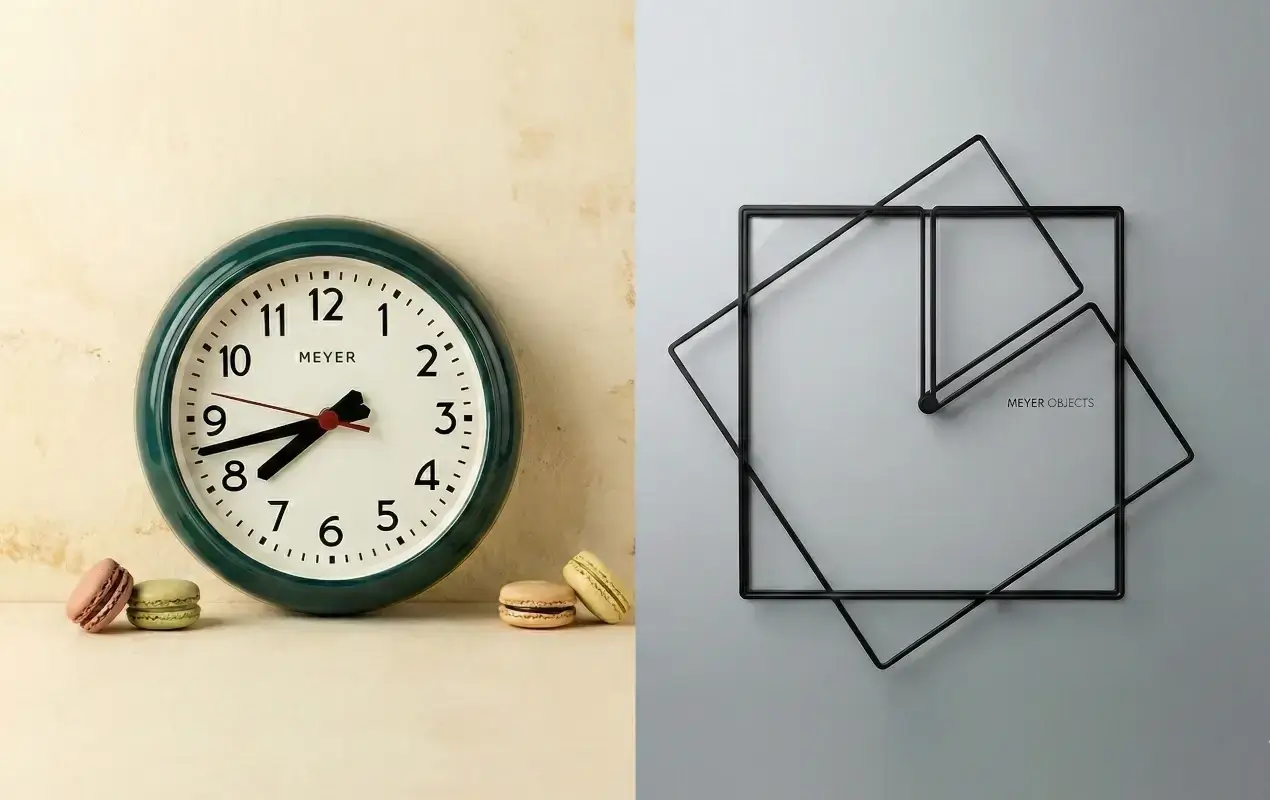
In Karaköy, the heart of Istanbul, directly opposite the Tunnel, stands a watchmaking machine that has been in operation since 1878. Founded by Johann Meyer, the chief watchmaker of Sultan Abdul Hamid II, Meyer Watchmaking has witnessed the transition from empire to republic, and from analog to digital, continuing to live on as one of Türkiye's most established brands. This is the story of a century-old legacy that began in a palace and extended to industrial timekeeping and modern design.
Time wears everything down, but some brands, perhaps because they measure time, remain invincible. Meyer, one of the finest examples in Turkish commercial history, not only sold watches during its journey from the 19th to the 21st century, but also became a living witness to Türkiye's modernization, industrialization, and aesthetic sensibilities.
The Adventure That Began at Yıldız Palace
The story is about someone who was born in Athens in 1843 but spent his childhood in Istanbul. Johann Meyer It begins with... Johann, who was studying watchmaking in Berlin, had a twist of fate that changed the course of his life in 1876 with a newspaper advertisement: the Ottoman Sultan was looking for a skilled watchmaker for his palace.
Johann, whose application was accepted, became the chief watchmaker of Yıldız Palace at the age of 33. The most valuable watches of the Sultan, the princes, and the state officials were entrusted to him. However, palace life harbored not only elegance but also danger. Johann, who accidentally witnessed or became aware of a murder plot within the palace, fears for his life and resigns from his post. This escape will pave the way for the birth of one of Istanbul's most established brands in civilian life.
The German Watchmaker of Karaköy and the Sultan's Order
On May 1, 1878, Meyer Watchmaking opened its doors in the area then known as "Grande Rue de Galata," directly opposite the Karaköy Tunnel exit. Johann Meyer's strategic location and craftsmanship ensured that the shop quickly became a popular destination for the people of Istanbul.
An Invention That Took 8 Years: The Mechanical Fusion of Turkish and Western Styles
Johann Meyer, in his shop in Karaköy, not only repaired aging gears but also grappled with one of the greatest engineering problems of his time. In those years, life in Istanbul flowed between two different time zones: the Alaturka (Ezan-i) Clock, which considered sunset as 12 and changed daily, and the fixed Alafranga Clock of the modern world.
It seems impossible for a mechanical watch to accurately display both the traditional Turkish time, which changes daily according to sunset, and the fixed Western time on the same dial. Johann works on this mechanical impossibility for eight years. Finally, through complex gear systems and precise calculations, he invents that unique watch which captures the movement of the sun within a mechanical mechanism.
This mechanical prayer clock was presented to his former patron, Sultan Abdul Hamid II. The Sultan was impressed by this ingenious creation, which could read not only the time but also the movement of the sky, and honored his former chief clockmaker with the "Order of Honor." This invention went down in history as proof that Meyer was not just a merchant, but a master who changed the mathematics of time.
From the Meyer Family to the Bayindir Family: A Transfer of Inheritance
Emil Meyer, the son who took over the business in 1914, and Wolfgang Meyer, the grandson who passed the torch in 1954, managed to keep the brand alive even during the war years. However, the most emotional turning point in the story occurred in 1981.
Before his death, Wolfgang Meyer entrusted the future of the company to Nahsen Bayındır, whom he regarded as his own son and had mentored. This handover ensured that the Meyer brand remained a local value intertwined with Turkish culture, rather than a foreign investment.
From Watch Clocks to Minimalist Design
During Nahsen Bayındır's tenure, Meyer transformed from a company producing only wall and pocket watches into one focused on providing technological solutions needed by Turkish industry. The company, which introduced the first "PDKS" (Personnel Attendance Control Systems) and guard tour clocks to the country, pioneered time management in industrializing Türkiye.
Today, the company is headed by Onur Bayındır. With the “Meyer Objects” brand, launched in 2015, the firm blends its rich craftsmanship with modern and minimalist design. Century-old Meyer watches are restored while preserving their historical textures, and new collections become part of modern architecture.
The ticking sound that began across from the Tunnel in 1878 continues today with the same passion, measuring the time in Türkiye.
From Berlin to Istanbul, from Istanbul to the World: The Oscar of Design
Meyer's story began a century ago in the hands of a master craftsman from Berlin; in 2019, this historical connection was crowned with global success. The iconic "Frame Clock," designed by Nazar Shighaher and part of the brand's modern "Meyer Objects" collection, was awarded the German Design Award 2019, one of the most prestigious awards in the design world.
This award, supported by the German Ministry of Economy and Technology, validated the brand's strong vision for the future built upon its century-old heritage. Moreover, Frame Clock's success didn't stop there; it was also included among 150 rare pieces in the "Telling Time" exhibition at the MUDAC Museum of Modern Art and Design in Switzerland, which compiles 500 years of timekeeping history, thus etching Meyer's name in gold letters in the history of modern design.
