


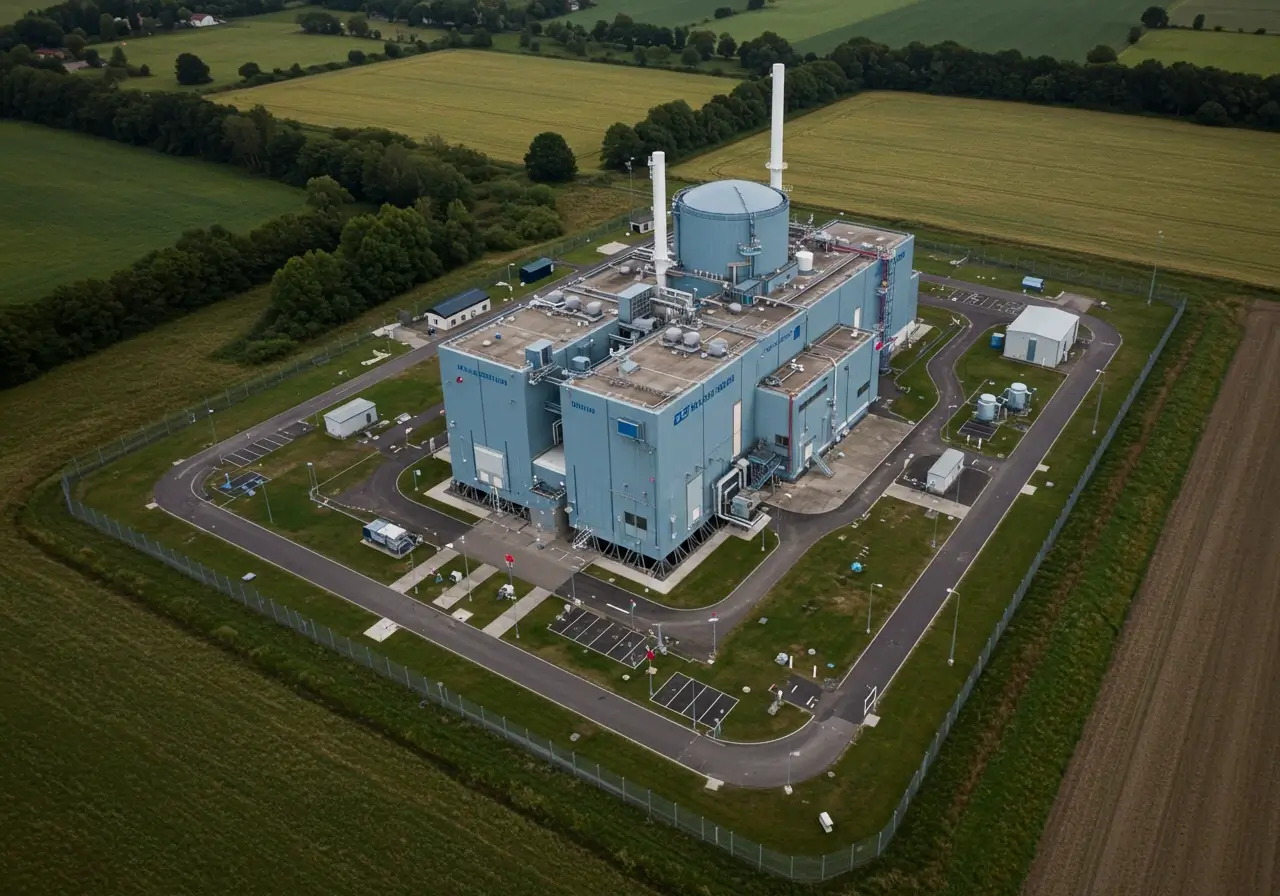
Turkey is shaping its energy independence with a historic step in the fields of energy and technology. Minister of Industry and Technology Mehmet Fatih Kacır announced the launch of the "Call for the Development of a Domestic Nuclear Reactor" via a significant announcement on his social media accounts. This strategic initiative aims to improve Türkiye's energy security and reduce its dependence on foreign sources.
Türkiye is paving its own way in nuclear technologies.
The call initiated by the Minister of Industry and Technology, Mehmet Fatih Kacır, with the words "We are taking a new step in nuclear energy technologies," signals a revolutionary change in Türkiye's energy policy. Having kept nuclear energy on its agenda for many years to ensure energy supply security and increase resource diversification, Turkey, with this new move, demonstrates that it is now focusing directly on the technology itself.
This initiative aims to enable Türkiye to "pave its own way in nuclear energy technologies; to solidify its independence and power." This move represents much more than simply building a reactor to generate electricity. Possessing nuclear technology means developing it with domestic resources and becoming a key player in this field in the future. This vision has the potential to transform Türkiye from an energy-importing country into an energy-exporting power.
Why Did Türkiye Press the Button for Domestic Reactor Production Now?
The timing of the call initiated by Minister Kacır is no coincidence. There are three main global and national dynamics pushing Türkiye down this path:
- Global Energy Crisis and Strategic Independence: The energy crisis, which peaked with the Russia-Ukraine war and deeply shook Europe, demonstrated to the world the enormous national security risk posed by supply security and dependence on fossil fuels. For Turkey, which is highly dependent on imported resources such as natural gas, possessing a nuclear technology that can operate 24/7 uninterruptedly using domestic resources is one of the most critical steps towards strategic independence.
- Climate Change and the Pressure of Green Transition: The Paris Agreement, to which Türkiye is a signatory, and the 2053 Net Zero Emissions target necessitate the rapid decarbonization of the energy production portfolio. While renewable sources such as wind and solar power play a vital role in this transformation, they are not sufficient on their own due to their dependence on weather conditions. Nuclear energy, as a reliable “base load” plant operating with zero emissions, will play a key complementary role in achieving Türkiye’s green transformation goals.
- Technological Opportunity Window: The SMR Revolution: The world is undergoing a shift from massive and costly traditional nuclear power plants to a new generation of smaller, safer, and factory-producible reactors. Small Modular Reactors (SMR) This technology, known as SMR, is making nuclear energy more accessible and flexible. Turkey aims to seize this new wave of technology and enter the league as a developer and producer in the field of SMR.
Is the target technology 'Small Modular Reactors'?
Minister Kacır's phrase "high-tech reactors" most likely refers to innovative concepts such as SMRs (Small Modular Reactors). So what does this technology mean?
The Energy of the Future? What are Small Modular Reactors (SMRs)?
Small Modular Reactors are scaled-down, simplified, and safer versions of traditional nuclear power plants. Their main advantages are:
- Factory Production: Instead of years of complex assembly on a construction site, SMRs can be manufactured in a factory as standard modules and transported by trucks to where they are needed. This significantly reduces costs and construction times.
- Enhanced Security: SMRs are equipped with “passive safety” systems that can safely cool themselves down without human intervention in situations such as power outages. This makes them much safer than conventional reactors.
- Low Cost and Flexibility: Compared to the massive initial investment required for a large power plant, SMRs can be installed with lower capital and new modules can be added over time to meet energy needs. This makes them ideal for industrial areas or remote settlements.
The Difference Between Fission and Fusion
There is an important distinction to be made: the technology that Türkiye aims to develop is a proven and existing nuclear technology that generates energy by splitting (fission) the atomic nucleus. This should not be confused with the next-generation technology, which is still in the experimental stage and is based on combining atoms (fusion) to mimic the energy production of the sun.
The Three Strategic Pillars of the Project and What They Promise for Türkiye
The ultimate goal of this project is not just to supply electricity to the grid. As Minister Kacır stated, it has three main strategic objectives: energy security, reducing external dependence, and contributing to the net-zero emissions target. These objectives promise Türkiye long-term technological superiority, economic stability, and environmental sustainability.
Who will implement the project and how?
A project of this magnitude requires a national mobilization, something no single institution can handle. A model similar to the one successfully implemented in the defense industry is now being applied to nuclear technology.
- State Coordination: The Ministry of Industry and Technology will lead the project.
- Scientific Background: TENMAK and TÜBİTAK institutes will form the R&D and scientific backbone of the project.
- Academic Power: The engineering and basic sciences faculties of the universities will support the project with brainpower and fundamental research.
- Production Capacity: Turkish industry will undertake the task of producing the reactor components and carrying out the system integration.
Roadmap for Developing Domestic Nuclear Technology: Details of the Call and Expected Timeline
The process has begun for stakeholders who wish to participate in this historic journey of Türkiye.
- Application Deadline: Deadline for project proposals December 31, 2025 It was determined as such.
- Application Address: All details and application process rip.sanayi.gov.tr It will be carried out via this address.
