


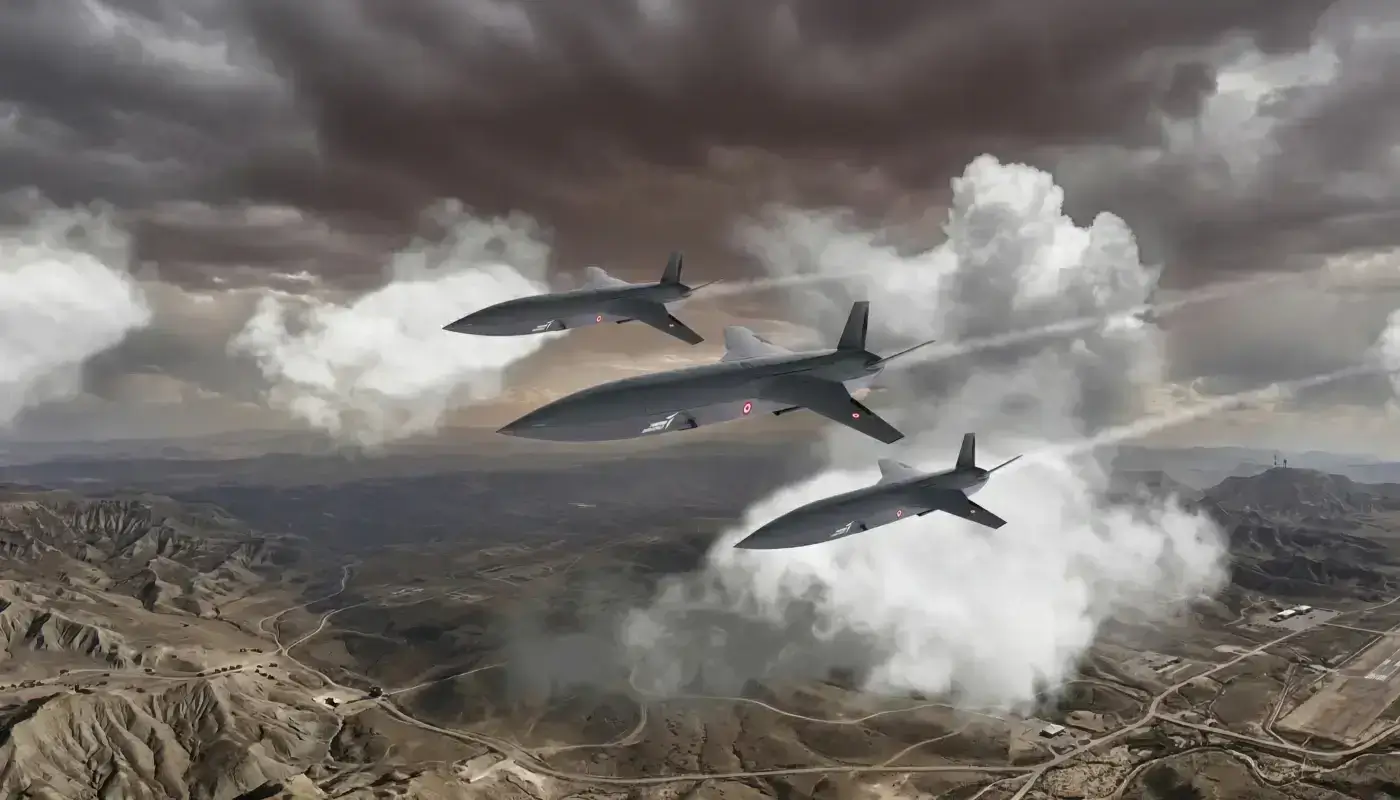
The modern battlefield is witnessing the unstoppable rise of long-range and autonomous systems. The TAI Süper Şimşek tactical UAV system, shaped by the advanced technology vision of Turkish engineers, is rewriting the rules in aviation. The global defence industry has long been discussing slow-flying kamikaze UAV platforms like the Iranian-made Shahed series. However, unlike these traditional systems, the TAI Süper Şimşek reaches a speed very close to the sound barrier, at Mach 0.85. Moreover, the platform takes deep strike capability to its peak with a massive operational range of 900 kilometres.
This innovative vehicle is not just a kamikaze drone. Simultaneously, the system opens a brand new chapter in air warfare with its electronic warfare, deception, and swarm intelligence capabilities.
Development Process: From Target Drone to Strategic Striking Power
The evolution of platforms in the defence industry is shaped by real operational needs on the ground. The Şimşek project, born initially as a target drone for testing and training air defence systems, is undergoing a massive tactical transformation today. Turkish aerospace engineers have created the new TAI Süper Şimşek model by enlarging and accelerating this basic aerial vehicle.
Modern warfare requires asymmetric weapons that can deceive enemy radars and rapidly destroy air defence batteries. Recognising this strategic need, the company transformed the vehicle into a modular multi-mission platform. Indeed, today the vehicle serves both as a capable electronic warfare asset and as a lethal kamikaze UAV penetrating enemy lines. This broad vision clearly proves Türkiye's design intelligence in the field of unmanned systems.
Technological Superiority Over Iran's Shahed Series
International defence industry enthusiasts often associate the kamikaze UAV concept in current conflicts with Iran's Shahed 136 model. Despite its long range, the Shahed derives its power from a simple piston engine. Therefore, it flies quite slowly and noisily. Enemy air defence systems or fighter jets can easily detect and destroy these slow targets. In contrast, the TAI Süper Şimşek competes in a completely different technological league thanks to its jet-powered architecture.
The vehicle reaches speeds of Mach 0.85 (approximately 1040 km/h) in the sky. Additionally, the platform operates at an altitude of 35,000 feet. This immense speed and high altitude make it nearly impossible for enemy radars to detect and intercept the vehicle in time. Moreover, upon reaching its target, the system goes into its final dive within seconds, leaving no reaction time for air defence missiles. In short, this platform establishes absolute superiority in asymmetric warfare by combining long range with high speed.
Cost-Effectiveness: Economic Superiority in Asymmetric Warfare
Although the exact unit cost of the TAI Süper Şimşek has not been officially disclosed by TAI, the platform's fundamental design philosophy is based on being expendable and cost-effective. In modern warfare, using such low-cost autonomous systems instead of sending multi-million dollar cruise missiles or much more expensive manned combat aircraft on dangerous missions provides armies with a massive budgetary advantage. Thanks to the decoy signal reflectors it carries, the Süper Şimşek appears as an expensive F-16 or F-35 on enemy radars, causing the enemy to waste its multi-million dollar air defence missiles (interceptors). This system, which occupies strategic air defence batteries worth perhaps hundreds of times its own cost, exhausts their ammunition, or destroys them with a direct kamikaze dive, offers Türkiye both a technological and a unique economic asymmetric superiority in air warfare.
Technical Anatomy: Game-Changing Capabilities in Its Class
The platform's physical dimensions and aerodynamic structure directly support this high performance. The Süper Şimşek measures 4 metres in length, has a wingspan of 1.75 metres, and a height of 0.75 metres. This compact structure, with a maximum take-off weight of only 200 kilograms, houses a 70-litre fuel tank. Lightweight composite materials maximise the vehicle's aerodynamic efficiency.
Engineers equipped the vehicle with a substantial payload capacity of 50 kilograms. Thanks to this capacity, the system achieves an operational range of 900 kilometres and can remain airborne continuously for 80 minutes. Additionally, the vehicle has a line-of-sight (LOS) data link range of 150 kilometres. The operational range being significantly longer than the data link range provides a major tactical advantage. Possessing full autonomous flight capability, the system successfully finds its target by adhering to its pre-programmed mission even if communication is lost. Return-to-base, emergency, and automatic landing modes guarantee operational safety.
Multiple Launch Options and Swarm Autonomy
The system's greatest strategic advantage lies in the broad flexibility of launch platforms. Forces are not limited to ground launches. The TAI Süper Şimşek can be easily released from under the wings of unmanned aerial vehicles such as ANKA III, AKSUNGUR, and ANKA. Thus, UCAVs can send these fast jets deep into enemy territory without entering dangerous zones threatened by air defence.
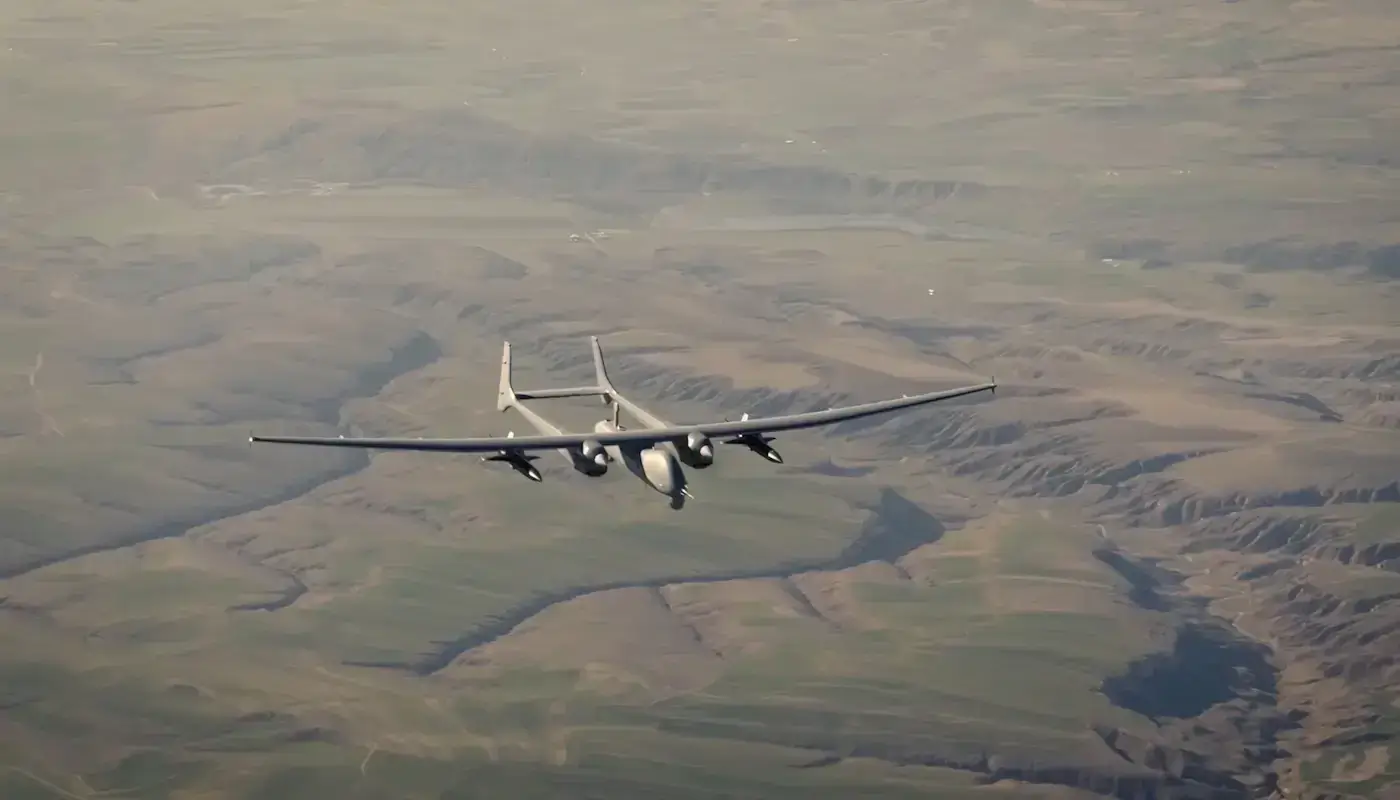
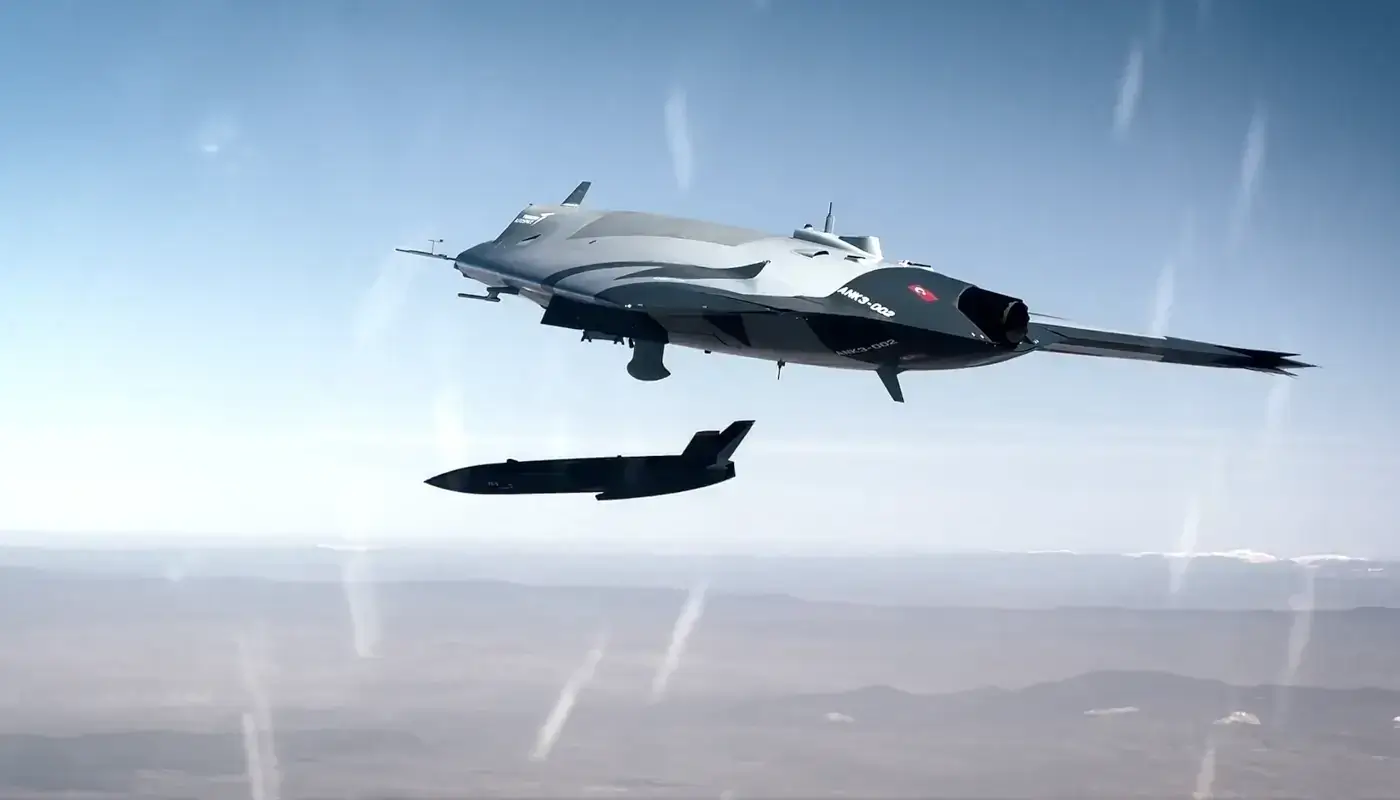
Furthermore, units can launch the vehicle from the ground using a rocket-assisted take-off (RATO) system. After the vehicles are airborne, the AI-supported swarm flight capability is activated. Thanks to swarm technology, multiple platforms communicate with each other in the air and engage multiple targets simultaneously. This coordinated attack quickly saturates and collapses the enemy's defence network.
The Asymmetric Key to Modern Warfare: Mission Diversity
TAI designed the Süper Şimşek with a modular payload architecture rather than confining it to a single mission. Users can integrate various different systems into the Süper Şimşek depending on the operation type. This makes the system a critical player at every stage of warfare.
- Kamikaze Strike: Units equip the system with a 35 kg warhead and various seeker heads. Thus, the system transforms into a devastating cruise missile that hits targets with millimetric precision in deep strikes.
- Suppression of Enemy Air Defences (SEAD/DEAD): Destroying enemy radars and missile batteries is one of the most dangerous missions for air forces. The Süper Şimşek undertakes this dangerous role completely autonomously, without risking human life.
- Target Deception and Decoy: The vehicle carries active and passive radar cross-section (RCS) augmentation systems. This technology makes the vehicle appear as a massive fighter jet on enemy radars. While enemy missiles lock onto this decoy, friendly forces can safely penetrate the target area.
- Electronic Warfare: Engineers have equipped the aerial vehicle with infrared signature augmentation (Hot Nose), electronic attack (Jammer), and electronic support measure systems. These systems blind enemy radars and paralyse communication networks.
- Training and Testing: Thanks to its parachute recovery capability, the system lands safely after performing target drone missions. Additionally, the Onboard Scoring System (MDI) measures how close training missiles come to the vehicle, providing personnel with a realistic combat experience.
A New Doctrine in Air Warfare
This new-generation high-subsonic UAV system completely transforms Türkiye's stand-off strike capability in air warfare. Sending swarms at near-sonic speeds deep into enemy territory without risking classic combat aircraft creates a unique tactical asymmetry. Equipped with encrypted digital flight data recording and Controlled Reception Pattern Antenna (CRPA) anti-jam systems, the vehicle remains resilient even in the most intense electronic warfare environments.
In the coming years, these platforms are planned to conduct joint operations with systems like the National Combat Aircraft KAAN, KIZILELMA, and ANKA III. The TAI Süper Şimşek project, with its technological innovations and modular structure, is preparing to attract significant interest in the international market. Ultimately, Türkiye is proving to the world that it is not just a country producing defence platforms, but a leading technology hub rewriting global asymmetric warfare doctrines.
