


The defense industry, which has spearheaded Türkiye's technological advancements over the last twenty years, is beginning to transfer its acquired engineering capabilities and R&D culture to civilian sectors. Baykar, which has become one of the world's leading companies in unmanned aerial vehicle (UAV) technology, is making a strategic move by entering one of the most niche areas of the energy sector: nuclear technology.
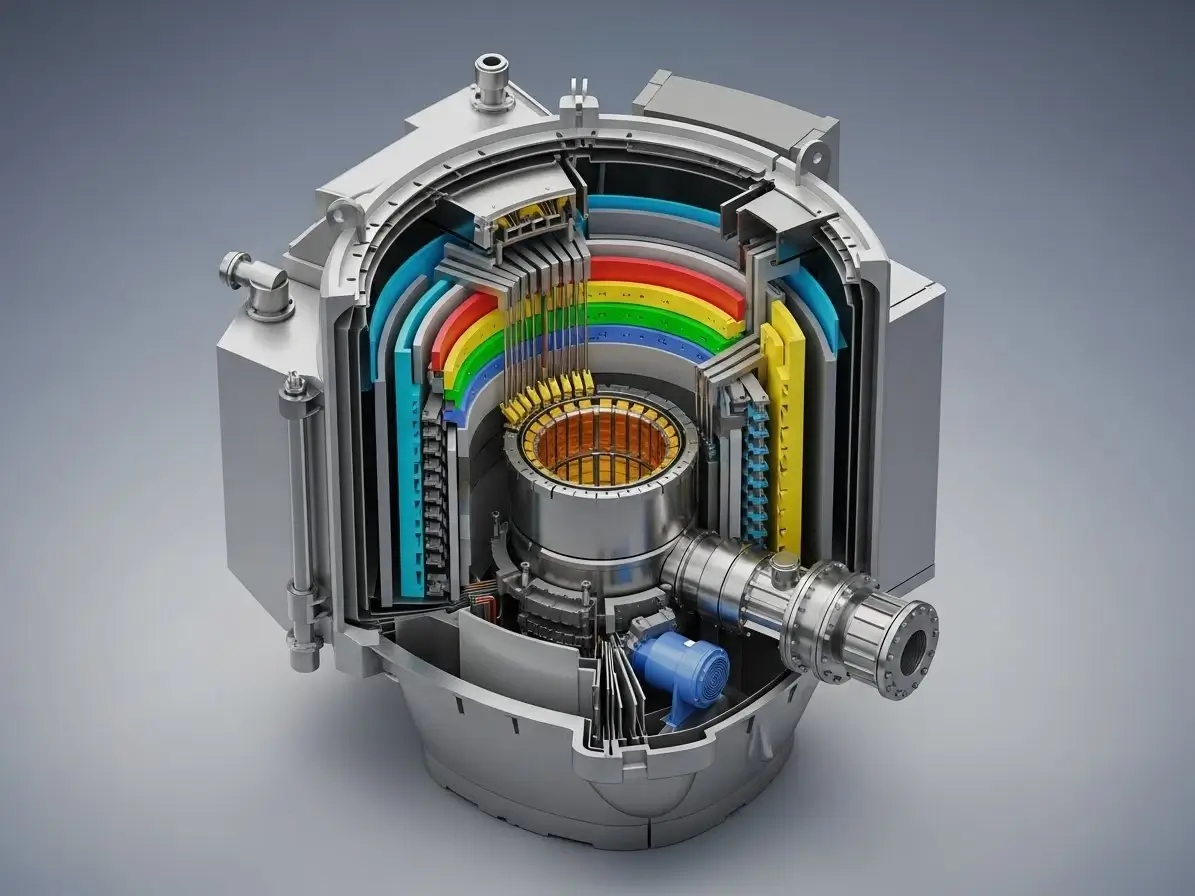
As Energy and Natural Resources Minister Alparslan Bayraktar revealed in an interview with Middle East Eye (MEE), Baykar is conducting research on Small Modular Nuclear Reactors (SMRs). This development should be interpreted not merely as an investment decision by one company, but as a harbinger of a new era in Türkiye's energy independence and technological deepening process.
Knowledge Transfer from Defense Technologies to Energy Technologies
According to a report in Middle East Eye, Energy Minister Alparslan Bayraktar highlighted the role of the private sector in Türkiye's energy transformation and carbon neutrality goals. According to Minister Bayraktar, Baykar, which has changed aviation history with platforms like the Bayraktar TB2, Akıncı, and Kızılelma, is now preparing to become a global player in the energy sector as well.
While this transition may seem surprising at first glance, an industrial analysis reveals it to be part of a highly consistent strategy. High-tech defense industry projects require in-depth expertise in disciplines such as materials science, thermodynamics, control systems, artificial intelligence, and systems engineering. Baykar's development of high-temperature resistant materials, autonomous control software, and critical system integration capabilities in the aviation sector largely overlaps with the technological infrastructure required for the development of next-generation nuclear reactors.
Baykar's entry into the SMR field demonstrates that nuclear energy in Türkiye has moved beyond being a purely state-monopoly process and is now entering a phase where it is integrated with the dynamism and innovation capabilities of the private sector. This represents the first and strongest manifestation in Türkiye of the "entrepreneurial nuclear ecosystem" model seen in Western countries (e.g., NuScale or TerraPower in the USA, Rolls-Royce in the UK).
Small Modular Reactors (SMR): The Future of Nuclear Energy
When nuclear energy is mentioned in public discourse, people usually think of massive structures like the Akkuyu Nuclear Power Plant, huge cooling towers, and multi-billion dollar projects that take decades to build. However, Baykar's focus, Small Modular Reactors (SMRs), represents a paradigm shift in nuclear energy. So, what are SMRs and why are they of strategic importance?
SMR is an abbreviation for "Small Modular Reactors" and generally describes advanced nuclear reactors with a capacity of up to 300 Megawatts (MWe) of electrical power per unit. Unlike conventional nuclear power plants, the most defining characteristic of SMRs is their "modular" nature. The components of these reactors can be manufactured in factories using mass production methods, transported to the installation site by truck or ship, and assembled on-site.
The advantages that SMR technology offers for Türkiye are as follows:
- Flexibility and Scalability: While the construction of traditional power plants requires extensive infrastructure and vast land areas, SMRs can be built on smaller sites. This allows the reactors to be located near industrial areas with high energy demand.
- Secuirty: New generation SMR designs feature “passive safety systems.” These systems can cool and shut down the reactor in the event of a potential emergency, using the laws of physics (gravity, natural circulation) without requiring human intervention or an external power source.
- Cost and Financing: Lower initial investment costs compared to massive power plants and shorter construction times make it easier for the private sector to invest in this area.
- Carbon Neutrality Target: SMRs are an ideal base load energy source for offsetting intermittent renewable energy sources such as wind and solar.
Türkiye's 2053 Vision and Energy Transformation
Minister Bayraktar's statements are directly related to Türkiye's plans to transition to a carbon-neutral economy by 2053. Turkey has identified nuclear energy as a strategic pillar to diversify its energy mix and reduce external dependence. The four reactors at Akkuyu, as well as the large-scale plants planned in Sinop and Thrace, will form Türkiye's main backbone. However, according to the plan, Türkiye aims to reach over 20 Gigawatts (GW) of nuclear capacity by 2050, with approximately 5 GW expected to come from SMRs (Sustainable Energy Reactors).
Baykar's entry into this equation strengthens Türkiye's resolve to achieve its 5 GW SMR target using domestic and national resources. Transferring the "localization rate" success achieved in the defense industry to energy technologies could enable Türkiye to rise from being merely a nuclear energy consumer to a country that also exports nuclear technology.
Key words: Baykar, SMR, nuclear energy, Alparslan Bayraktar, small modular reactors, Turkish defense industry, energy independence, domestic technology, Middle East Eye, Türkiye's energy vision
