


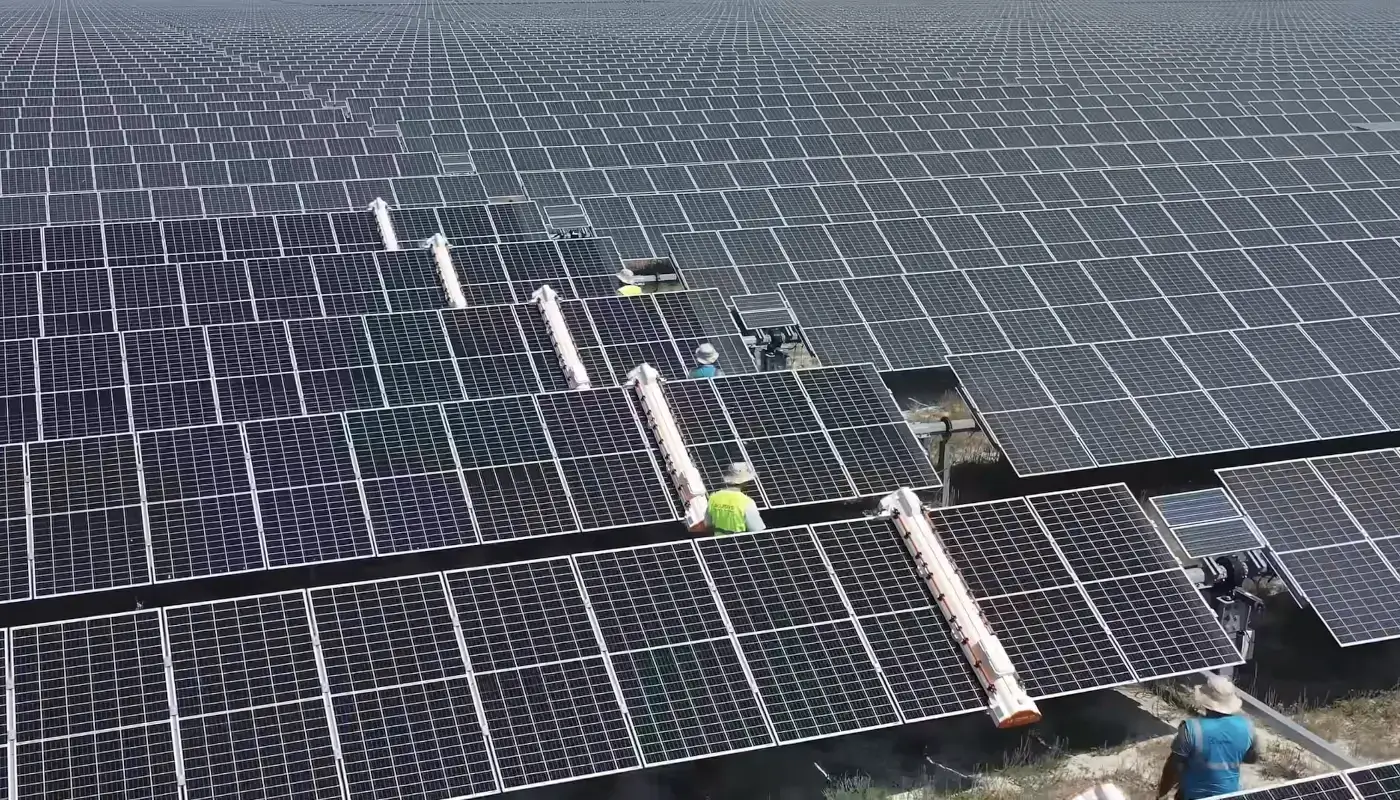
While Turkey is increasing its renewable energy installed capacity day by day, pollution remains the biggest problem threatening the efficiency of solar power plants (SPPs). Dust, pollen, and industrial waste accumulating on the panels can cause energy production losses of up to 25%. This is where Turkish engineering comes in. Robsys, a domestic technology company, is eliminating energy losses and preventing the waste of millions of tons of water with its autonomous solar panel cleaning robots, which have the precision of a space shuttle.
While solar energy is an unlimited and clean resource, the photovoltaic (PV) panels that convert this energy into electricity are highly sensitive technologies. The biggest nightmare for a solar power plant investor is the dust layer settling on the panels and blocking sunlight, known as Soiling Loss. Academic research and field data show that the return on investment (ROI) of a plant that is not regularly cleaned can be extended by years. Robsys is redefining standards in the industry by offering a domestic, high-tech solution to this global problem.
Contrary to popular belief, rainwater doesn't clean, it makes things muddy.
One of the biggest misconceptions in the industry is the belief that panels are cleaned when it rains. However, Robsys' technical analyses and independent academic studies (DergiPark, etc.) prove the exact opposite.
Dust particles, pollen, and bird droppings in the air adhere to the panel surface. When it rains, instead of being washed away, this layer combines with the water, causing mud to form on the lower parts of the panel. When it dries, it leaves permanent stains that create a shading effect on the panel. This can lead to hotspot formation and permanent damage to the panel cells by burning them. To eliminate this risk, Robsys engineers have developed autonomous systems that combine brush and air power, requiring no human intervention.
Robsys Technology: The Space Shuttle of Solar Power Plants
Robsys' robots are being likened to the Space Shuttle of solar power plants in the industry due to their speed and technological infrastructure. So, what are the features that distinguish these robots from traditional cleaning methods (tractor-based washing or manual brushing)?
- Speed and Lightness: Robsys robots are designed to scan massive areas (MW-scale sites) at solar power plants in the shortest possible time. Their lightweight aluminum alloy bodies and special track structures allow them to move gliding smoothly without adding extra load to the panels.
- Autonomous Navigation: Autonomous driving capability, which minimizes operator error, enables the robot to find its own path along the panel array, detect obstacles, and complete the cleaning to a standard level of quality.
- Waterless and Hybrid Cleaning: Water is more valuable than gold, especially for solar power plants in arid regions. Robsys has developed special microfiber brushes and vacuum systems that enable waterless cleaning. This prevents the waste of tons of water and also prevents stains that hard water would leave on the panels.
2000 Cycle Tests: Zero Damage to Panels
The biggest concern for solar power investors transitioning to autonomous robots is whether cleaning robots will scratch the panels. Robsys has eliminated this concern with a rigorous, internationally valid test.
The company ran its newly developed cleaning robot continuously on the panel surface for a full 2,000 cycles. This was a simulation equivalent to the number of cleanings a panel would undergo over its approximately 20-year lifespan. The test results showed no microscopic wear (deformation) on the anti-reflective coating or glass surface of the panels. This achievement proves that Robsys prioritizes not only cleaning but also asset management and preserving panel lifespan.
Economic Impact: Up to 15% Increase in Productivity
The profitability of a solar power plant depends on each kilowatt-hour it produces. Measurements taken at sites where Robsys robots are regularly used show that pollution-related losses are completely eliminated, and total production increases by 10 to 15 percent.
Örneğin, 10 MW kurulu güce sahip bir santralde %10’luk bir verim artışı, yıllık bazda milyonlarca liralık ek gelir demektir. Robot kendini kısa sürede amorti ederken, santralin ekonomik ömrünü de uzatıyor.
The Largest in Europe is Entrusted to Them: The Karapınar Solar Power Plant Signature
Robsys's technology has been proven not only by laboratory tests but also by its massive success in the field. Kalyon Karapınar Solar Power Plant, the largest solar power plant built on a single plot in Türkiye and Europe, chose Turkish engineering for its cleaning operations.
Located in Konya's challenging climate and desertified landscape, this massive facility, housing over 3.5 million panels, is a testament to the brand's operational capabilities, with Robsys robots actively participating. Entrusting Robsys with the cleaning of such a strategically important facility, visible even from space, demonstrates the industrial-scale durability and reliability of domestically produced robots to the global stage.
The Power of Domestic Production and Export Vision
Türkiye's goal of energy independence depends not only on producing energy, but also on possessing the technologies to produce it. Robsys, with its products developed using domestic engineering power from software to mechanical design, ensures that Türkiye's foreign currency remains within the country.
Unlike imported robots, which face high maintenance costs and spare parts issues, Robsys, as a domestic manufacturer, offers fast technical service and parts supply. Furthermore, by exporting its experience gained in Türkiye to the Middle East and North Africa (MENA) region, where solar energy investments are concentrated, the company is progressing towards becoming a significant player in technology exports.
The Future of Energy Lies in Autonomy
As the solar energy sector grows, operation and maintenance (O&M) processes are becoming more complex. Manual cleaning is no longer sustainable on massive sites. Robsys is bringing solar power plants up to Industry 4.0 standards with its autonomous solutions.
For investors, the question is no longer "Should I clean up?", but "With what technology should I do it?". Robsys stands out as the domestic and national answer to this question with its 2000-cycle durability test, water-saving environmentally friendly structure, and efficiency-enhancing engineering.
