


Technological bridges between Türkiye and Malaysia are being strengthened with a critical R&D project that will shape the future of the space and aerospace industry. The results of the "2567 Bilateral Cooperation" call, announced by TÜBİTAK and the Malaysian Industry-Government Group for High Technology (MIGHT), have been revealed by TÜBİTAK. One of the four projects deemed eligible for support is preparing to break new ground in aviation. Gazi University and MetalWorm Additive Manufacturing Technologies, together with their Malaysian partners UTM and G7 Aerospace, will develop machine learning-assisted (AI) multi-materials for aircraft and spacecraft.
Traditional manufacturing methods are increasingly struggling to meet the demands for ultra-lightweight yet high-strength parts required by the modern aviation and space industry. Aiming to overcome this bottleneck, TÜBİTAK and Malaysia's MIGHT have joined forces to invest in strategic technologies. The most attention-grabbing study within the announced support programme is the advanced materials project to be led by Prof. Dr. Rahmi Ünal (Gazi University), Nevzat Bol (MetalWorm), Prof. Dr. Mohd Hasbullah Idris (UTM), and Izhar Harun (G7 Aerospace). This major project brings together three-dimensional (3D) metal printers and machine learning in the production of aviation parts.
Additive Manufacturing and FGM
At the heart of the project lies the concept of "Functionally Graded Multi-Materials" (FGM). Traditional metal parts exhibit the same physical properties at every point. However, when a rocket engine or aircraft turbine operates, one end of a part must withstand extreme heat while the other end must endure high pressure. FGM technology offers different capabilities within a single part by altering the material's chemical composition on a millimetric scale.
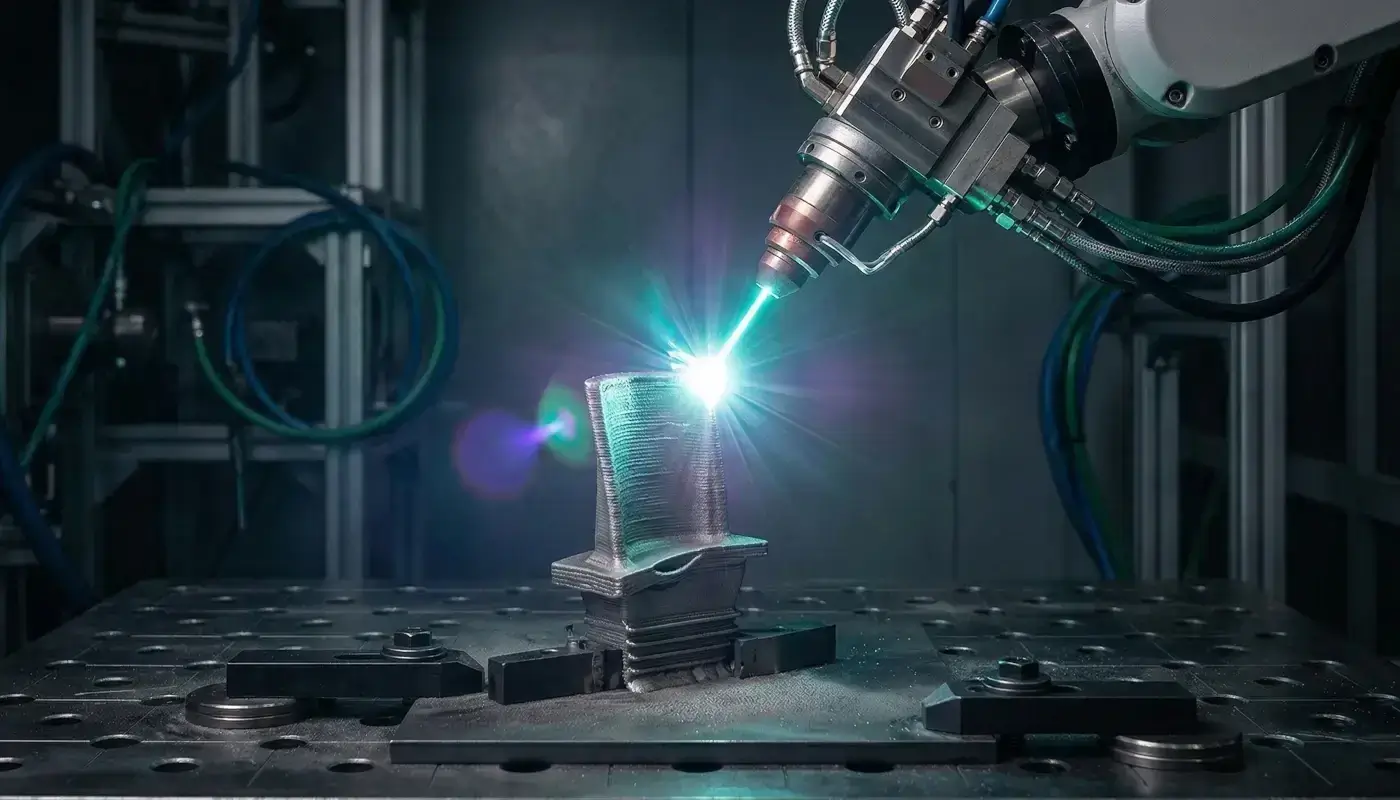
The teams will use innovative 3D metal printer technologies such as Wire Arc Additive Manufacturing (WAAM) to create this complex structure. This method allows different alloys to be layered on top of each other to achieve the desired shape and strength. Furthermore, machine learning algorithms integrated into the project will predict thermal stresses and potential cracks during production. Thus, artificial intelligence will provide real-time commands to the machine to produce the metal in its most flawless form.
Powerful Players in the Field
Behind this international consortium lie very strong academic and industrial foundations. The industrial partner on the Turkish side of the project, MetalWorm, plays a pioneering role in Türkiye's domestic and national additive manufacturing capacity. The company rapidly produces critical titanium and aluminium parts for the defence industry using its industrial-scale robotic 3D metal printers.
On the other hand, G7 Aerospace on the Malaysian side of the project stands out as one of the region's most competent aviation companies. G7 Aerospace possesses deep experience in avionics systems, aircraft maintenance, repair and overhaul (MRO) activities, and engineering integration. The theoretical materials science expertise of Gazi University and the University of Technology Malaysia (UTM) combines with the practical industrial strength of these two companies. Consequently, a tangible technology emerges that can be directly transferred to mass production.
Costs Decrease, Strength Increases
The successful completion of this project holds the potential to prevent billions of dollars in imports for both the Turkish and Malaysian aviation ecosystems. With the AI-supported production model to be developed, critical engine parts used in fighter jets or satellites will become much lighter, more flexible, and more heat-resistant.
Furthermore, the new method will eliminate tooling costs in part production, reducing prototype development processes from months to days. National platforms such as KAAN, HÜRJET, and KIZILELMA, as well as Malaysia's regional air power needs, will directly benefit from these new-generation materials. Consequently, in line with the "National Technology Move" vision, Türkiye is transforming into a global power that not only produces aircraft platforms but also exports the advanced materials science that forms the fundamental components of those aircraft.
