


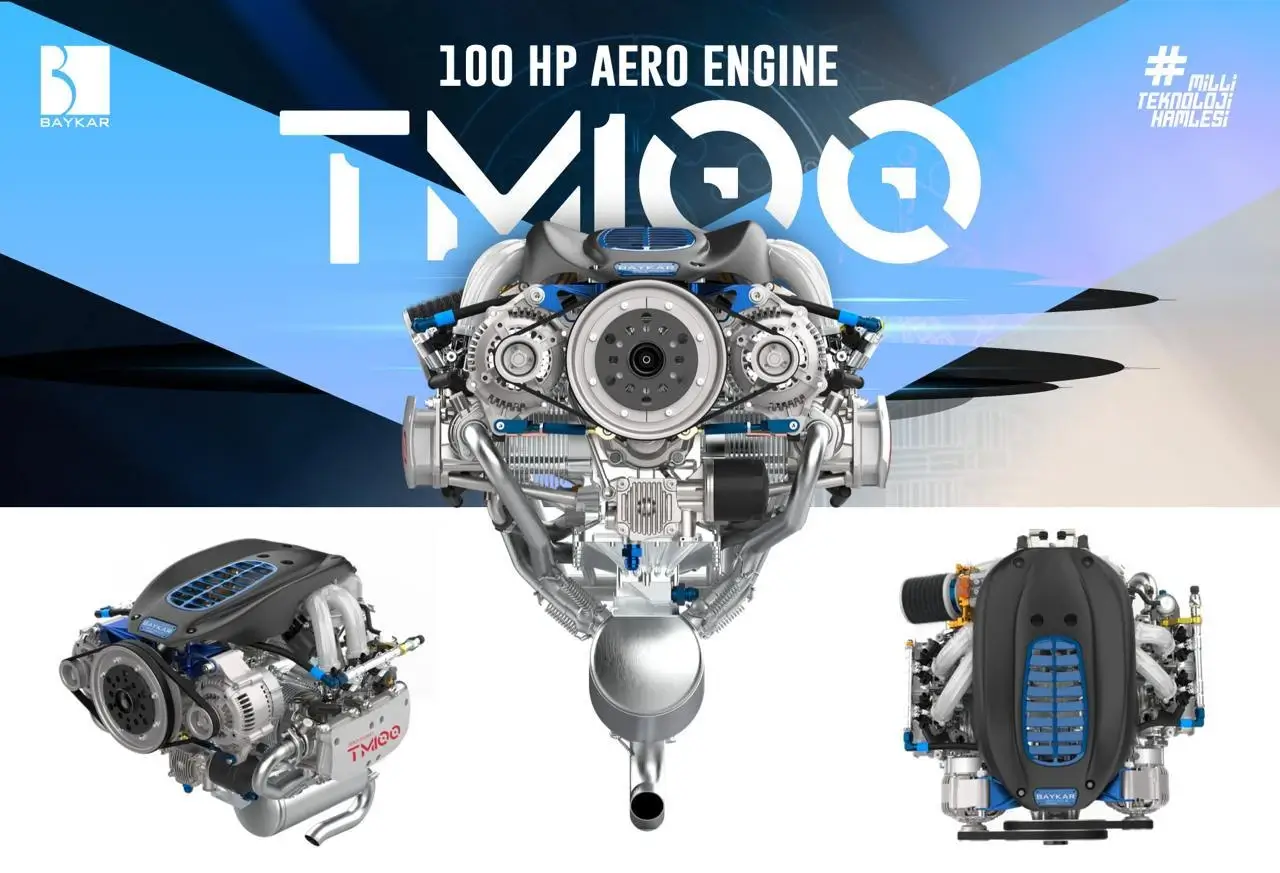
Baykar Teknoloji, the shining star of the Turkish defence industry, has successfully completed a critical step for the globally renowned Bayraktar TB2 UCAVs. As announced by Haluk Bayraktar, CEO of Baykar Teknoloji, the long-awaited domestic engine development work has come to fruition, and the national engine, named TM100, has successfully passed its first flight tests. This development is a historic milestone not only for Bayraktar TB2, but also for Turkey's goal of full independence in the defence industry.
Bayraktar TB2: A Success Story and Engine Debates
Bayraktar TB2 is undoubtedly one of the most talked about military platforms of recent years. This Tactical Class Armed Unmanned Aerial Vehicle (UCAV), which has been developed largely with national resources, from its airframe to its electronic-avionics systems, from its flight control computer to all of its software, has made a name for itself all over the world, especially with its superior performance in conflict zones in Syria, Libya, Karabakh and Ukraine. As Haluk Bayraktar stated, it has become “by far the most ordered tactical class UCAV system in its class in the world, and the one that has entered the mass production phase with the highest number of units”.
In addition to this dazzling success, one of the most frequently raised issues about the TB2 was that its engine was not indigenous. In Bayraktar TB2s, a proven and widely used internal combustion piston engine was preferred. However, this situation was criticised from time to time by various circles. Referring to these criticisms and perception operations, Haluk Bayraktar said, ’At the time, many perception operations were tried to be carried out by saying “well, but the engine is not domestic‘. However, for a UCAV in this class, the engine was not one of the most critical components that determine mission success. For this reason, we initially focused on more strategic areas.’.
Indeed, the success of a UCAV system depends on the harmonious functioning of many critical components such as aerodynamic design, avionics, sensor technologies, communication capability, software and ammunition integration. Baykar initially focused on these areas, aiming to maximise the TB2’s operational capabilities. Bayraktar also emphasised that it was not economically feasible to develop an engine from scratch, given the production numbers in the early years of the project: “In addition, it was not economically feasible to develop a domestic engine, given the production numbers at that time. Therefore, it was not our priority.”
Strategic Change: Why Domestic Engine?
However, Bayraktar TB2’s victories in the field and its transformation into a worldwide phenomenon have changed the situation. Increasing production numbers, the expanding export market and the strategic importance of the platform have made the development of a domestic engine no longer a choice, but a necessity. Haluk Bayraktar explained this change by saying, “Following this success, developing a domestic engine with higher performance has become a necessity in terms of supply chain security.”.
Dependence on engines of foreign origin always brings risks such as potential supply problems, embargoes or export restrictions. Especially in a strategic area such as the defence industry, minimising foreign dependence on critical components is vital for the country's freedom of movement and national security. The global success of the Bayraktar TB2 has made these risks more apparent and pushed Baykar to take action on the indigenous engine.
TM100 Engine Development Process: National Cooperation and Self-Sourcing
In line with this strategic need, Baykar started engine development activities using its own resources. The project was led by the Engine Development Team established within Baykar. However, this was not an effort carried out by Baykar alone. A total of 40 different national companies that are members of SAHA Istanbul (Defence, Aerospace and Space Cluster Association), which operates under the coordination of the Presidency of Defence Industries (SSB) with a clustering model, also supported this important project.
Underlining this national cooperation, Haluk Bayraktar said, “In line with this need, we have started the design and R&D activities of the TM100 engine under the leadership of the Baykar Engine Development Team with the support of 40 different national companies from all over Anatolia, which are members of @Sahaistanbul, and entirely with @BaykarTech's own resources.”.
In this process, specialised companies in different cities across Turkey have contributed to the realisation of the TM100 engine by demonstrating their own capabilities. Bayraktar especially mentioned some of these companies and expressed his gratitude:
- Parsan: Crankshaft forging operations
- Limousine: Gear production
- Estas: Camshaft production
- Hook: Connecting rod production
- Ozgayd: Cylinder block casting
The expertise and efforts of these companies and the other 35 companies involved in the project played a key role in the successful development of the TM100. This situation also demonstrates the level of competence reached by the Turkish defence industry ecosystem and its ability to cooperate in national projects.
Technical Specifications and Advantages of TM100 Engine
The TM100 engine, which emerged as a result of intensive R&D work, is not only indigenous, but also stands out with its advanced technology features. Haluk Bayraktar listed the prominent features of the TM100 aviation engine, which is designed to reach 100 horsepower (100HP), as follows “With its prominent features such as three redundant engine control units, modular power packs and advanced thermal management, the TM100 is the most advanced aviation engine in its class.”
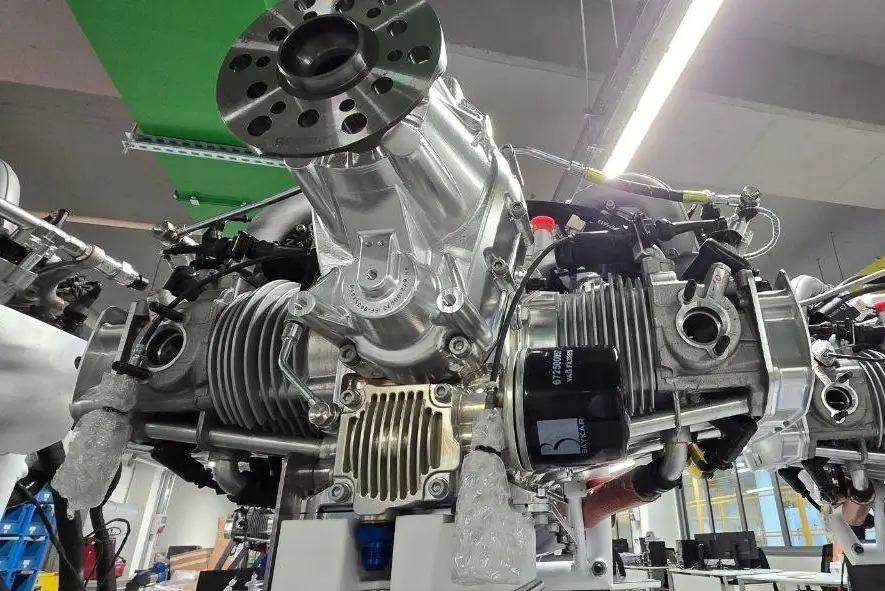
What do these features mean?
- 3 Redundant Motor Control Units: The triple redundancy of the control unit, which can be considered as the brain of the engine, maximises the safety level, which is of critical importance in aviation. In the event of any malfunction, the activation of other units ensures that the engine, and therefore the aircraft, continues its mission or returns safely to the base. This is a vital advantage, especially considering that UCAVs are used in long-term and critical missions.
- Modular Power Groups: The modular design of the engine's main components facilitates maintenance, repair and logistics processes. The ability to quickly replace a faulty module increases the operational life of the UCAV and reduces maintenance costs. At the same time, it provides flexibility for potential future developments or integration into different platforms.
- Advanced Thermal Management: Effective control of engine operating temperature is critical for efficiency and durability in aviation engines. The advanced thermal management system in the TM100 ensures that the engine operates at optimum performance at different altitude and environmental conditions, prevents overheating, extends engine life and increases reliability.
These features make the TM100 not only a substitute for existing imported engines, but also a potential power source that can further improve the performance and reliability of Bayraktar TB2.
Successful Tests and the Future
Haluk Bayraktar's statement, “We have successfully completed our first flight tests,” indicates that one of the most critical stages of the project has been successfully passed. Following the ground tests, the engine was integrated into the Bayraktar TB2 platform and tested under real flight conditions, and the positive results obtained mean that the TM100 is one step closer to mass production and operational use.
In the following period, detailed tests of the engine in different flight profiles and harsh conditions are expected to continue, certification processes are expected to be completed and mass production is expected to begin. With the standardisation of the TM100 engine in Bayraktar TB2s, Turkey's foreign dependence in this field will be completely eliminated.
Strategic Importance and Impacts of TM100
The development of the TM100 engine is of strategic importance in many respects:
- Complete Independence and Security of Supply: The indigenisation of the engine, one of the most critical components, ensures full independence in Bayraktar TB2 production and operations. The risk of possible embargoes or supply chain disruptions is eliminated.
- National Technology Competence: This success proves Turkey's competence in designing, developing and manufacturing complex aviation engines. This know-how will also form the basis for future larger and more advanced engine projects.
- Increasing Export Potential: The transformation of Bayraktar TB2 into a fully indigenous platform will further strengthen Turkey's hand in export markets. The possibility of some countries avoiding purchases or imposing restrictions due to the presence of foreign-origin components in critical subsystems will be eliminated.
- Economic Contribution: The domestic production of the engine and its sub-components will create a business volume for many companies in the defence industry ecosystem, increase employment and ensure that the foreign currency paid abroad remains in the country.
- Potential for Performance Improvement: The development of TM100 as a ’higher performance“ engine has the potential to improve Bayraktar TB2”s operational capabilities such as payload, flight time, altitude or speed.
- National Pride and Motivation: The development of such a critical technology with the labour of Turkish engineers and workers is a source of great pride and motivation throughout the country.
Native Heart for Native Wings
Baykar's successful development and testing of the TM100 engine is the product of a determination and national cooperation that can be summarised with the words “We believed, we worked together, we succeeded...”. It is the best answer given with technology and engineering to a subject that has been the subject of years of criticism and “the stuff of caricatures”. The fact that the heart of the national UCAV, which has become a global symbol like Bayraktar TB2, will now beat locally reinforces Turkey's claim in the defence industry and its march towards independence.
As Haluk Bayraktar stated, this success is a shared pride that belongs not only to Baykar, but also to all suppliers, engineers, technicians and workers who contributed to the project. With the TM100 engine powering domestic and national platforms in the sky, Turkey is entering a new era in the field of defence and aerospace.
Haluk Bayraktar concluded this historic development with the following words: “I would like to take this opportunity to express my sincere gratitude to all our supplier companies, especially Parsan (Crank forging), Limöz (Gears), Estaş (Camshaft), Kanca (Connecting rod), Özgayd (Cylinder block casting), and all our suppliers and their employees who contributed to this important project. May it be auspicious and auspicious for our homeland and nation.”
Key words: Baykar Teknoloji has successfully completed the first flight tests of the TM100 engine, developed entirely with domestic facilities for Bayraktar TB2 UCAVs. With this historic development, engine dependency in the TB2 is coming to an end and the national defence industry is crossing another critical threshold. Details and importance of the TM100 engine.
