


While millions of tons of textile waste are disposed of annually worldwide, harming the environment, the Turkish startup Biges Kompozit is transforming this problem into a revolutionary business model. Founding Partner Beyza Aslan announced that they are converting textile waste into high-performance composite materials for the automotive and construction industries using their patented production line. Having collaborated with Toyota and received an award in Japan, the startup is targeting the global market with its "From Disposal to Raw Material" vision.
Globally, approximately 92 million tons of textile waste are generated annually, and 67 million tons of this waste is disposed of by burning or burying without any recycling method. This leads to both significant carbon emissions and economic losses. Biges Kompozit, established with KOSGEB R&D Innovation support and viewing "waste not as a problem but as a resource," is recovering this waste for the economy through its domestically developed and patented recipe technology.


Three Different Strategic Products in a Single Process
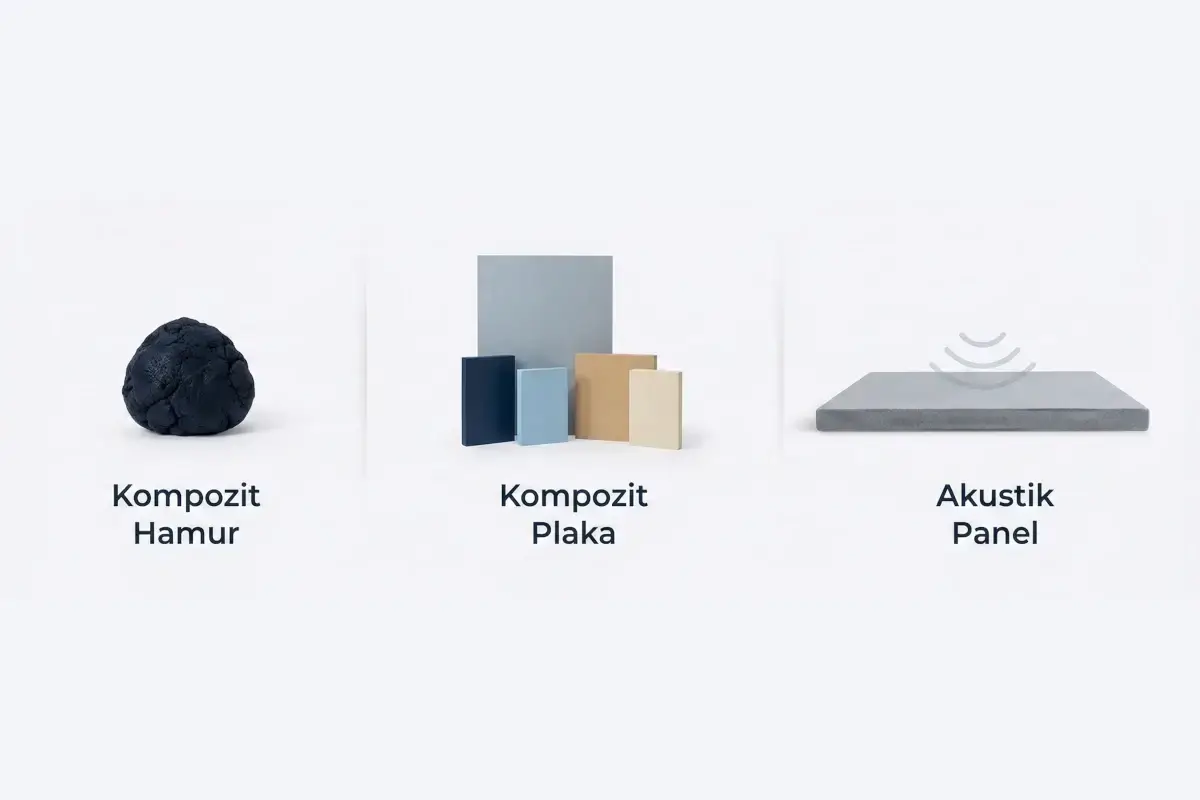
Biges Kompozit's technology reduces complex recycling processes to a single line using the "Grind, Mix, and Press" principle. The company processes textile waste from the automotive industry in its own facilities, obtaining three main product groups:
- Composite Pulp (BMC): Offered as a ready-to-use semi-finished product for companies using hot press molding, this product is used in the automotive, white goods, and construction industries. Its low cost and sustainability provide a solution to the raw material problem for manufacturers.
- Composite Rigid Plates: This product, which recycles 2.5 kilograms of textile waste per square meter, is used in the ceilings, floors, and side panels of buses and caravans. It is also preferred in the construction and furniture industries due to its durable structure.
- Acoustic Panels: Tested in the field and providing an average sound insulation of 10 decibels, these panels are used in industrial facilities and for vehicle interior insulation.
Girişimin en büyük rekabet avantajı, %70’e varan geri dönüştürülmüş içerik sunması ve hem hammadde (hamur) hem de nihai ürün (plaka/panel) üretebilen çift yönlü iş modeline sahip olması.
Toyota Confirms Success: They Returned from Japan with an Award
Despite being in its early stages, Biges Kompozit has signed a strategic partnership with automotive giant Toyota. The startup, which is included in Toyota's quality circles, first achieved second place in Europe, and then second place in the world finals in Japan, proving its technology on the international stage.
Beyza Aslan stated that they initially sold 500 square meters of products to Toyota, and as a result of customer satisfaction, they proceeded with Toyota's Düzce and Sakarya factories. 15,000 square meters of pre-orders They announced the acquisitions. With this reference, the company, which made a strong entry into the market, plans to increase its production to 50,000 to 100,000 square meters in the short term.
A "Local" Signature in a €100 Billion Market
Aslan stated that the market volume for composite materials and acoustic panels in Türkiye, Europe, and the world exceeds 100 billion Euros, and emphasized that they are a pioneering company in this huge market that produces using waste-based and single-process methods.
Aralık 2024’te kurulan ve sadece iki ay sonra ilk faturasını kesen girişim, patent süreçlerini Nisan ayında başlattı. Şubat ayı itibarıyla kendi üretim tesisini tam kapasiteyle kurmayı hedefleyen Biges Kompozit, 450.000 Euro’luk yatırım turuna çıktı. Alınacak yatırımın %55’i tesis kurulumuna, geri kalanı ise Ar-Ge ve operasyonel iyileştirmelere harcanacak.
Managed by Setenay Gökçe Sultan Gül (Design and Product Development), Beyza Aslan (Production Planning), and Gizem Şermet (R&D and Sustainability), the company receives consultancy from experienced industry figures such as Feyyaz Ünal and Mehmet Onur Topçu. Biges Kompozit is preparing to close the raw material gap in the automotive sub-industry, white goods, and construction sectors with domestic and environmentally friendly solutions.
