


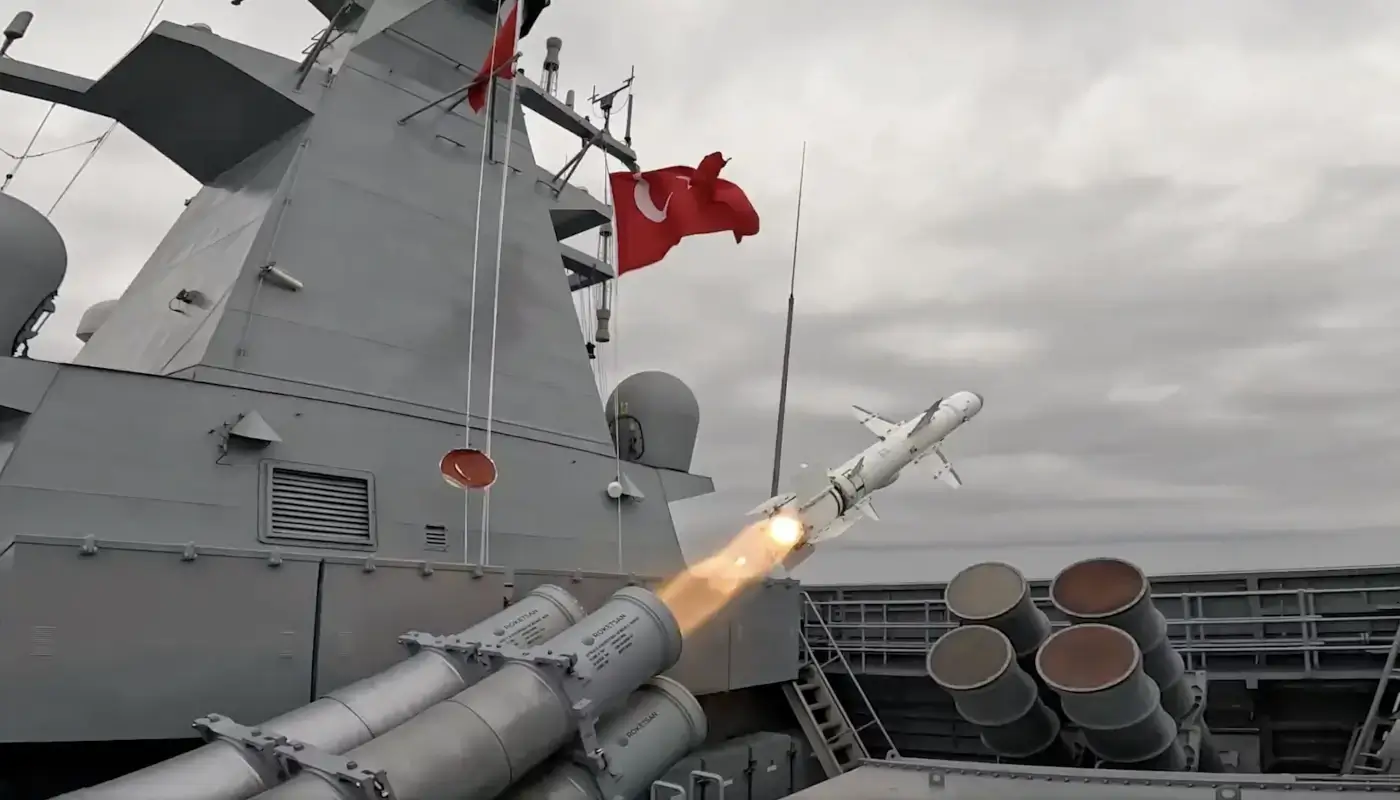
The Turkish defence industry has taken the striking power of naval forces to a strategic level. The ATMACA cruise missile, developed by ROKETSAN engineers, was launched from the TCG Burgazada corvette and precisely struck a land coordinate. Prof. Dr. Haluk Görgün, President of the Presidency of Defence Industries, announced this historic test to his followers via his official social media accounts. This firing proved that the missile can target not only enemy ships but also strategic land installations. Furthermore, the newly integrated national data link system gave the missile the ability to change its target in flight. The Turkish navy has gained an asymmetric power capable of conducting deep strikes from sea to land.
National Data Link and In-Flight Target Update
In modern naval warfare, targets constantly change position. Therefore, using a missile with a simple "fire-and-forget" logic does not provide sufficient tactical advantage under today's conditions. ROKETSAN overcame this major operational obstacle by integrating a national tactical data link into the ATMACA missile.
This critical infrastructure is based on the KEMENT Tactical Data Link project, developed with domestic resources by Meteksan Defence. The KEMENT system establishes a high-speed, encrypted communication network between platforms over the UHF band that is highly resistant to electronic jamming. This hardware provides the missile with Network-Enabled Weapon capability.
Even after launch, the missile remains in constant communication with the warship, airborne UAVs, or early warning aircraft (AWACS). If the target moves, a wrong target is selected, or a more urgent threat emerges on the field, operators can instantly update the missile's course in flight or abort the mission. In dynamic operational environments, this technology provides our military with immense flexibility and technological superiority.
Transition from Anti-Ship Missile to Multi-Role Striking Power
The Presidency of Defence Industries initiated the ATMACA project years ago to replace the American-origin Harpoon missiles in the Turkish navy. The missile's primary purpose was to destroy enemy warships by approaching stealthily using sea-skimming flight. However, rapidly evolving warfare doctrines have made it necessary for naval platforms to exert a powerful effect on land as well.
The recent test clearly demonstrates the significant evolution in the missile's guidance and navigation algorithms. For an anti-ship missile to hit a land target, it must deviate from its flat sea route. The missile must recognise the rugged terrain on land and overcome obstacles. It is understood that ATMACA successfully completed this challenging navigation task. Consequently, this situation documents that the missile has now gained the identity of a multi-role cruise missile. While meeting the needs of our own navy, ATMACA's anti-ship versions have also been successfully exported to Southeast Asian countries such as Indonesia and Malaysia.
Anatomy of ATMACA: 250+ KM Range and the MİDLAS Goal
ATMACA's physical and operational capabilities make it one of the most dangerous anti-ship and cruise missiles in its class. The system carries a high-explosive, fragmentation, and semi-armour-piercing warhead weighing approximately 220 kilograms in its nose section. This warhead is designed to penetrate the thick steel hulls of modern warships and create a massive detonation inside.
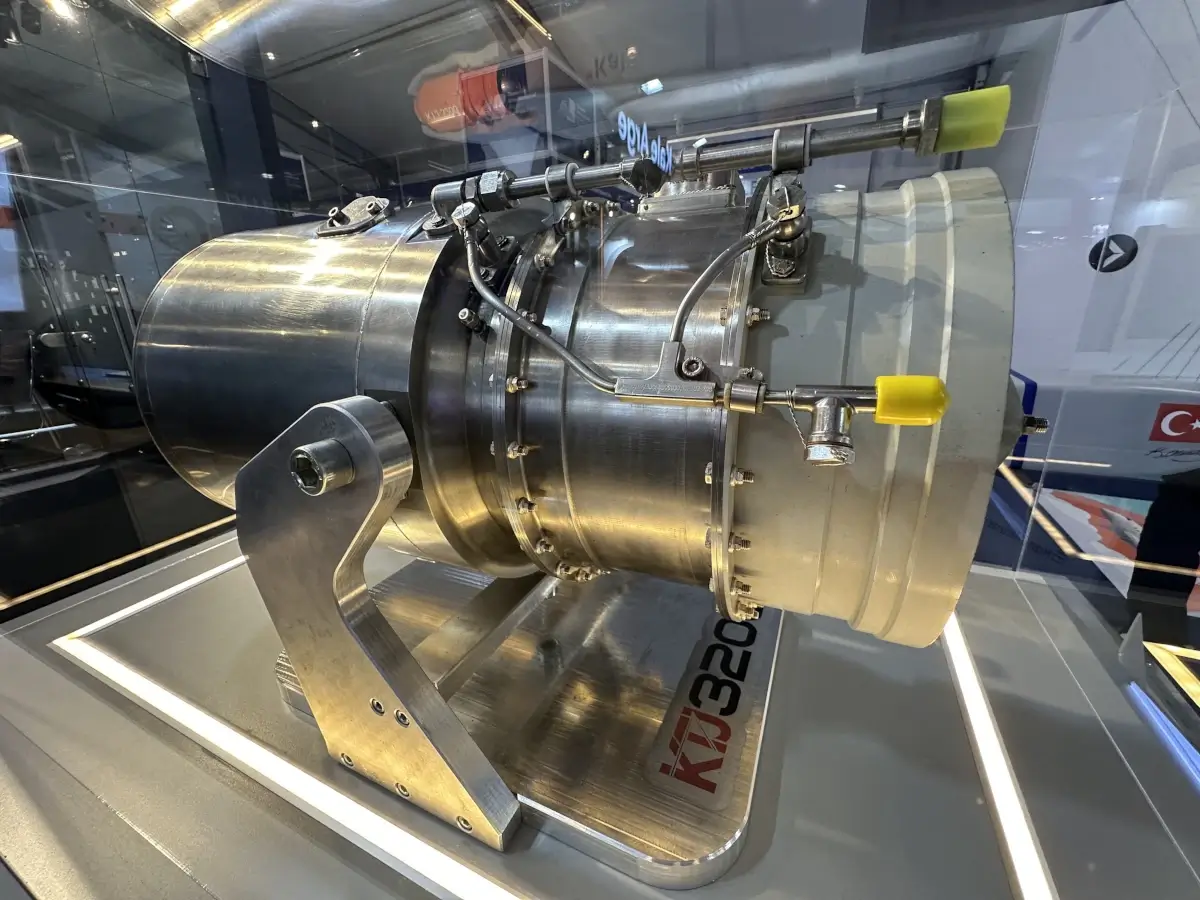
The missile derives its flight power from the KTJ-3200 turbojet engine, produced entirely with domestic resources by Kale Arge. Thanks to this engine, ATMACA achieves an operational range exceeding 250 kilometres while flying at high subsonic speeds (Mach 0.85).
Meanwhile, ROKETSAN engineers are rapidly diversifying the missile's launch platforms. Work is ongoing to enable ATMACA, currently launched from inclined canister launchers on warships, to be launched from vertical silos. ROKETSAN is directly integrating the missile into the MİDLAS (National Vertical Launch System / VLS) platform. When this integration is complete, İstif-class frigates (TCG İstanbul) and future TF-2000 air defence destroyers will be able to launch the missiles from vertical silos below the deck at a 360-degree angle.
The Navy's Arm Reaching Land
This multi-dimensional reach from sea to land completely transforms the strategic depth of the Turkish Naval Forces. In the past, striking a land-based radar site or port usually required combat aircraft. Now, our MİLGEM-class corvettes (such as TCG Burgazada) or frigates possess the capability to conduct precision strikes deep into enemy territory without approaching the coast.
This success once again certifies the Turkish defence industry's capability for inter-platform integration. The submarine and coastal defence battery (Barbaros) variants of ATMACA are also planned to be brought into full operation. Thus, Türkiye continues to build a global and unstoppable deterrent shield that extends beyond the borders of the Blue Homeland.
