


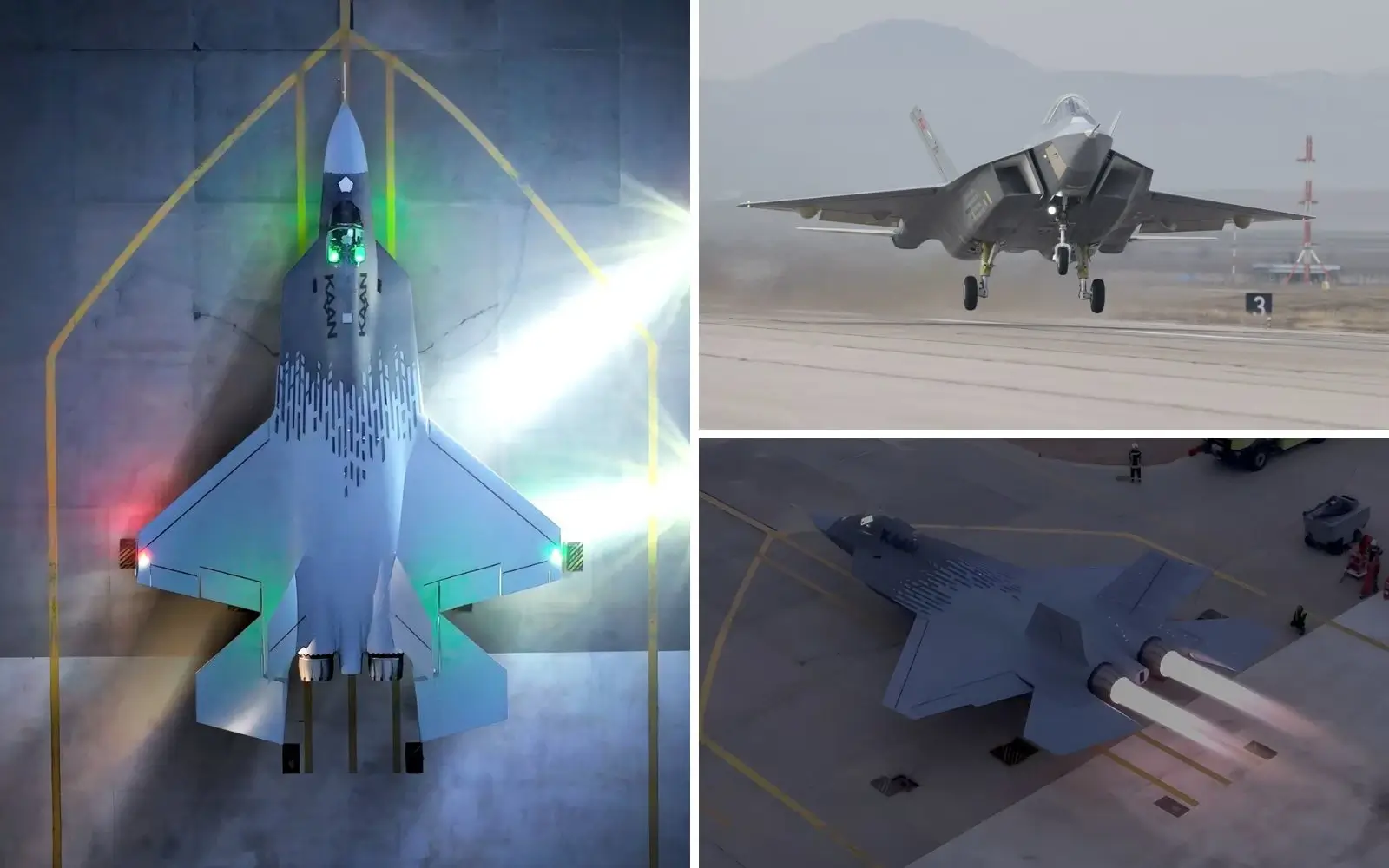
Türkiye and South Korea are frequently making headlines on the global aviation stage with their domestically developed next-generation jet fighter projects. On one side is the Turkish Aerospace Industries (TUSAŞ) company. KAAN, on the other hand, developed by Korea Aerospace Industries (KAI) KF-21 Boramae. Both are historical sources of pride for their countries and technological breakthroughs. However, an in-depth comparison made by a technology analyst with the username “TR_tech” on social media reveals the other side of the coin, namely the two projects. "national technological independence" And “philosophy of localism” This analysis, based on data shared by the TR_tech account, reveals the enormous difference between the two projects. It demonstrates why the KAAN project is much more than just producing an aircraft.
Two Different Philosophies: Why Are Not All Projects the Same, Even If They Are "National"?
Both KAAN and KF-21 are projects that represent the engineering prowess of their respective countries. However, the "domestic content" of a project is not simply about producing a few parts domestically. What is truly critical is how many of the most strategic components, considered the brain, heart, and vital organs of the aircraft, are developed using national resources. It is at this point that Türkiye's contribution to the KAAN project becomes crucial. “complete independence" with the goal of increasing South Korea's KF-21 capacity. “pragmatic and based on international cooperation” The difference between their approaches is becoming apparent.
Strategic Distinction Regarding the Engine
The most critical and challenging technology in a fighter jet is undoubtedly its engine. This component also carries the greatest potential for pressure and embargoes in the international arena.
- KAAN's Roadmap: KAAN, in its initial prototypes and first series production blocks, uses components manufactured by the American General Electric, a proven brand familiar from F-16s. F110 engines It uses it. However, this is just one of many things for Türkiye. "bridge solution". Simultaneously, TUSAŞ Power Systems (TEI), together with TRMotor and other partners, will power KAAN. to develop a completely domestic engine A massive investment and human resource mobilization is underway. The goal is to replace the cores of the KAAN drones in the inventory with domestically produced engines as soon as possible.
- KF-21's Choice: South Korea's KF-21 aircraft is also manufactured by American General Electric. F414 engines However, unlike the KAAN project, there is no publicly announced progress of this scale and determination for the KF-21. “There is no "national engine development program". This means the KF-21 will remain dependent on American engines for its entire lifespan.
While Türkiye has chosen the most challenging path, aiming for complete independence in engine technology, South Korea appears to have accepted a strategic dependency in this field.
Radar, Differences Revealed in Sensors
The greatest strength of a new generation fighter jet is its ability to detect the enemy from very long distances without being detected. Although at first glance both aircraft appear to have domestically produced AESA radars, a deeper look at the project reveals KAAN's unique domestic production philosophy.
- KAAN's 100% Domestic National Eye: KAAN demonstrates a complete national ecosystem success in this field. On the nose of the aircraft... ASELSAN cutting-edge technology developed by MURAD AESA Radar This radar is a product of decades of accumulated experience and entirely national engineering power, like the ÖZGÜR project developed for F-16s. It also enables the aircraft to be a "silent fighter". Infrared Search and Tracking (IRST) system (ASELSAN TOYGUN) All critical sensors, such as these, are also being developed using national resources.
- KF-21's Assisted National Radar: KF-21 Hanwha Systems They possess a domestically developed AESA radar, which is a great achievement. However, behind the scenes, there were serious issues in the development and testing processes of this radar. international support It appears to have been received. Israeli Elta Systems In prototype hardware and flight tests, Swedish Saab in software development, South African Paramount Aerospace He also provided support for the project during flight tests. In addition, the aircraft The IRST system was also developed by the Italian Leonardo da Vinci. It is supplied by the company.
While South Korea does not hesitate to seek foreign technology and testing support to accelerate projects, even in critical technologies like radar; Turkey, with ASELSAN, has overcome this challenging process entirely with its own national resources, creating a fully independent solution.
From Ejection Seat to Canopy: The Importance of National Touches
The domestic production of a fighter jet is evident not only in large systems but also in smaller, vital components.
- Ejection Seat: KAAN even develops the ejection seat, which saves the pilot's life in emergency situations, domestically. KF-21, on the other hand, uses this critical system from the world-renowned British manufacturer. Martin-Baker‘'He is dependent on it.
- Canopy (Cockpit Window): While the canopy of the KAAN, which protects the pilot and determines the field of vision, was developed and manufactured by a local company, the canopy of the KF-21 is British. Textstars It is supplied by the company.
- Flight Control System: While KAAN's "fly-by-wire" flight control computer and actuators are developed by domestic companies, KF-21 largely works with foreign suppliers in this area as well.
Mission Computers and National Munitions
Both aircraft possess strong national capabilities in mission computers and avionics architecture. KAAN, ASELSAN‘It offers a fully integrated structure with the central mission computer developed by [company name]. In terms of ammunition, Türkiye utilizes the systems developed by TÜBİTAK-SAGE and ROKETSAN. Gökdoğan, Bozdoğan, SOM and HGK While KAAN has the ability to integrate countless domestically produced munitions, the KF-21 starts off more dependent on European-made missiles such as Meteor and IRIS-T.
A Vision of Complete Independence Against Pragmatism
In light of all this data, the picture that emerges is clear: South Korea's KF-21 project is following a faster and less risky development process by using proven Western subsystems. It is a pragmatic model. This does not diminish the aircraft's capabilities, but it makes it strategically dependent on foreign sources for key technologies.
Türkiye's KAAN project, however, has chosen a much more challenging, arduous, but ultimately far more valuable path: Complete technological independence. Having learned from past embargoes, Turkey is demonstrating its resolve to possess all the fundamental and critical technologies that make up an aircraft. This makes KAAN not just a fighter jet, but also the most tangible symbol in the sky of Türkiye's ambition to become a self-sufficient technological giant.
Keywords: KAAN, KF-21 Boramae, national fighter jet, TUSAŞ, domestic production rate, technological independence, ASELSAN MURAD, national engine, defense industry, KF-21 vs KAAN, AESA Radar, Elta Systems
