


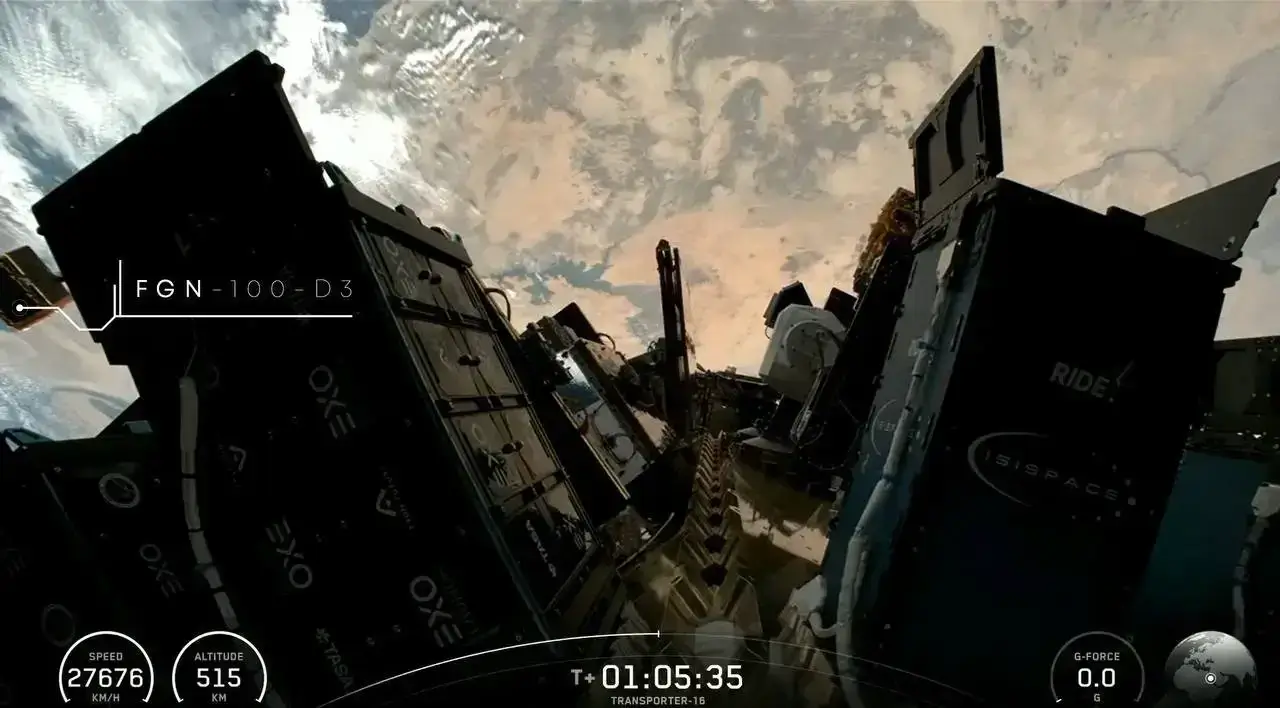
Türkiye has passed another historic threshold on the path to establishing its digital sovereignty and strategic communication infrastructure in space. Fergani Space, a private space company founded with Selçuk Bayraktar's technology vision, successfully placed its fifth test satellite, the FGN-100-D3, which stands out with its communication and navigation capabilities, into orbit. This launch, announced officially by Prof. Dr. Haluk Görgün, President of the Presidency of Defence Industries, and Selçuk Bayraktar, represents more than just a routine space mission. These satellites are laying the technological foundations for the Uluğ Bey Global Positioning System, which will completely free Türkiye from dependence on systems like the US GPS or Russia's GLONASS.
In the shadow of global wars and geopolitical crises, technological independence now begins not on Earth but in space. For a country to guide its own smart munitions, communicate securely with its military units, and manage its civilian logistics networks, it must possess its own space infrastructure. Having previously successfully launched the FGN-100-D1 and D2 test satellites, Fergani Space is continuing the construction of this vast infrastructure (constellation) unabated with the new member of the series, FGN-100-D3.
Communication and Navigation Infrastructure
Successfully placed into Earth orbit, FGN-100-D3 possesses a much more advanced engineering architecture based on flight data obtained from previous test satellites. According to Selçuk Bayraktar's statement, this fifth test satellite stands out particularly with its communication and navigation payloads.
For a satellite to generate navigation signals in space and transmit positioning information to moving platforms on Earth (ships, aircraft, cars), it requires highly precise atomic clocks and advanced data links. FGN-100-D3 is actively testing these domestically developed positioning algorithms and communication modules, developed by Fergani engineers, under the harsh radiation and temperature conditions of space. The data obtained will definitively determine the hardware standards for the main satellite fleet, hundreds of which will be launched into orbit in the future.
Strategic Goal: The Uluğ Bey Global Positioning System
The major vision behind these launches is the Uluğ Bey Global Positioning System project, clearly emphasised in Selçuk Bayraktar's message. Today, almost every platform, from our smartphones to banking systems, from our unmanned combat aircraft like KIZILELMA to SOM cruise missiles, relies on the US GPS (Global Positioning System) satellites to find their position and time.
However, in a potential global crisis, there is a risk that the countries controlling these navigation networks (USA, Russia, or Europe) could shut down, spoof, or encrypt these systems for civilian or military use. The Uluğ Bey system, which Türkiye will establish with its own satellites, will completely eliminate this strategic vulnerability. Hundreds of Fergani satellites placed in Low Earth Orbit (LEO) will generate signals much stronger and far more resistant to electronic jamming than current GPS systems, providing absolute route security for Türkiye's platforms.
Haluk Görgün: The Foundation of Our Technological Sovereignty
Prof. Dr. Haluk Görgün, President of the Presidency of Defence Industries, also described the placement of FGN-100-D3 into orbit as an indicator of technological independence. In his official assessment, Görgün included the following strategic statements:
"Developing our communication and positioning infrastructure with national capabilities forms the basis of our technological sovereignty, data security, and strategic mobility."
Indeed, data security is the most significant border defence of the 21st century. Military or strategic civilian communications conducted via foreign satellites always carry the risk of being intercepted. This national network being established in space by Fergani ensures that Türkiye creates a closed space internet and communication network using its own cryptographic encryption algorithms.
The Path to the Constellation
With these successive successful test flights, Fergani Space is progressing towards becoming one of the world's select private companies capable of building its own satellite constellation in space.
In the coming years, it is expected that mass production will commence based on the experience gained from the test satellites, and the first operational signals of the Uluğ Bey Global Positioning System will be broadcast. Ultimately, Türkiye is transforming into a global power that not only produces weapon systems but also manages them with its own independent space networks.
