


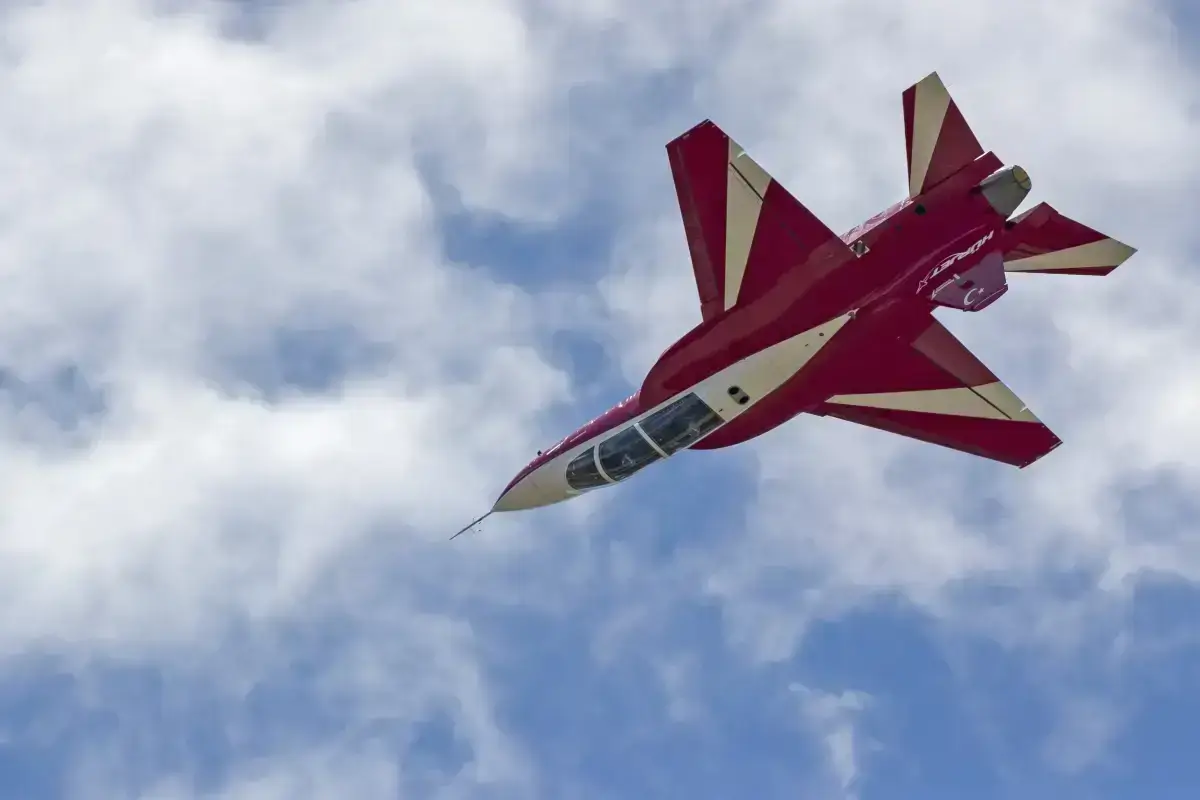
The Turkish aviation industry is preparing to cross another historic threshold. TUSAŞ has shared an exciting preliminary announcement on social media regarding the supersonic test flights that HÜRJET will conduct over the Gulf of Antalya. The company warned the local population about possible sonic booms with the words: "Attention! HÜRJET may reach supersonic speeds, heart rates may accelerate these days!" This challenging test, which will measure the aircraft's performance at sea level and its aerodynamic limits, is vitally important for HÜRJET to reach operational maturity.
Maximum Power in Dense Air
HÜRJET had previously broken the sound barrier successfully at high altitudes during its earlier flights. However, this new test planned for the Gulf of Antalya presents a much more challenging engineering exam for the aircraft. This is because air density increases as altitude decreases towards sea level.
When the aircraft attempts to exceed the speed of sound (Mach 1) in this dense air, it is subjected to maximum aerodynamic drag force and dynamic pressure. Through this test, TUSAŞ engineers will verify the structural durability of the aircraft at its extreme limits. Additionally, teams will analyse the engine's full power (afterburner) performance at low altitude in a real environment. The telemetry data obtained will directly contribute to the development of flight control software.
Why Does a Sonic Boom Occur?
The reason behind TUSAŞ's striking message is the phenomenon of the sonic boom. When aircraft exceed the speed of sound, they compress air at the nose and tail, creating powerful shock waves. These waves combine and reach the ground as a loud explosive sound.
Especially during supersonic flights conducted near sea level or land, this pressure wave is felt as a strong noise in residential areas. Therefore, TUSAŞ is following a transparent communication strategy by informing the public in advance. This stage is a necessity for the aircraft to complete its certification processes according to international aviation standards.
Critical for Light Attack and Training Missions
When HÜRJET enters the inventory, it will not only serve as a jet trainer aircraft. The vehicle will also undertake close air support and light attack roles. These combat missions typically occur below radar coverage, meaning at low altitude and very high speeds. Consequently, these flights at sea level constitute a realistic simulation of combat scenarios.
Envelope Expansion Nearing Completion
The completion of these critical tests in the Gulf of Antalya will open the doors to a brand new era in the project. In light of the collected data, engineers will have largely finalised the aircraft's envelope expansion tests. Subsequently, preparations for HÜRJET's inventory entry and delivery will accelerate as it moves towards serial production. Indeed, Türkiye is directly transferring the aerodynamic and structural engineering experience gained from this project to the KAAN project.
