


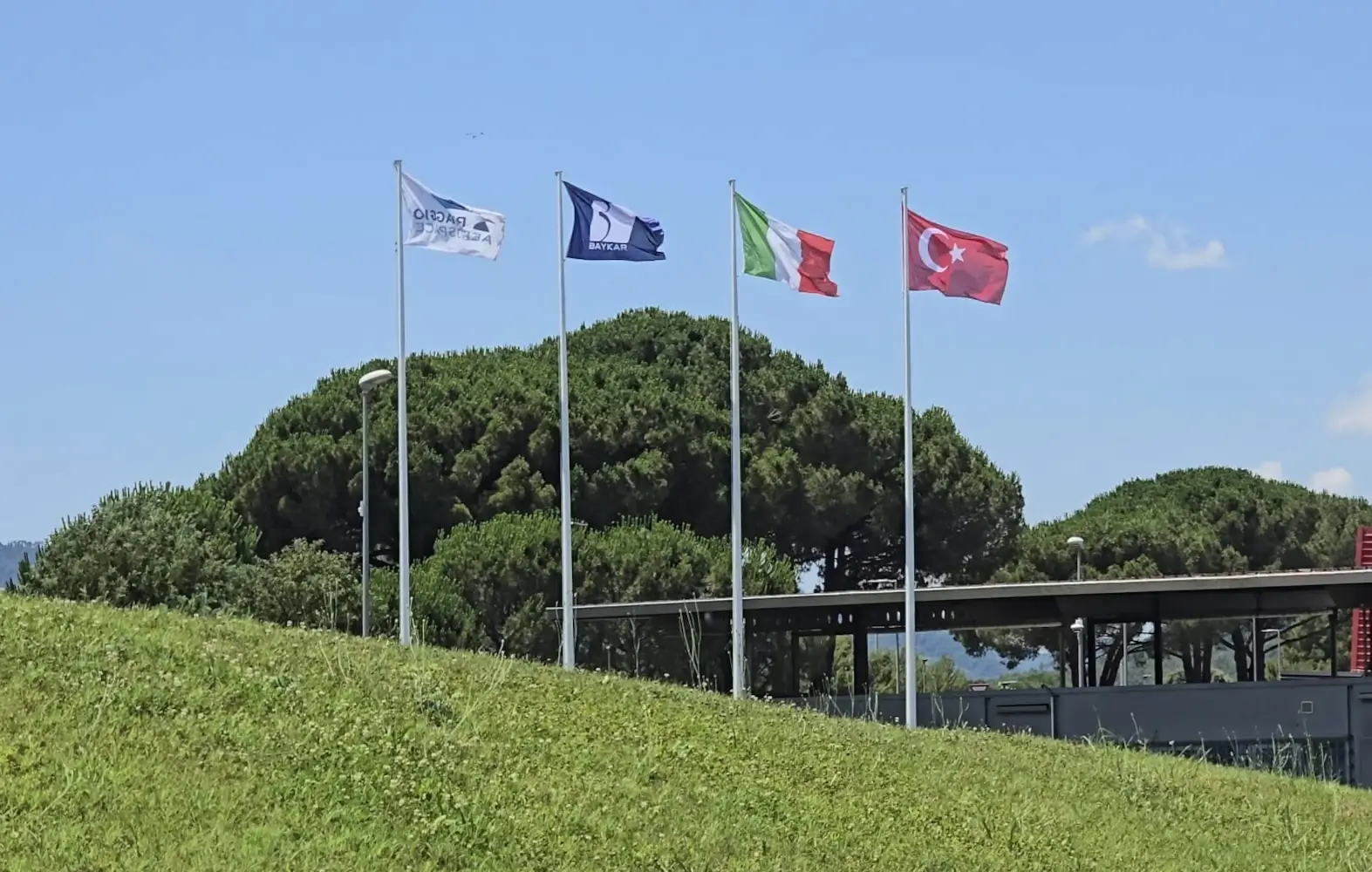
A historic development that has been dominating the global aviation scene for some time has now been officially confirmed: Baykar, a global brand in the Turkish defense and aerospace industry, announced the completion of its acquisition of Italian aircraft manufacturer Piaggio Aerospace. With the final signatures, the 140-year-old Italian engineering giant has officially become part of a Turkish company.
This milestone not only solidifies Baykar's leadership in unmanned systems but also marks a historic moment that elevates the company, and consequently Türkiye, to the most prestigious league of civil and military aviation.
Combining Italian elegance and deep-rooted engineering expertise with Baykar's groundbreaking innovative vision, this partnership has opened the doors to a new era in the skies. This move is the most concrete and irreversible proof that Türkiye is no longer just a technology follower, but a global player, a brand acquirator, and a force shaping market dynamics. Baykar's acquisition of this Genoa-based giant company is a testament to how its "Domestic and National" technology vision has transcended borders and transformed into a global power. So, what is the strategic genius behind this historic merger, and what new horizons have now opened up for the Turkish aviation industry?
Baykar: The Turkish Giant That Writes the Rules of the Sky
To understand this massive acquisition, it's essential to first understand the incredible journey Baykar has taken in the last two decades. Founded in 1986 as a humble automotive supplier, Baykar transformed into a defense and aerospace giant thanks to its founder Özdemir Bayraktar's passion for developing national and original technology. Particularly since the 2000s, the company has focused on unmanned aerial vehicles, and under the leadership of Selçuk Bayraktar and Haluk Bayraktar, it has undertaken the mission of ending Türkiye's dependence on foreign sources in this field.
The first fruits of this vision were reaped with the Bayraktar Mini UAV. This system, the first domestically produced UAV to enter the inventory of the Turkish Armed Forces, laid the foundation for future great successes. However, the project that transformed Baykar into a global phenomenon was undoubtedly the Bayraktar TB2 SİHA (Armed Unmanned Aerial Vehicle). Considered the best in its class in the world, the Bayraktar TB2 rewrote modern warfare doctrines with its low cost, high effectiveness, and proven success in the field. Its performance in Syria, Libya, Karabakh, and Ukraine led to it being referred to as a "game changer" not only in military circles but also in the field of international relations and politics. While providing Türkiye with a unique strategic advantage, the TB2 also made the name Baykar known to the whole world.
However, Baykar's success wasn't limited to the TB2. The company rapidly climbed the technological ladder by continuously investing in R&D. The Bayraktar Akıncı, a strategic attack UAV, with its increased ammunition capacity, longer flight duration, and superior avionics such as AESA radar, has positioned Türkiye as one of the few countries in this field. Following the Akıncı, the Bayraktar Kızılelma, expected to shape the future of air combat, made history as Türkiye's first unmanned combat aircraft project. Possessing features such as supersonic speed, low radar signature, and aggressive maneuverability, Kızılelma is further proof of Baykar's forward-thinking vision.
The fundamental philosophy behind Baykar's success is its emphasis on vertical integration and original design. By developing software, avionics systems, aerodynamic design, and even many critical subcomponents in-house, it has minimized external dependence. This philosophy has provided the company with flexibility, speed, and cost advantages. Now, this national technology giant is setting sail for a new horizon, combining its accumulated experience and vision with the Italian aviation heritage.
Piaggio Aerospace: A Century-Old Legacy of Italian Elegance and Engineering
On the other side of the acquisition is Piaggio Aerospace, a venerable giant of the aviation world. Founded in 1884 by Rinaldo Piaggio, the company initially produced luxury marine equipment and railway vehicles, but entered the aviation sector shortly after World War I. Over the years, Piaggio has produced many successful aircraft in both civilian and military fields, and while it became a global icon, particularly with the Vespa scooter after World War II, its aviation arm, Piaggio Aero, has always maintained an identity of pushing the boundaries of engineering and design.
Piaggio Aerospace's most renowned and iconic product is undoubtedly the P.180 Avanti business jet. Making its first flight in 1986, the Avanti revolutionized the aviation world with its design. It features a "three-surface" aerodynamic structure with pusher propellers located at the rear of the fuselage, small canarts at the front of the wings, and a T-shaped tail. This unique design allowed the aircraft to combine the fuel efficiency of turboprop engines with the speed of light jets. Creating its own niche market with its cabin comfort, quietness, and low operating costs, the Avanti is considered a reflection of Italian design and engineering ingenuity in the sky.
The P.180 Avanti platform was developed over time into more modern versions such as the Avanti II and Avanti EVO. Furthermore, the Italian Air Force attempted to convert this platform into an unmanned version, the P.1HH HammerHead, for manned reconnaissance, surveillance, and intelligence (ISR) missions. These projects demonstrated Piaggio's significant expertise not only in business jet production but also in the development of special mission platforms and UAVs.
Despite its illustrious engineering history, Piaggio Aerospace had been struggling with serious financial difficulties in recent years. Low order numbers and increasing competition put the company in a tight spot economically, leading it to enter a "management by emergency" process with the support of the Italian government. A new investor was sought to save the company. At this point, Baykar, seeking new opportunities in the global market and aiming to diversify its technological capabilities, emerged as an ideal candidate for Piaggio's engineering heritage, certification capabilities, and manufacturing infrastructure, and successfully completed the process.
The Patented Strategy: Why This Acquisition Has Historic Significance?
Baykar's acquisition of Piaggio Aerospace is far more than a simple corporate merger; it's a masterful move encompassing multifaceted and profound strategic objectives. This acquisition can be considered one of the most significant steps in transforming Baykar from a mere UAV manufacturer into a global aerospace company.
1. The Golden Gateway to the European Market: EASA Certifications
In the aviation industry, obtaining the necessary certifications to sell a product in international markets is as critical as developing that product. Certifications issued by the European Union Aviation Safety Agency (EASA) are essentially a passport for an aircraft to fly in many countries across Europe and the world. Piaggio Aerospace, having been operating in this market for years with a civilian product like the P.180 Avanti, possesses extremely valuable competencies and certifications, including the EASA Type Certificate. With this acquisition, Baykar has bypassed this complex and time-consuming bureaucratic process, gaining direct access to the European market for its future civilian or military/civilian dual-use platforms. This is an invaluable advantage for Baykar's potential future civilian UAV cargo transport or manned/unmanned regional passenger aircraft projects.
2. Transfer of Technology and Engineering Expertise
Although Baykar is a world leader in UAV technology, Piaggio's areas of expertise perfectly complement Baykar's existing portfolio.
- Turboprop Engine Technology: The P.180 Avanti is equipped with highly successful turboprop engines such as the Pratt & Whitney Canada PT6A. Piaggio's deep expertise in integrating, maintaining, and optimizing these engines will greatly contribute to Baykar's efforts to develop more efficient and powerful engine solutions for its own UAVs. Considering Türkiye's national turboprop engine development projects (such as the TEI-PD170), Piaggio's experience in this field has the potential to create synergy.
- Advanced Composite and Metal Frame Manufacturing: Avanti's aerodynamically complex fuselage requires advanced manufacturing capabilities in both composite and metal processing. Piaggio's facilities in Genoa and Villanova d'Albenga possess generations of accumulated know-how in this field. This capability can accelerate and improve the quality of production processes for more complex and larger platforms like Baykar's Kızılelma.
- Business Jet Design and Comfort Engineering: Designing the interior of a business jet requires expertise not only in engineering but also in luxury, comfort, and ergonomics. Piaggio's "Italian touch" in this area could open the door for Baykar to enter the manned aircraft market for VIP transport or special mission platforms in the future.
3. Product Portfolio Diversification and Global Brand Image
With this acquisition, Baykar has added the proven P.180 Avanti business jet to its portfolio. This transforms the company from a purely defense industry firm into a versatile aerospace company operating in both civil and military aviation. The Baykar brand will now be associated not only with UAVs but also with luxury and high-performance Italian business jets. This will strengthen the brand's global perception and make Baykar a more visible player in the arena of giants like Boeing, Airbus, and Lockheed Martin.
A New Vision to Rise from Genoa: Baykar's Roadmap for Piaggio
It is clear that Baykar does not view this acquisition as merely an asset takeover, but aims to bring a new vision and energy to Piaggio. The anticipated roadmap points to a strategy that both respects Italian heritage and includes bold steps towards the future.
First and foremost, Baykar management is expected to retain Piaggio's existing skilled workforce and engineering staff, and even strengthen them with new investments. Modernizing and increasing the efficiency of Piaggio's production facilities will be one of the first steps. This will both send a message of confidence to the local economy in Italy and bring the quality of production up to Baykar standards.
Secondly, the revival and marketing of the P.180 Avanti EVO program is likely. Baykar's global marketing network and diplomatic power could help Avanti achieve its deserved sales figures. Innovations such as modernization of the aircraft's avionics, updating of in-cabin technologies, and even work on a hybrid-electric version in the future, could make Avanti one of the most attractive players in its market once again.
The most exciting possibility is for the engineering teams of the two companies to jointly develop new products. Baykar's expertise in unmanned systems and autonomy, combined with Piaggio's experience in developing certified aircraft platforms, creates almost limitless potential projects.
- Next Generation Manned/Unmanned Special Mission Aircraft: Developed based on the Avanti platform, it will be a long-range maritime patrol or intelligence aircraft capable of flying both manned and, optionally, unmanned.
- Certified Cargo UAV for the European Market: A medium-to-heavy class cargo UAV that will be developed using Piaggio's EASA expertise and will be eligible to fly in European airspace.
- A New Business Jet or Regional Aircraft: A completely new, competitive, and technologically advanced civil aircraft project combining the expertise of the two companies.
This vision could transform Piaggio into Baykar's R&D, manufacturing, and logistics hub in Europe.
A Quantum Leap for the Turkish Aerospace Industry
Baykar's acquisition of Piaggio Aerospace is significant not only for the company itself, but also for the Turkish aviation and defense industry as a whole—a turning point, a quantum leap. The meaning of this move for Turkey is immense.
For years, Turkey has been trying to transfer technology from Western countries, producing under license, or facing embargoes for critical components. Now, Turkey has moved to the other side of the table. This acquisition demonstrates that Türkiye "owns" technology by purchasing a well-established technology and engineering brand from the heart of Europe. This is the strongest declaration of how successful the "Domestic and National Technology Initiative" can be, not only domestically but also on a global scale.
This move will set a precedent for other major Turkish industrial companies. Acquiring strategically important foreign technology companies to grow in the global market will now be seen as an achievable goal. This will accelerate the international integration of the Turkish economy and industry and increase value-added production.
KeywordsBaykar, Piaggio Aerospace, Baykar Piaggio acquisition, Turkish defense industry, aviation, P.180 Avanti, Bayraktar TB2, Bayraktar Akıncı, Bayraktar Kızılelma, UAV, UCAV, Selçuk Bayraktar, Haluk Bayraktar, technology transfer, EASA certification, Italian aviation, domestic and national technology, strategic investment, Genoa, Turkish industry, unmanned combat aircraft, turboprop engine.
