


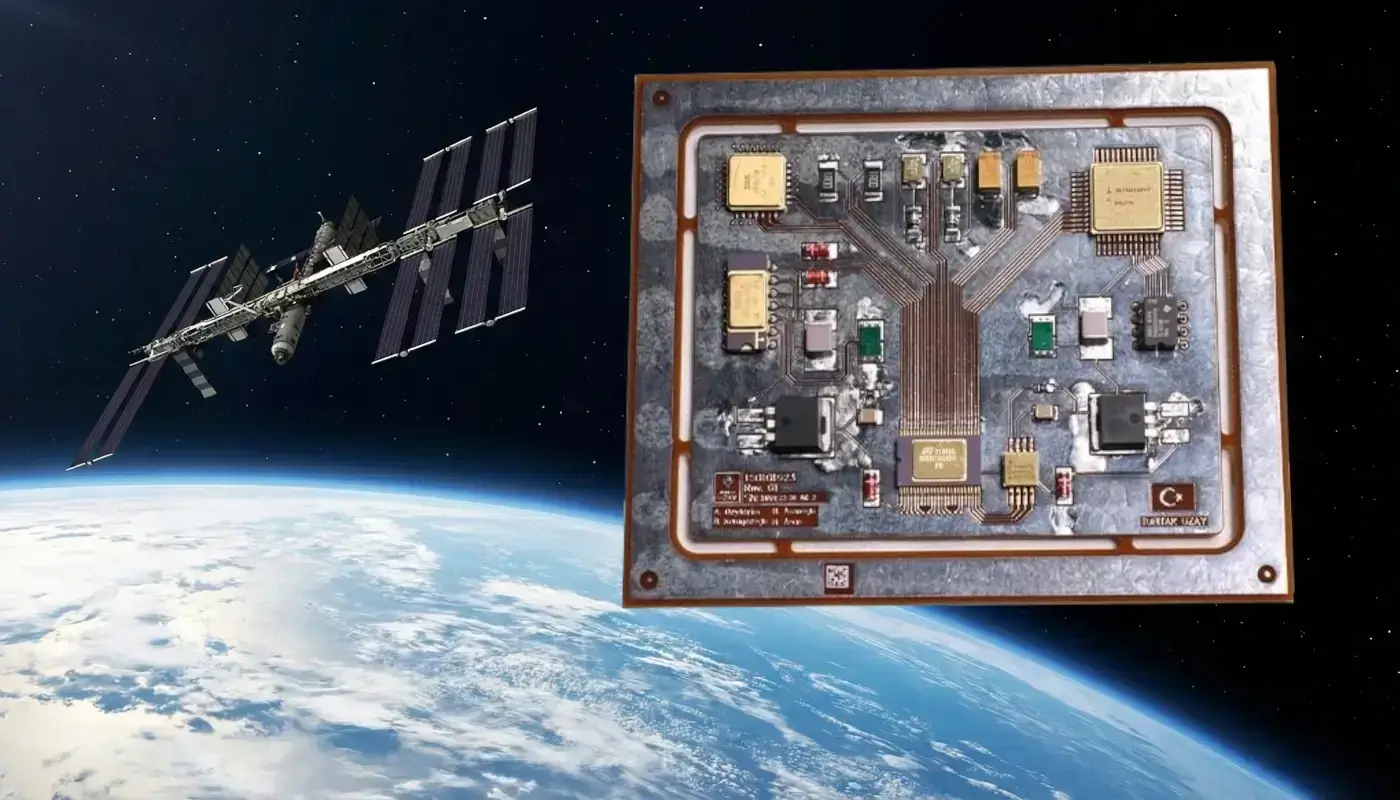
TÜBİTAK UZAY has passed a significant milestone in the second phase of the MIYOKA experiment to be conducted on the International Space Station (ISS). The institution sent the electronic card, developed for the T-STAR satellite family, to the NASA White Sands Test Facilities. The domestic hardware successfully passed the rigorous safety tests conducted there. Furthermore, the system proved that it meets the safety criteria for manned mission environments. Consequently, Turkish engineers have taken a historic step regarding the feasibility of lead-free soldering technologies in space.
NASA-STD-6001 Standard Met for Manned Missions
TÜBİTAK UZAY engineers used completely lead-free soldering and assembly processes in the production of the hardware. NASA experts verified in detail the compliance of these processes with the "NASA-STD-6001" requirements. The safety of the enclosed environment is vitally important in manned space missions. Risks such as toxic gas release or flammability directly endanger the lives of astronauts. This approval documents that the domestic hardware will operate with zero risk in environments like the ISS. This development strengthens the institution's engineering competence in manned space missions at an international level.
The Lead-Free Transformation in the Aerospace Industry
For years, the aviation and space sector preferred tin-lead soldering methods in electronic card production. However, the negative effects of lead on human health pushed the industry towards new pursuits. Therefore, the sector turned its attention to printed circuit board (PCB) production using lead-free soldering. However, scientists do not yet fully know the effects of microgravity conditions on lead-free solder performance. The MIYOKA experiment aims precisely to eliminate this uncertainty. Astronauts will solder PCBs using lead-free methods in the ISS environment.
The Role of the T-STAR Satellite Family
The T-STAR satellite platform family forms the foundation for Türkiye's projects ranging from low Earth orbit to the Moon. TÜBİTAK UZAY is directly testing the electronic cards developed for these platforms in the space environment through the MIYOKA experiment. The electronic cards, which will return to Earth at the end of the mission, will undergo detailed examinations in the institution's laboratories. Subsequently, experts will report the effects of microgravity on the lead-free soldering process. Afterwards, researchers will make this valuable data available to the entire scientific world.
The Future of Maintenance and Repair in Space
The successful progress of the MIYOKA experiment creates critical opportunities for future long-duration space missions. In deep space missions to the Moon or Mars, waiting for spare parts from Earth becomes impossible. Therefore, astronauts will need to repair malfunctioning electronic cards on board the spacecraft themselves. In short, this experiment lays the foundation for in-situ production and maintenance-repair concepts in space. By pioneering research on manufacturing processes in microgravity, Türkiye is making a unique contribution to the space ecosystem.
