


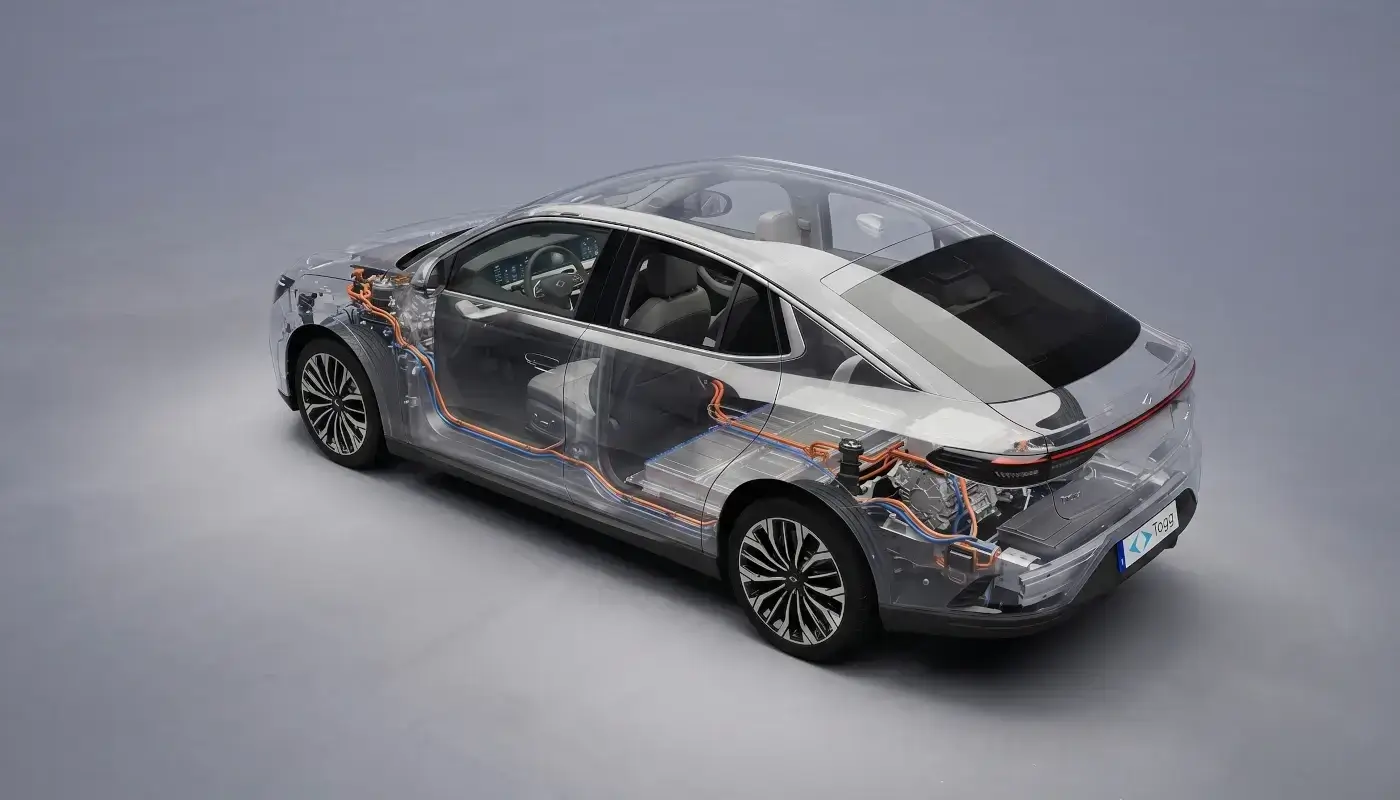
As of June 2026, Togg has made a significant technology transition for its T10X and T10F models. The technical data quietly updated on the configurator on the company's website indicated that the long-range models have switched from NMC (Nickel Manganese Cobalt) batteries to LFP (Lithium Iron Phosphate) batteries. It was known that Togg's battery supplier, Farasis, had long been shifting from NMC-heavy production to a more cost-effective LFP structure. Although no official statement has been made, the changes in the technical data show that the transition has already begun.
What Has Changed in the Technical Data?
According to Togg's updated technical data, three critical changes stand out for the long-range T10X and T10F models. Battery capacity increased from 88.5 kWh to 89.6 kWh. Vehicle weight increased by approximately 20 kilograms. The 0-100 km/h acceleration time increased from 7.8 seconds to 8.0 seconds. The WLTP range remained the same at 610-623 kilometres.
Charging performance has also seen an improvement. The charge time from 20% to 80% decreased from 28 minutes to 26.5 minutes. This 1.5-minute reduction indicates an improvement in the new battery's charging curve. Additionally, for the T10X, the AC charging capacity is now listed as 11 kW as standard instead of 22 kW in the catalogue.
Differences Between LFP and NMC: How Did Industry Experts Receive This Change?
Electric car enthusiasts welcomed Togg's transition to LFP battery technology with joy, and there are solid technical and practical reasons behind it. The advantages offered by LFP batteries directly appeal to the user's wallet, safety, and daily convenience.
The biggest advantage of LFP batteries is that they offer users the freedom to charge to 100 percent. While it is recommended to keep the charge at 80 percent for daily use to preserve battery life in NMC batteries, LFP batteries are not damaged when continuously charged to 100 percent. On the contrary, this is recommended for the calibration of the battery management system. Users can use their vehicles at full capacity every day without range restrictions or battery health concerns.
Battery lifespan is another area where LFP clearly stands out. While NMC batteries typically start losing capacity after 1,000 to 2,000 full charge cycles, LFP batteries often last 3,000 to 5,000 charge cycles. This means that even after hundreds of thousands of kilometres of use, the battery will still be close to its original health, which is one of the most important factors maintaining its second-hand value.
In terms of safety, LFP batteries are much more resistant to what is known as thermal runaway, a condition where battery cells overheat and catch fire. With extremely stable chemical structures, LFP batteries carry almost negligible risk of catching fire or exploding compared to traditional lithium-ion batteries, even in the event of punctures, crushing, or serious accidents.
Cost advantage is also significant. While NMC batteries require expensive and difficult-to-source minerals like nickel, manganese, and especially cobalt, LFP batteries use abundant and very cheap iron and phosphate. Lower battery costs directly reflect on the vehicle's selling price, making electric cars more accessible. Battery replacement costs also become more economical as a result.
On the downside, LFP batteries are heavier and take up more space to store the same amount of energy compared to NMC. At very low temperatures, charging speed and range can decrease somewhat more. However, advanced heat pumps and battery heating systems largely solve this problem. Togg's ability to maintain range with only a 20 kg weight increase indicates that Farasis is offering an LFP solution with high energy density. The 1.1 kWh increase in battery capacity is considered an optimisation made to keep the range at the same level.
Quiet Transition, Successful Integration
Togg carrying out this transition without an official announcement is interpreted as a sign of successful engineering integration. Apart from a very small increase in consumption data, there are no noticeable changes that would affect the user experience, indicating that the transition was made considering all users. It is almost impossible for a customer not meticulously examining the technical data on the configurator to notice these differences.
When asked by automotive journalists whether they would use LFP batteries, Togg executives Fuat Tosyalı and Gürcan Karakaş had previously replied, "we are working on it." It is understood that these studies have now been completed and mass production has begun.
Transition to Continue Until NMC Stocks Run Out
Industry sources predict that Togg will continue to use both battery types until its existing NMC battery stocks run out, after which the transition to LFP batteries will be completed. This gradual transition strategy is seen as a sensible approach to avoid disruption to the production line and ensure a smooth transformation of the supply chain.
Note
If you have any photos or video footage to support our news story, please share them with us using the information provided on our contact us page.
