


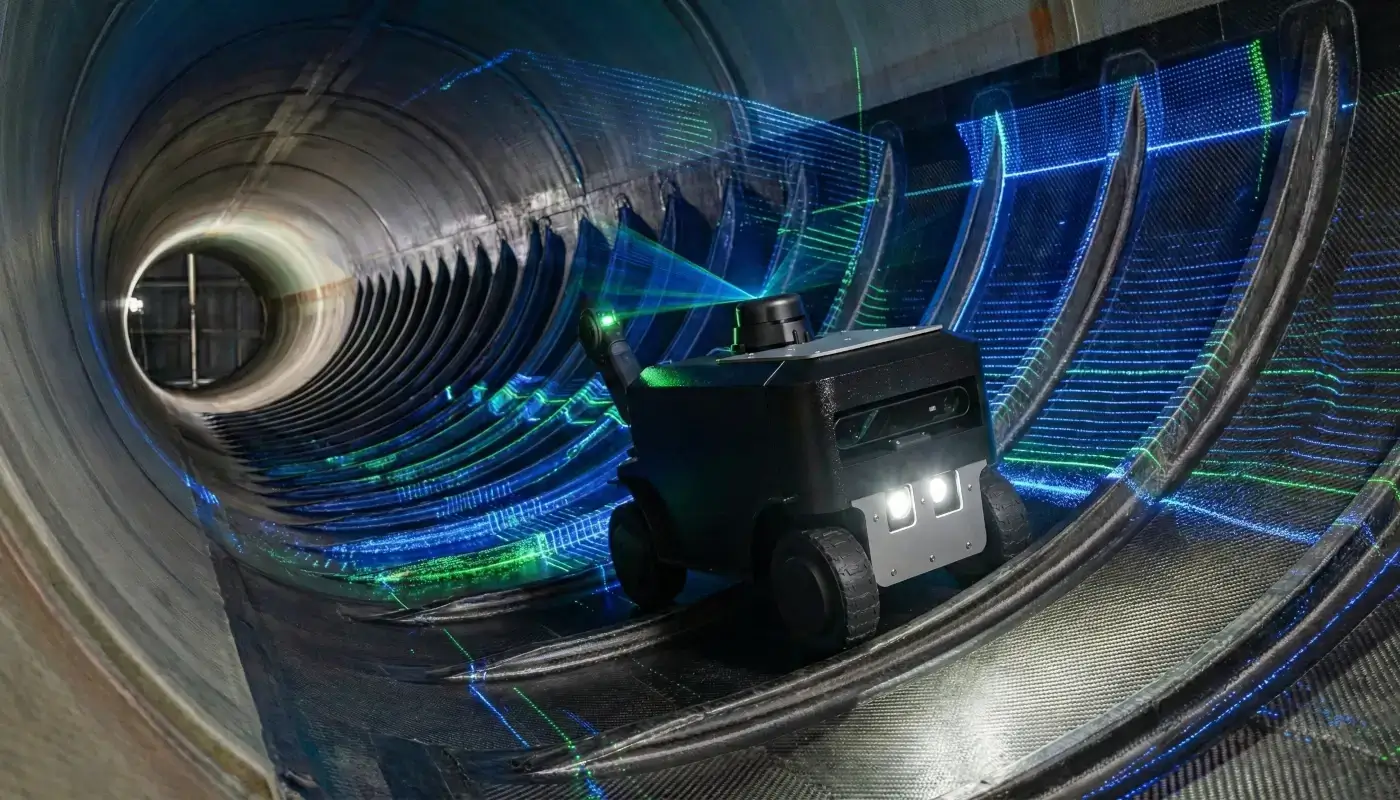
While wind turbines, giants of the energy sector, may appear flawless from the outside, they contain a challenging and dangerous inspection process within. Onna Robotics, a startup from ITU Seed, performs this task without putting maintenance teams at risk with its autonomous mobile robot called "Maça". Maça conducts inspections in dark blade tunnels with over 90% coverage. This domestic technology, which reduces the 4.5-hour manual process to 1.5 hours, eliminates human error in internal blade maintenance.
While Turkey is increasing its installed renewable energy capacity, it is also nationalizing the technologies needed for the sustainability of these massive facilities. In particular, in-blade inspection, one of the most critical and risky operations in wind power plants (WPPs), is taking a giant leap forward with an autonomous system developed by Turkish engineering. This is a deep-tech initiative. Onna Robotics, With its AI-powered autonomous mobile robot (AMR) and software platform, it offers high-tech solutions to the industry's pressing problems of inefficiency and occupational safety risks.
Inside the Wing: A Dark Tunnel 100 Meters High
Wind turbine blades are delicate structures made from composite materials. Even the slightest problem, such as cracks, separation, or manufacturing defects, can eventually destabilize the turbine and lead to costly damage. Therefore, maintenance crews have to enter these narrow, airless, and dark tunnels numerous times throughout the year.
However, the human inspection method brings with it significant limitations and daily risks. Due to the physical limitations of the technicians, only 40% of the wing interior can be inspected. In addition, high altitude, claustrophobia, and composite dust pose significant risks to occupational safety. According to data shared by Onna Robotics, the human error rate in manual inspections is around 30%. This means that even a single overlooked nut, despite maintenance, could cause major damage in the future.
How does the locally produced robot "Maça" work?
To solve this problem, Onna Robotics developed a 4x4 robot named "Maça," inspired by the cats in their office. However, what makes Maça special is not its wheels, but its sensor package and autonomous navigation capability.
- Navigation in the Dark with SLAM: Wing interiors are sealed boxes without GPS signals. Using Lidar and Depth Cameras... SLAM It determines its own path using Real-Time Positioning (Real-Time Positioning) and Mapping technology.
- Millimeter Accuracy: The robot scans surface anomalies with millimeter precision, invisible to the human eye, and transfers the data to a digital environment.
Google Street View-like interior wing tour
Onna Robotics combines hardware power with a SaaS (Software as a Service) platform called "OnnaWind Portal". The data collected by the robot is processed by artificial intelligence algorithms to detect anomalies.
The system's most striking feature is its visualization capability. Maintenance teams can navigate a three-dimensional map of the blade via a portal, using a "Google Street View"-like experience, without having to physically go to the turbine. This allows for the pinpoint identification of damaged areas, making maintenance processes data-driven rather than guesswork-based. This method creates a digital twin of the blades, making it possible to maintain a lifetime health record for the power plant.
Sahadaki Sayısal Kanıtlar: %66 Zaman Tasarrufu
Data shared by Onna Robotics reveals the overwhelming superiority of autonomous systems over traditional methods:
- Duration: The inspection of a turbine is reduced from 4.5 hours to 1.5 hours.
- Coverage Area: The robot, which can reach areas inaccessible to humans, scans 90 percent of the wing's interior.
- Truth: Thanks to artificial intelligence analysis, the detection accuracy reaches 95 percent.
- Economy: Early detection of damage can lead to potential savings of up to €280,000 per turbine.
Target for 2026: 750 Wings and the European Market
Founded in 2021 and developing its prototype with KOSGEB R&D/Product Development support, the startup is making rapid strides in the commercialization process. Having exceeded its 2025 target by performing 150 wing scans, Onna Robotics has set its target for 2026 at 750 wings. This figure demonstrates that the startup has moved beyond the prototype testing phase and transformed into a technology company conducting fleet operations.
Hybrid Business Model: The company structures its revenue model as RaaS (Robot as a Service) and SaaS (Software Subscription), offering services to its customers without incurring high investment costs.
Onna Robotics, collaborating with the Technical University of Munich and targeting Germany, the United Kingdom, and the Middle East as its markets, has secured national patent application number 2024/004408 to protect its technology. This domestic startup is preparing to export cutting-edge technology from Türkiye to the world, shedding light on the unseen aspects of wind energy.
Not Just Wind: A Robotic Ecosystem Expanding from Water to Air
Onna Robotics positions itself not just as a vertical startup providing solutions to the wind energy sector, but as a versatile technology company. Maça is just one of the members of the company's extensive family of robots that has recently taken center stage.
In the company's R&D department, underwater, land and air There are also various robotic platforms capable of performing challenging tasks in their environments. In particular... defense industry The team, which also develops projects for sectors where error is unacceptable, has the ability to integrate its autonomy, navigation, and artificial intelligence infrastructure into different platforms. This vision transforms Onna Robotics from a single-product startup into a potential robotics solution partner for Türkiye in the fields of industrial and military robotics.
