


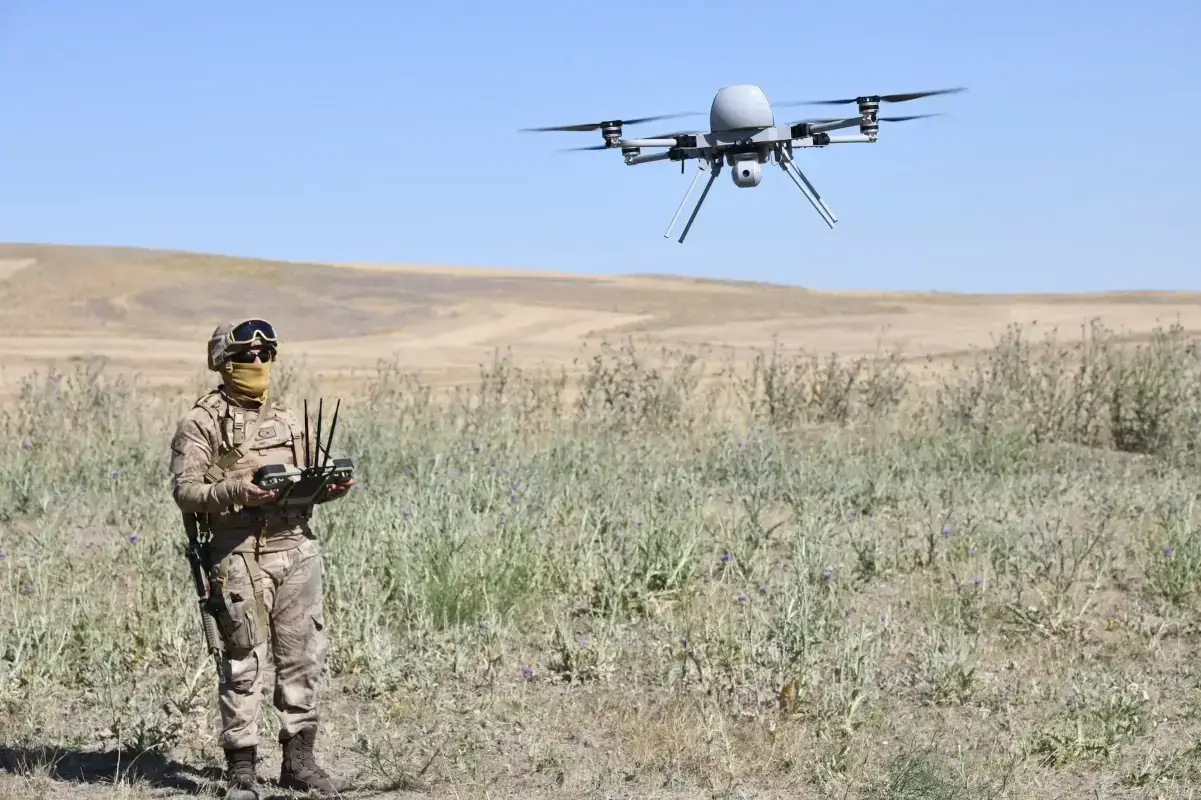
STM, a leading company in the Turkish defense industry specializing in tactical systems, has achieved a historic export success for its domestically produced KARGU and ALPAGU strike UAV systems. Under a contract signed with an unnamed NATO and European Union (EU) member state, the Turkish "kamikaze" drones have entered the European market. This agreement brings the number of countries to which STM exports UAVs to 15, and the number of continents to 4.
Following the combat-proven success of Turkish UAVs, which have attracted the attention of world armies, Turkey is becoming a global player in the "Loitering Munition" (LOU) segment. STM Defense is bringing its rotary-wing KARGU and fixed-wing ALPAGU systems to Europe, not just as individual products, but as an "integrated solution" package.
Exporting Not Just UAVs, But Also "Software and Integration"
The most critical detail that distinguishes this export from an ordinary defense industry sale is the scope of the project. The agreement with a NATO and EU member country does not only involve the delivery of drones in boxes.
- Integration into Armored Vehicles: KARGU and ALPAGU will be integrated into the armored land vehicles in the recipient country's inventory.
- Doctrinal Consensus: Turkish engineers also export software that adapts these systems to the operational concepts and combat management systems of the respective countries.
This situation proves that Türkiye is positioned not only as a “platform producer” but also as a “system integrator” and “software developer” in accordance with NATO standards.
STM General Manager Güleryüz: “A Signature with High Added Value”
Commenting on the matter, STM General Manager Özgür Güleryüz emphasized that the project is not limited solely to platform exports. Güleryüz stated, “The integration of KARGU and ALPAGU into armored land vehicles also demonstrates our software capabilities. This project represents a high value-added integration and software export.”.
Güleryüz also stated that this collaboration would create a strong reference for STM's autonomous systems to be used in other European countries.
Strike Forces on the Field: KARGU and ALPAGU
The two systems at the heart of this export success possess game-changing technical characteristics in both asymmetric and conventional warfare.
KARGU: Rotary Winged Hunter
KARGU, which entered the Turkish Armed Forces inventory in 2018 and plays an active role in the fight against terrorism, operates on the "Man-in-the-Loop" principle.
- Features: AI-powered image processing, 10 km range, 30+ minutes flight time.
- Flexibility: Anti-personnel and armor-piercing warheads can be rapidly changed in the field.
- Swarm Ability: KARGU drones move in swarms, enabling them to carry out coordinated attacks.
- Electronic Warfare Resistance: Thanks to the RF seeker heads and algorithms developed by STM, GNSS (GPS) can perform its mission independently.
ALPAGU: Fixed-Winged “Alpine”
Distinguished by its lightweight construction and diving speed, ALPAGU is one of the rare platforms in the world weighing less than 2 kilograms.
- Features: 8 km range, 15 minutes flight time, can be set up by a single person in 1 minute.
- Pinpoint Accuracy: Thanks to its low radar cross-section, it remains undetected until the very last moment and destroys its target with pinpoint accuracy.
- Platform Independence: It can be easily integrated into land, sea, and air vehicles.
A New Era in the European Market
STM's move is a testament to the technological depth of the Turkish defense industry. A NATO country relying on Turkish software and hardware for its most critical strike capabilities confirms the level of maturity the sector has reached. Reaching 15 countries across 4 continents, STM continues to transform its "National Technology Initiative" into a global brand.
