


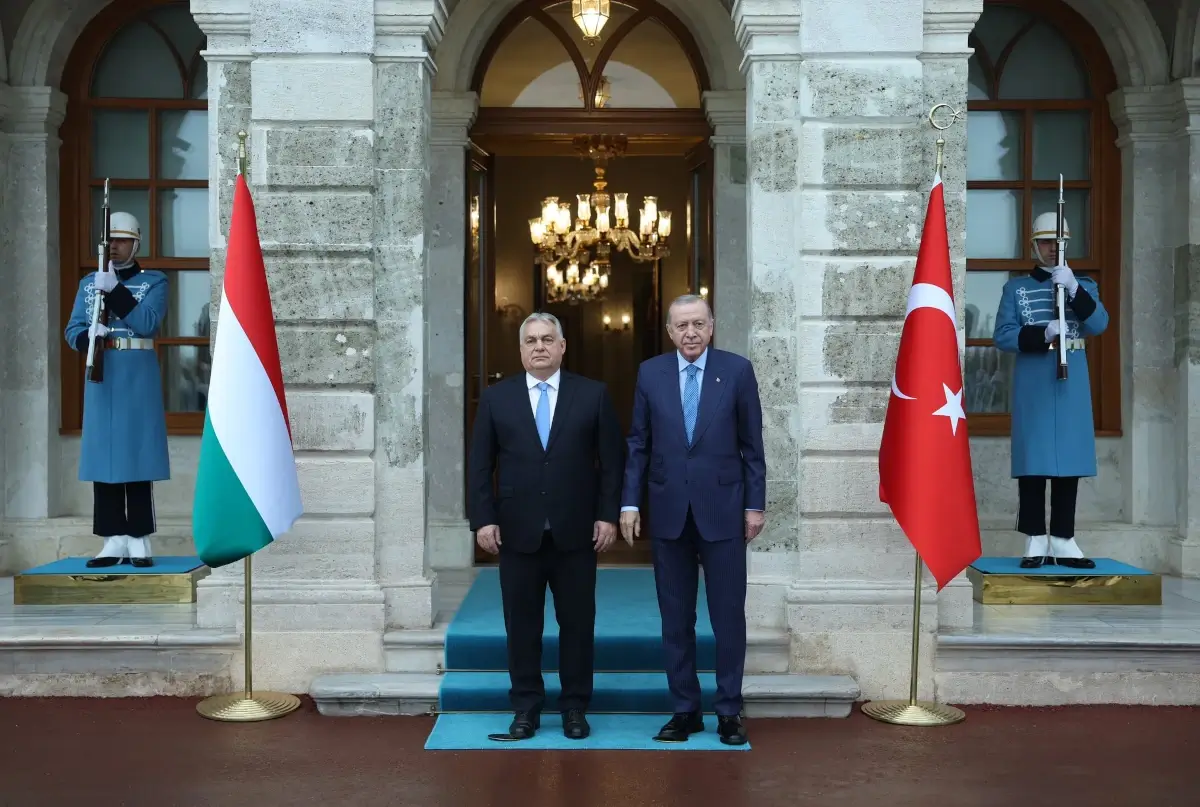
The deep-rooted friendship and strategic partnership between the Republic of Turkey and Hungary reached a new dimension with the 7th meeting of the High-Level Strategic Cooperation Council held in Istanbul. This critical summit, chaired by President Recep Tayyip Erdoğan and Hungarian Prime Minister Viktor Orban, not only confirmed the diplomatic courtesy between the two countries but also ratified concrete steps to be taken in critical sectors such as defense industry, energy, trade, and logistics.
As the Yüzde 100 Yerli platform, we are analyzing the nuances of this meeting, the stated objectives, and especially its significance for the future of the Turkish defense industry in Europe. Here are the strategic codes of the Istanbul summit and the future of Turkey-Hungary relations.
Haluk Görgün Explained: Not Just a Business Partnership, but a Shared Destiny
Speaking immediately after the summit, the Head of the Defense Industry, Haluk Görgün, emphasized that the relationship between the two countries has gone far beyond the commercial dimension. The signed "Memorandum of Understanding on Defense Industry Cooperation" provides a legal and strategic framework for the development of long-term projects between the companies.
Görgün's statement, "The defense industry dialogue between Turkey and Hungary is not merely a commercial relationship, but carries a vision of partnership based on mutual trust and long-term strategic goals," is the clearest indication that Ankara positions Budapest as a strategic production base in Europe.
Key Signatures: ASELSAN, Nurol Makina and 4iG Partnership
The most tangible outcome of the meeting was the collaboration between two giants of the Turkish defense industry and Hungary's leading technology and telecommunications company. 4iG Space and Defense Technologies Bridges were built between them. The agreements signed will enable Turkish technology to be localized in the heart of Europe:
1. Joint Venture between ASELSAN and 4iG:
With the signing of the "Letter of Intent," ASELSAN has taken the first step towards establishing a joint venture with Hungary-based 4iG. This initiative means that ASELSAN's high-tech products, such as electronic warfare, communication, and radar systems, will be jointly produced, developed, and marketed from Hungary to other European countries. This move is part of ASELSAN's "glocal" strategy (think globally, act locally) on its way to becoming a global player.
2. Nurol Makina and 4iG Strategic Partnership:
Nurol Makina, which already has its Ejder Yalçın (Gidran in Hungary) vehicles in the Hungarian army's inventory, has institutionalized its presence in the field with the "Strategic Partnership Agreement" signed with 4iG. This agreement will enable the Hungarian industry to be involved in the maintenance, repair, and local integration of armored vehicles.
Aiming to Increase Trade Volume: From $6 Billion to $10 Billion
Trade volume, the most tangible indicator of economic relations between the two countries, is following a steady upward trend. One of the most important findings from the meeting was that both sides are close to reaching their previously set target of $6 billion in trade volume. Despite contractions in the global economy and disruptions in supply chains, Turkey and Hungary's approach to this goal highlights the complementary nature of the two economies.
However, the vision did not stop there. Considering the existing potential and increasing cooperation opportunities, President Erdoğan and Prime Minister Orban revised the trade volume target to $10 billion. So, from which areas will this $4 billion increase be achieved?
The leading sectors here include defense industry, automotive, energy, and logistics. For Turkish exporters, Hungary is a strategic gateway to the European Union market. For Hungary, Turkey is both a large market and an energy and trade corridor extending to Asia and the Middle East. The new $10 billion target signifies broad economic integration encompassing not only the buying and selling of goods but also mutual investments and joint ventures.
The "Buy-Sell" Era in the Defense Industry is Ending, the "Joint Production" Era is Beginning.
Undoubtedly, the most striking outcome of the summit was the decision to deepen cooperation in the defense industry. Long-standing procurement processes are now giving way to a much more strategic concept: Joint Production.
The changing security architecture and geopolitical risks in Europe are pushing countries to increase their defense capabilities and diversify their supply sources. Hungary, a NATO country, has long shown interest in Turkish defense industry products and has made concrete purchases in this area. However, the point emphasized in the meeting in Istanbul was to transform the relationship from a mere "customer-supplier" relationship into a "partnership of destiny" that also includes technology transfer and joint production.
President Erdoğan's statement, "Considering the changing security conditions in Europe, we are evaluating projects that will take our defense industry cooperation to even higher levels and also foresee joint production," represents a great opportunity and responsibility for Turkish defense industry companies.
This strategy means:
- Technology and Know-How Sharing: Armored vehicles and defense systems, which are a testament to Turkish engineering, could be produced or developed in joint facilities to be established with Hungary.
- Deepening Our Presence in the European Market: Joint production in Hungary could provide a “Made in EU/NATO” label advantage, facilitating the sale of Turkish defense products to other European countries and NATO allies.
- Supply Security: Both countries will acquire an infrastructure that will allow them to meet their defense needs while reducing dependence on external sources and supporting each other in times of crisis.
The positive impact of defense industry projects on trade and investment was also confirmed at this meeting. In other words, the defense industry is positioned not only as a security issue but also as a driving force for economic growth.
A Corporate Innovation: Joint Planning Group
Conducting bilateral relations through an institutional memory and mechanism, rather than relying on individuals or periodic developments, is fundamental to a sustainable foreign policy. In this context, the decision to establish a "Joint Planning Group" under the chairmanship of the Foreign Ministers is a giant step towards institutionalizing relations.
This group will address not only bilateral issues but also global problems. From energy to security, migration to regional conflicts, Turkey and Hungary will gain the ability to act with a common understanding on many issues. This mechanism will accelerate bureaucratic processes and ensure that decisions are implemented more quickly on the ground. Particularly in areas requiring long-term planning, such as energy and transportation, the Joint Planning Group is expected to play a key role in determining a strategic roadmap.
Hungary: A Strategic Bridge Between the Turkic World and the EU
Hungary's place in Turkish foreign policy is not limited to bilateral relations. With its observer member status and active role in the Organization of Turkic States (OTS), Hungary is the strongest voice of the Turkic world in Europe.
As President Erdoğan has also expressed with satisfaction, Hungary's contribution to the Turkic World Summit is invaluable. In particular, the informal summit hosted by Hungary last May was a first of its kind. Being the first Turkic World summit held within the borders of the European Union shows how seriously Hungary takes its mission as a "bridge between East and West".
Hungary's support is also vital in Türkiye's full membership process with the European Union. Ankara is confident that Budapest's constructive contributions and strong support will continue. Hungary often acts as a balancing factor in Brussels, ensuring that Türkiye's positions within the EU are understood and that Türkiye's strategic importance is emphasized.
Strengthening Energy, Transportation and Cultural Ties
Energy and transportation were also on the agenda during the meetings. At a time when energy supply security is the number one agenda item for the whole world, cooperation between Turkey and Hungary in the energy sector is critically important for regional stability. Natural gas deliveries, renewable energy investments, and the sharing of experience in nuclear energy are areas with high potential for cooperation.
Furthermore, various documents signed in many areas ranging from aviation to security, technology to education, strengthened the contractual basis of the relationship. These agreements are not mere texts on paper; each contains concrete action plans to be followed by the relevant ministries and institutions.
Strengthening cultural ties is part of "soft power" diplomacy. The historical friendship between the two peoples is passed on to future generations through cooperation in education and culture.
From Strategic Partnership to Shared Destiny
The 7th High-Level Strategic Cooperation Council meeting between Turkey and Hungary is a manifestation of the mutual trust and shared vision for the future between the two countries. The $10 billion trade target, the decision for joint production in the defense industry, and the institutionalized diplomatic mechanisms prove that this relationship is structural, not merely circumstantial.
The steps to be taken, especially in the field of defense industry, represent a great opportunity for Türkiye to prove the worth of its domestic and national technologies in the global arena. This model established with Hungary will also serve as a point of reference for Türkiye's relations with other NATO allies and countries in the region. As Yüzde 100 Yerli, we will continue to closely follow the reflections of this strategic partnership on the ground and the details of the "joint production" projects.
Keywords: Turkey-Hungary relations, defense industry, joint production, trade volume, Viktor Orban, Recep Tayyip Erdoğan, High-Level Strategic Cooperation Council, Organization of Turkic States, energy cooperation, export targets
Note
If you have any photos or video footage to support our news story, please share them with us using the information provided on our contact us page.
