


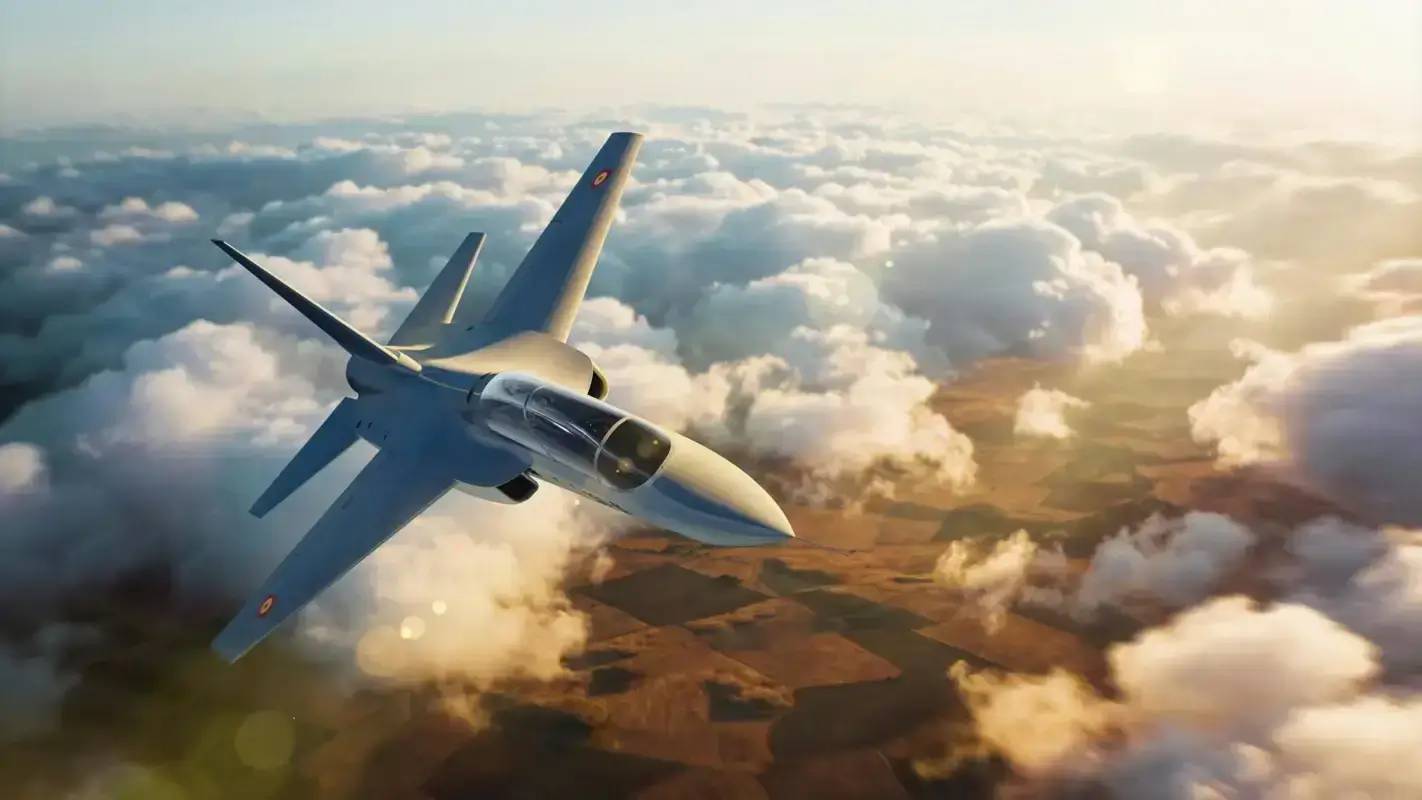
A new and critical turning point has been reached in the HÜRJET project, one of the Turkish defence industry's greatest export successes. As will be recalled, the Spanish Air and Space Force announced last December (2025) that it would select the TAI-produced HÜRJET to replace its ageing F-5 jets. The Industrialisation Agreement, which determines the implementation roadmap for this historic export in the field, was officially signed in Madrid on April 28, 2026. At the ceremony held at Airbus's facilities in Getafe, it was finalised how the fleet of 30 HÜRJET aircraft to be procured from Türkiye would be equipped with Spanish systems and transformed into the national SAETA II model.
HÜRJET SAETA II Configuration: 60 Percent Local Participation
HÜRJET will not enter the Spanish inventory with TAI's standard factory equipment. The Integrated Combat Training System (ITS-C) project, carried out with Airbus as the main contractor, involves the configuration of the aircraft according to the specific requirements of the Spanish Air Force. This new trainer aircraft, which Spain will name "SAETA II" nationally, will be shaped with 60 percent participation of Spanish industry as per the agreement.
Within this scope, sub-systems from Spanish technology companies will be integrated into the platform produced by TAI. GMV will integrate the mission computers, Sener the data links, Grupo Oesía the voice management, and Indra the Identification Friend or Foe (IFF) systems onto the aircraft. This situation technologically certifies that the flexible open architecture designed by TAI engineers on the HÜRJET provides perfect compatibility with Western and NATO-standard sub-systems.
Two-Phase Delivery and Conversion Schedule
The delivery and modification schedule for the 30 aircraft has also been clarified with the industrialisation agreement. To avoid risking the Spanish industry's integration process, the project will be carried out in two planned phases:
In the first phase, TAI will begin delivering the initial batch of 21 aircraft to Spain starting from 2028. Airbus will use one of these first aircraft as a test prototype for the integration of new-generation Spanish avionics. Furthermore, the company will redesign the training centre at Talavera la Real Air Base and prepare the ground-based training simulators for the 2029-2030 training year.
In the second phase, these 21 delivered aircraft and the remaining 9 new aircraft will be converted to Spanish standards by Airbus and local industry partners. The operational deliveries of the final SAETA II version fleet of 30 aircraft and the simulators will be fully completed between 2031 and 2035.
Strategic Autonomy
These industrialisation signatures made in Madrid show that the HÜRJET project is not merely a aircraft sale but a massive industrial ecosystem integration. As highlighted by Spanish Ministry of Defence official Amparo Valcarce at the ceremony, this partnership allows Spain to strengthen its strategic autonomy by integrating its own systems.
A global aviation giant like Airbus accepting to build its own ecosystem directly on a Turkish platform, HÜRJET, is an invaluable source of prestige. This successful industrialisation model is expected to serve as an excellent, tailor-made procurement reference for other European and NATO countries looking to renew their jet training fleets in the coming period.
Note
If you have any photos or video footage to support our news story, please share them with us using the information provided on our contact us page.
