


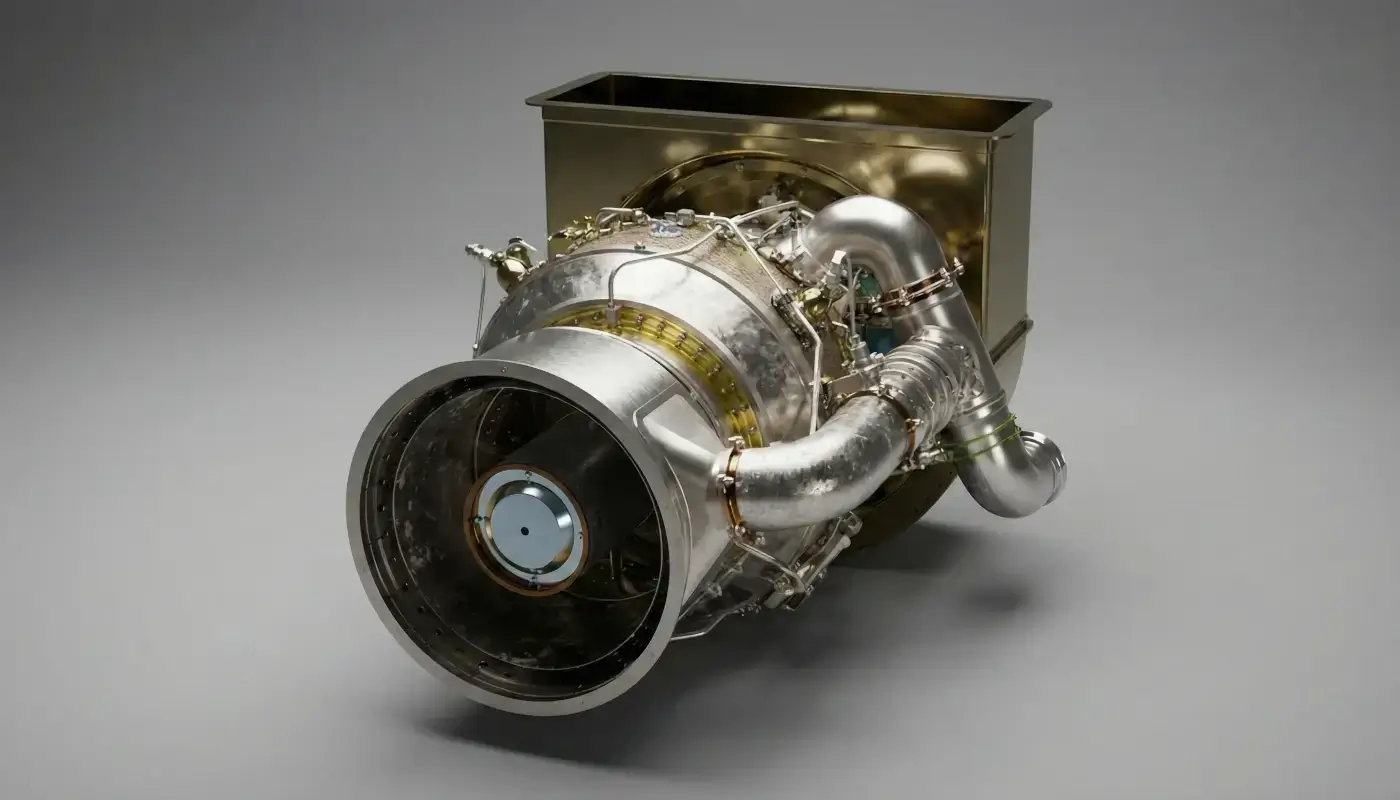
Another critical threshold is being crossed in the development process of the National Combat Aircraft KAAN. While work on the aircraft's main propulsion system continues at full speed, the Auxiliary Power Unit (APU), one of the vital parts of the power group, is being indigenised by TR Motor. The system, developed under the code name TRM-APU60 and whose technical details have been clarified, is progressing towards becoming the first national sub-system to undertake the task of meeting KAAN's ground power needs and starting the main engines.
In the aviation industry, the national character of a platform is measured not only by its airframe design but also by the indigenisation rate of the sub-systems that make that airframe functional. In the KAAN project developed by TUSAŞ, the engine and power transmission systems constitute one of the most challenging engineering areas. While design and development activities on KAAN's main engine, the TF35000, continue, TR Motor is preparing to reveal the most concrete output of this process. The TRM-APU60, which will meet the aircraft's electrical and pneumatic (compressed air) needs, holds the distinction of being the first indigenised component in the KAAN power systems family.
TRM-APU60: A Compact Gas Turbine Power Centre
The TRM-APU60, whose technical data has been shared by TR Motor, is fundamentally designed as a small-scale gas turbine engine. The aim is for this system to activate before the aircraft's main engines are started or during ground operations when the engines are off, ensuring the platform's self-sufficiency.
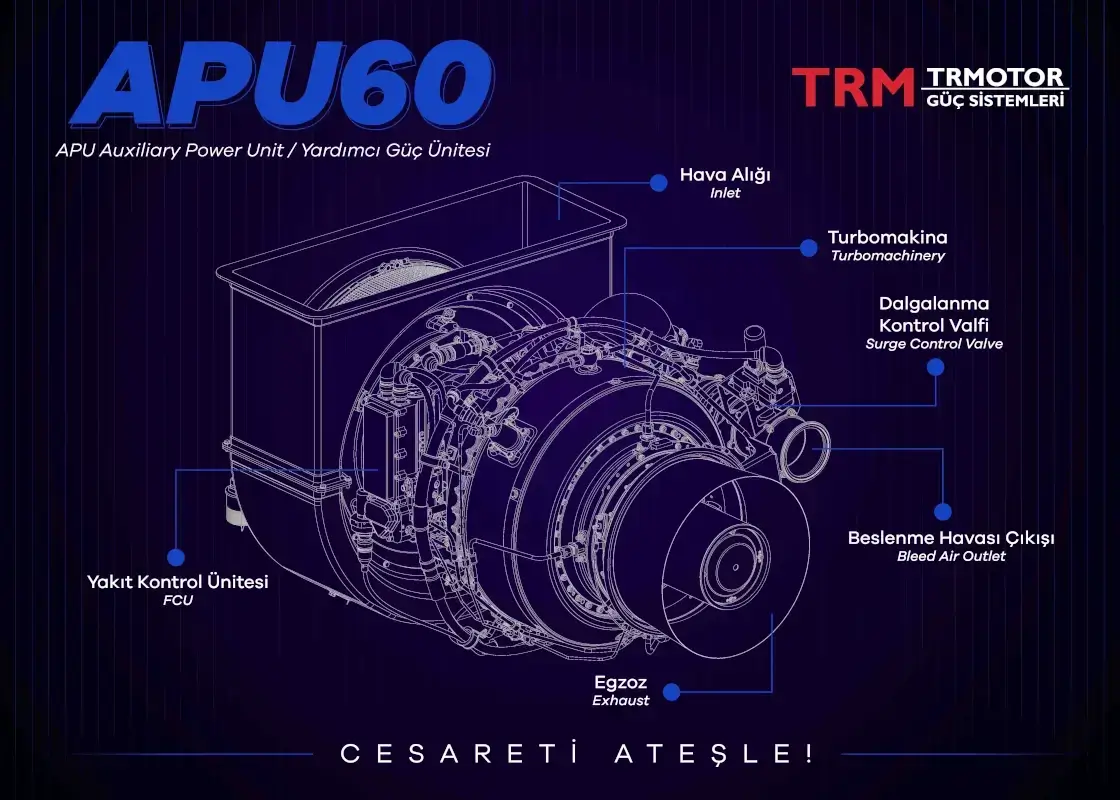
A 5th generation fighter aircraft requires a massive amount of electrical energy even when on the ground. It is planned that this energy, required for radar calibration, mission computer boot-up, cockpit display operation, and environmental control systems, will be provided by the TRM-APU60 without the need for an external Ground Power Unit (GPU). This achievement will enable KAAN to conduct independent operations even from non-equipped bases or civilian airports.
Technical Specifications and Operational Goals
The technical data released for the TRM-APU60 indicates the system is being developed with high-performance goals meeting military standards (Mil-Spec):
Electrical Power (35 kW)
The system is projected to generate 35 kW of electrical power under Sea Level Static ISA conditions. This capacity is considered a critical value for the uninterrupted power supply during ground tests for KAAN's AESA radar, electronic warfare pods, and advanced avionics.
Pneumatic Power and Motor Starting (1.46 kg/s²)
The most critical task of an APU is to provide the initial rotation to the main engine. The TRM-APU60 aims to generate the pneumatic power required to start KAAN's high-thrust turbofan engines, even in the most challenging weather conditions, by providing an airflow of 1.46 kg per second at a pressure of 441 kPa (Kilopascals).
Service Altitude (30,000 Feet)
The system is planned to be operational not only on the ground but also in the air. Designed to function up to an altitude of 30,000 feet (approximately 9,100 metres), the APU will engage in emergencies such as an in-flight main engine shutdown or generator failure, continuing to supply the aircraft's hydraulic and electrical systems. This feature provides vital redundancy for flight safety.
Weight/Power Optimisation
Every gram counts in aviation. TR Motor engineers aim to fit all this power generation capacity into a compact weight of just 120 kg. This design indicates that maximum energy efficiency will be achieved with minimal impact on the aircraft's total weight.
Engineering Challenges and TR Motor's Role
According to experts, developing an APU involves challenges similar to developing a large jet engine in terms of thermodynamics and materials science. Turbine discs rotating at very high RPMs within small volumes must operate under extreme temperatures and pressures.
With the TRM-APU60 project, TR Motor continues to enhance its competence in:
- High-temperature turbine blade technology,
- Combustion chamber efficiency,
- Precision gearbox design,
- Digital engine control software.
This project is seen as a reflection of the gains achieved in gas turbine engine technologies being applied in the field, prior to the ultimate goal for KAAN, the National Turbofan Engine TF35000.
A Critical Step Towards Strategic Independence
This indigenisation process in KAAN's power systems holds strategic importance for Türkiye's supply security in the defence industry. The APU market, hitherto generally monopolised by US or European manufacturers, is a critical area subject to potential export restrictions. With the TRM-APU60, Türkiye aims to end foreign dependency in engine starting and ground power systems.
Furthermore, the system's design suitability for use in both civil and military aircraft indicates that the TRM-APU60 has the potential to be a global product, usable not only in KAAN but also in future civil aviation projects.
