


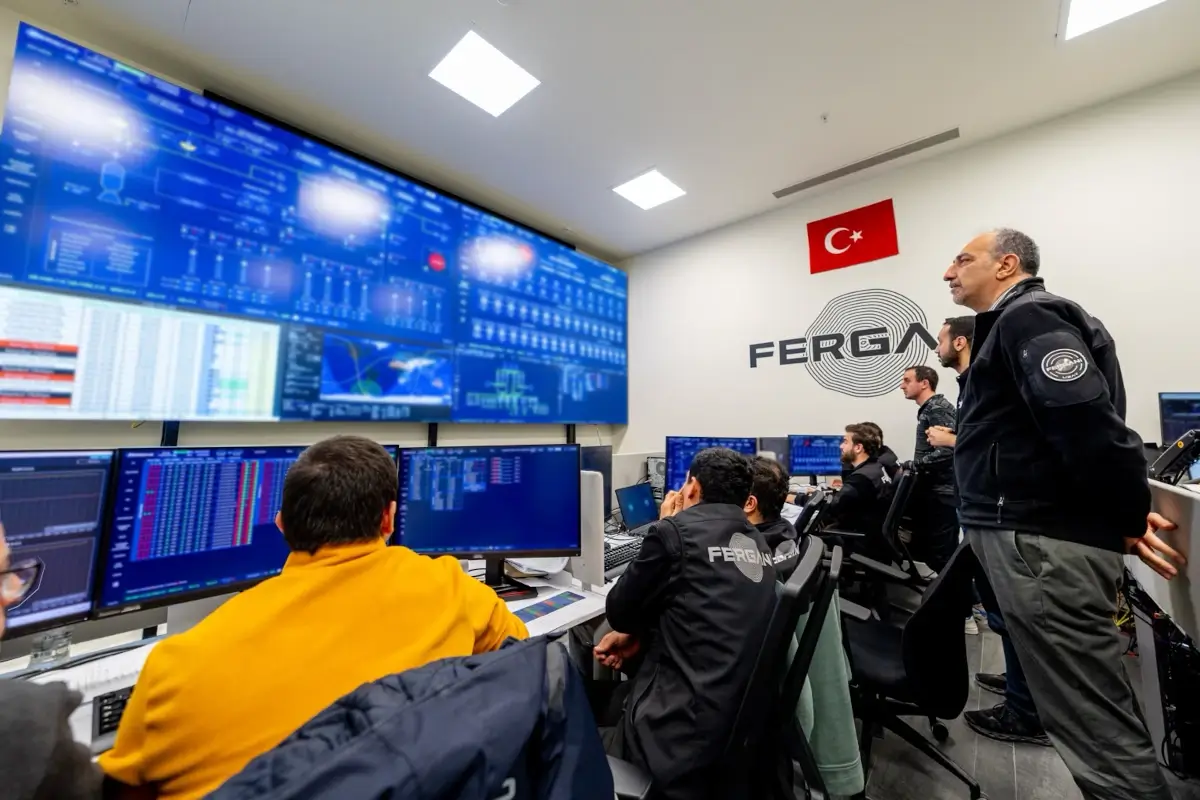
Fergani Space, Türkiye's quiet but steadily advancing force in the space race, has achieved a success that will go down in global aviation and space history. Fergani, which blossomed within Baykar and quickly began producing tangible results, has developed its first orbital transfer vehicle (ATV). FGN-TUG-S01, Turkey successfully completed its first orbital launch test in space. This test was not just a technical maneuver; it was the clearest proof that Türkiye has become one of the world's leading countries in hybrid rocket technology, and even reached the top in this specific field.
This operation, one of the most critical steps of the National Technology Initiative in space, entered the literature with the successful use of a hybrid propulsion system for the first time in space history in an orbital change maneuver.
From 530 Kilometers to 720 Kilometers: Flawless Maneuvering
Fergani's FGN-TUG-S01 successfully completed its most critical test, engine ignition, after beginning its orbital mission. According to technical data shared by Fergani Space, the vehicle From its circular orbit at an altitude of 530 kilometers, by firing up its hybrid engine an elliptical orbit with an apogee altitude of 720 kilometers He switched sides.
This process, known as "Orbital Transfer" in aerospace engineering, requires extremely precise calculations and a stable propulsion system. It is vital that the engine responds accurately in fractions of a second, consistently produces the desired thrust, and that the software directs this power correctly. The statement indicated that the maneuver was completed "cleanly and in a controlled manner." From an engineering perspective, this means:
- Fuel combustion stability is at an excellent level.
- The flight control algorithms did not experience any deviations.
- The thermal management systems operated flawlessly in outer space.
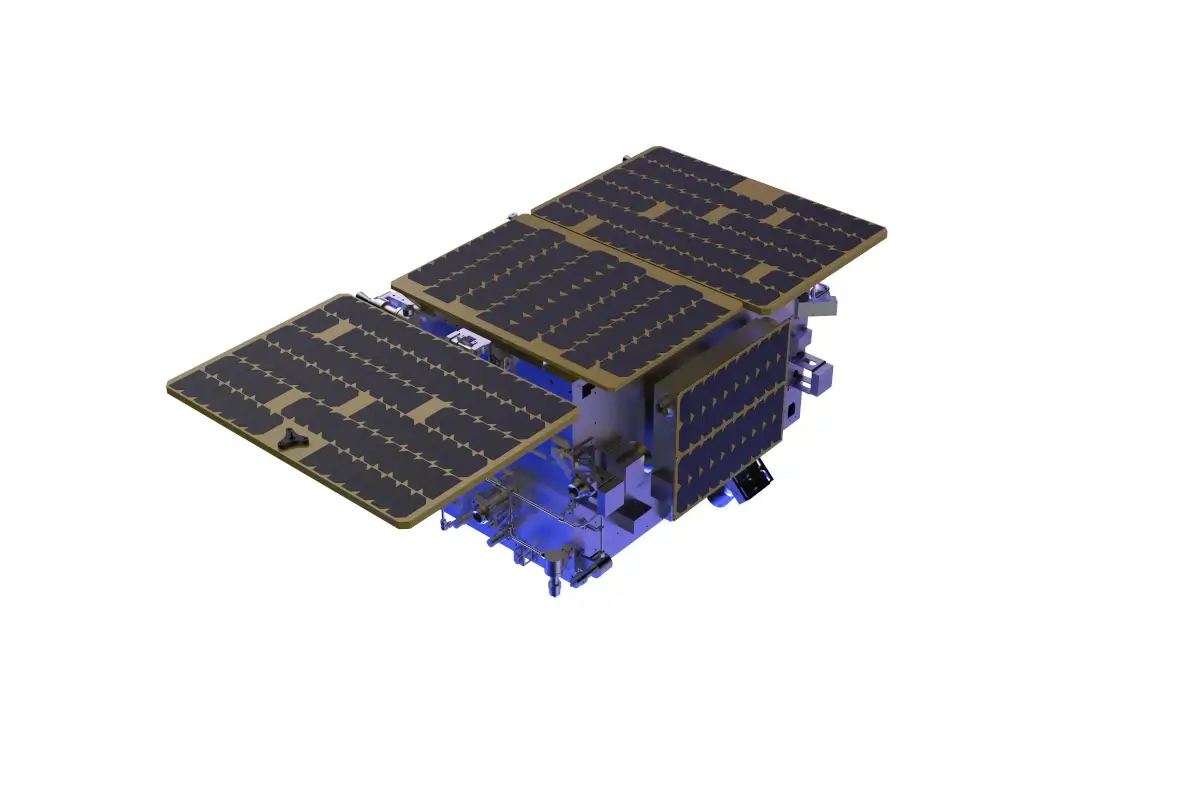
Mission Complete: FRG-10D1 CubeSat is in Orbit.
Immediately following the successful launch, the second critical phase of the operation began. Carried on the Orbital Transfer Vehicle (ETV) Fergani CubeSat (FRG-10D1), It separated from the main body and settled into its own orbit.
The primary task of a transfer vehicle is to “distribute” its payloads (satellites) to different targeted orbits. Just like a shuttle vehicle drops off passengers at different stops, FGN-TUG-S01 successfully released its payload. The flawless operation of the separation mechanism demonstrates that Fergani has gained commercial reliability in future multi-satellite launch missions.
Why a Hybrid Engine? What Differentiates It From Its Competitors?
The most crucial aspect of this achievement is the engine technology used. Traditionally, the space industry uses either liquid-fueled (high-performance but complex/expensive) or solid-fueled (simple but difficult to control/unstoppable) engines. Fergani, however, opted for a "Hybrid Propulsion System" and became the first country to successfully fire it in space. So, why is the hybrid engine so important and a game-changer?
1. Security and Storage Advantage
Liquid-fueled rockets typically require cryogenic (very cold) storage or toxic chemicals. Solid fuels, on the other hand, carry a risk of explosion during production and transportation. In hybrid engines, the fuel is solid and the oxidizer is liquid. No reaction occurs unless these two components come together in the combustion chamber. This feature allows for efficient operation before launch and during orbital transit. maximum security provides.
2. Cost-Effectiveness
Hybrid engines have a much simpler design (turbopumps, complex valves, etc.) compared to liquid-fuel engines. This simplicity reduces production costs. In space logistics, reducing the "dollar/kilogram" cost is key to competitiveness. With this technology, Fergani will be able to offer much more economical launch and transfer solutions than its competitors.
3. Stop and Restart Capability
Solid-fuel rockets, once launched, burn until exhaustion; they cannot be stopped. However, for orbital maneuvers, it is necessary to shut off the engine, glide, and reignite at the correct point. Hybrid engines can be stopped and restarted by interrupting the flow of liquid oxidizer. Fergani's engine provides this flexibility, enabling complex orbital maneuvers.
4. Green Technology
The use of more environmentally friendly and manageable chemicals such as hydrogen peroxide as oxidizers in Fergani's engines (based on previous reports) provides an environmental and operational advantage over toxic hydrazine-based systems.
“Our "Attractor in Space" Power: Strategic Independence
Orbital Transfer Vehicles (Space Tugs) like FGN-TUG-S01 are the logistical backbone of the new space economy. Large launch rockets typically carry satellites to a specific “drop point.” To reach their final mission altitude or orbital angle, satellites either need to use their own engines (which makes the satellite heavier and more expensive) or utilize a “space truck” like Fergani’s vehicle.
Türkiye's possession of this technology opens up the following strategic opportunities:
- National GPS/GNSS Goal: The planned future deployment of national positioning and navigation satellites will eliminate dependence on foreign sources for orbital placement.
- Military and Intelligence Flexibility: We will gain the ability to secretly or unexpectedly alter the orbits of our strategic satellites.
- Commercial Market: Fergani will generate foreign currency revenue for Türkiye by offering "last-mile delivery" services to global satellite customers.
Not a Prototype, but Proven Technology
Baykar and Fergani have a culture that prefers saying "we have done it" rather than "we will do it." The ascent of FGN-TUG-S01 from 530 km to 720 km is not just an altitude change, but a leap forward for Turkish engineering. The stability of the flight software, the precision of the propulsion system, and the success of the separation mechanism prove the maturity of Fergani's mission architecture.
While many companies around the world are working on hybrid engines, the fact that a Turkish company is the first to successfully use it in a space environment, in a real mission, and in an orbital change maneuver summarizes the level reached by the national technology ecosystem.
Key words: Fergani Space, hybrid rocket engine, FGN-TUG-S01, orbital transfer vehicle, Selcuk Bayraktar, space technology, FRG-10D1, Baykar, national space program, satellite launch
Note
If you have any photos or video footage to support our news story, please share them with us using the information provided on our contact us page.
