


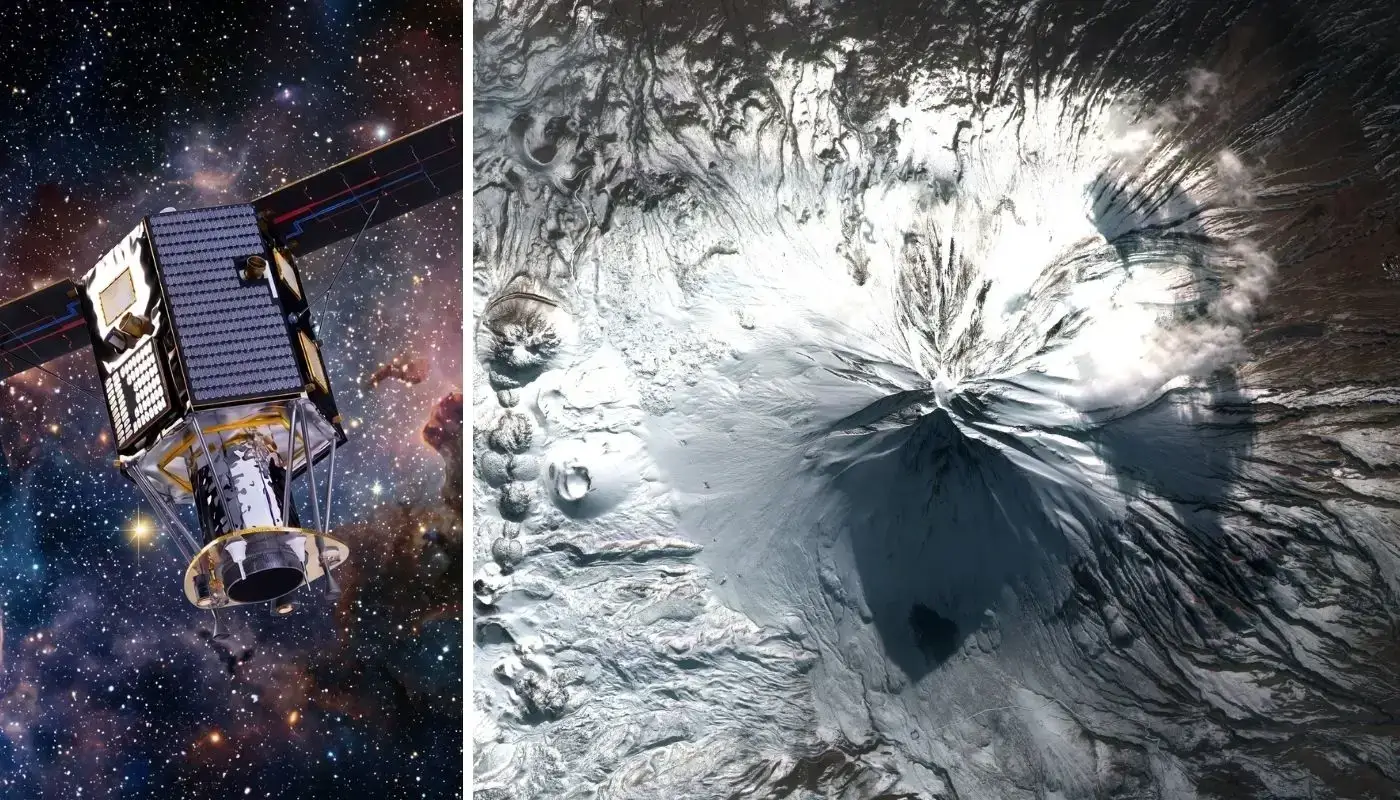
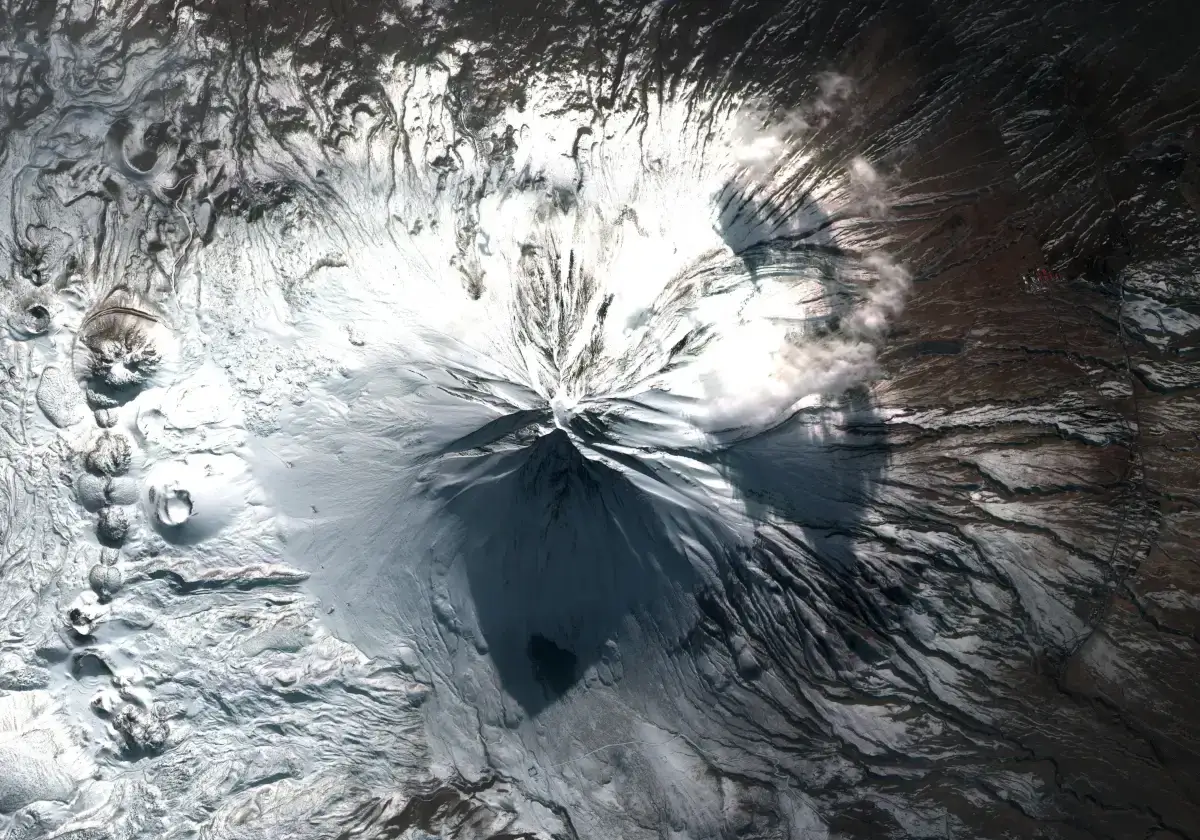
The Ministry of National Defence celebrated the third year in space of Türkiye's first domestic sub-metre resolution observation satellite, Göktürk-2B (formerly known as İMECE), with a special image of Mount Ararat taken from space. Launched into space on April 15, 2023, this strategic platform completed exactly 16,100 orbits around the Earth over the past three years. Thus, the Göktürk-2B satellite successfully recorded high-resolution images of a vast area covering 8,485,000 square kilometres. Managed by the Reconnaissance Satellite Battalion Command under the Air Force Space Command, Göktürk-2B continues to be the most critical intelligence power of the Turkish Armed Forces in space.
8.4 Million Square Kilometres of Observation
With a mass of 700 kilograms, Göktürk-2B operates seamlessly in its orbit at an altitude of 680 kilometres above Earth. TÜBİTAK UZAY engineers designed and produced a space-qualified electro-optical camera for the first time in Türkiye while building this platform. Thus, Türkiye moved away from being a country that merely purchased images from space at high costs. Furthermore, our country reached a level of technology capable of producing its own high-resolution camera and exporting it to the global market.
The technical depth of the system is not limited to the optical camera. Our engineers produced the electric propulsion system enabling the satellite to perform precise orbital manoeuvres entirely with domestic resources. Additionally, critical subsystems such as star trackers, sun sensors, reaction wheels, magnetometers, and the flight computer also bear the signature of the Turkish defence industry. Göktürk-2B demonstrates extraordinary hardware durability against the harsh radiation and extreme temperature variations in space.
Transformation from İMECE to GÖKTÜRK-2B
The public knew this strategic satellite by the name "İMECE" during its design and launch phase. Launched aboard a SpaceX Falcon 9 rocket from Vandenberg Space Force Base in the USA on April 15, 2023, the satellite successfully settled into its orbit. Following extensive system and acceptance tests, the platform was officially inducted into the Air Force Command inventory on May 22, 2025. During this handover ceremony, in line with military aviation naming standards, the satellite's name was updated to GÖKTÜRK-2B.
Space is now recognised not merely as a civilian research domain but directly as a defence domain in modern warfare doctrines. Military experts frequently emphasise that maintaining a continuous and independent presence in space is imperative against all forms of asymmetric threats. Göktürk-2B transmits real-time, high-resolution target intelligence, needed by the Turkish Armed Forces in cross-border operations, securely encrypted to Ankara using its indigenous X and S-band communication systems.
The Path to Constellation Satellites
These flawless three years spent in space by Göktürk-2B clearly demonstrate Türkiye's vision of full independence in space technologies. This acquired engineering and operational experience opens the door to even more strategic goals. TÜBİTAK UZAY is already rapidly executing the high-resolution constellation satellite development project, leveraging the infrastructure and skilled human resources gained from this project.
Thanks to these new constellation satellites to be placed into orbit in the coming years, the frequency of passing over any point on Earth will be radically shortened. Türkiye is transforming into a global space power capable of instantly monitoring the entire world and generating intelligence using its own national satellites, not just its own borders.
Note
If you have any photos or video footage to support our news story, please share them with us using the information provided on our contact us page.
