


The Turkish defense industry is crowning its success in platform production with a revolutionary project in the field of software and artificial intelligence. The “ROBOTIM Project,” coordinated by the Presidency of Defense Industries (SSB), enables UAVs in the sky and robotic soldiers (UGVs) on the ground to conduct “joint operations” with a single swarm intelligence, without the need for GPS and fully autonomously. This project is the embodiment of the “digital unity” concept in the field.
Although the use of unmanned systems is becoming widespread in modern warfare, most of these systems are still controlled individually by a single operator or operate independently of each other. Turkey has launched a project to overcome this limitation. ROBOTIM Project It is building a "common language and intelligence" between unmanned systems.

The project's vision is defined by the Presidency of Defence Industries as "Preparing for the future operational environment by adding new technologies to our unmanned systems." Here is a technical analysis of the changes ROBOTİM will bring to the field.
Heterogeneous Swarm Architecture: Aerial Surveillance, Ground Strike
The most fundamental feature that distinguishes ROBOTİM from other swarm projects is... “"Heterogeneous Herd"” It is a structure. When people usually think of swarms, only drones (UAVs) come to mind. However, ROBOTIM;
- With rotary-wing drones flying in the air,
- Land-based or wheeled UGVs,
It is a complex structure where members know each other, share data, and assign tasks.
Scenario: When a drone conducting aerial reconnaissance detects a threat behind a blind spot, it can autonomously transmit this data to an armed robot on the ground, giving the command, "The target is within your firing range, destroy it." All of this will happen in seconds, without human intervention.
No "Blind Flight" Without GPS
In modern battlefields with a high concentration of electronic warfare (EW) systems, GPS signal jamming is the greatest risk. This is the most strategic aspect of the ROBOTIM Project., “"Navigation in a Non-GPS Environment"” It is a talent.

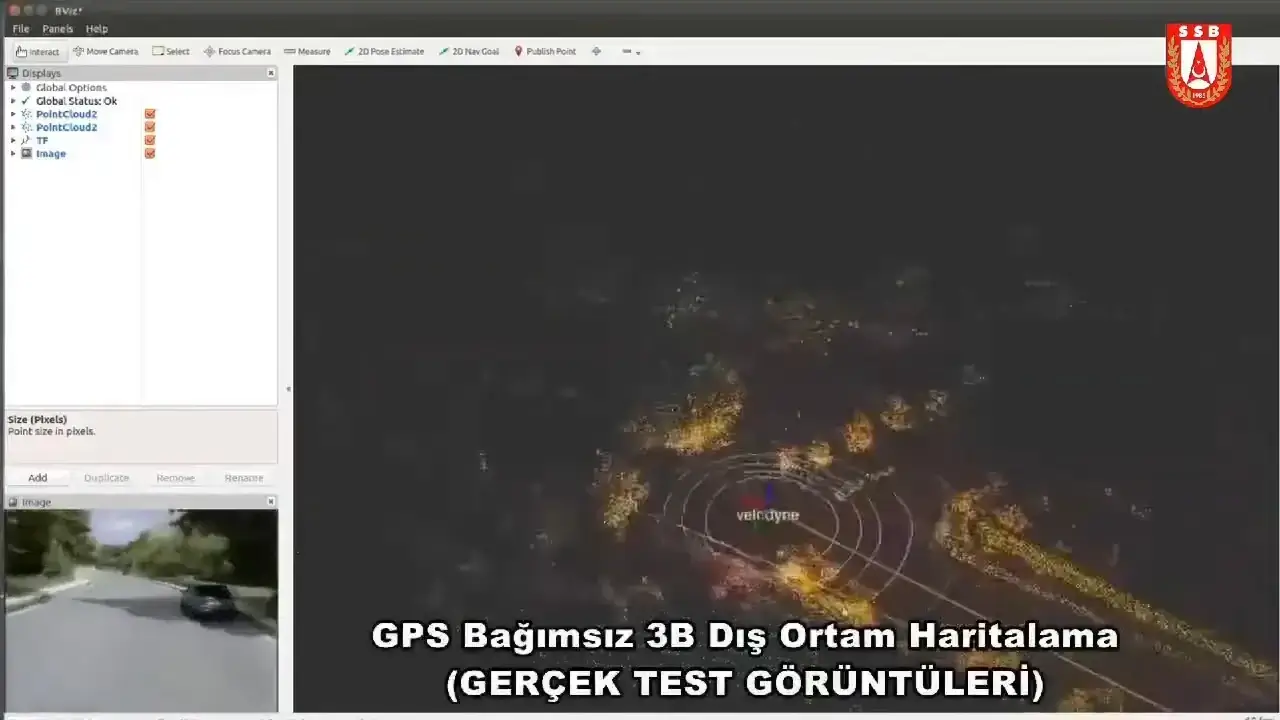
The system determines its position using its own cameras, LIDAR sensors, and image processing algorithms (SLAM technology), without needing satellite data. This means that even if the enemy cuts off their GPS, the Turkish robots don't lose their way or abandon their mission.
Full Autonomy and Collaborative Artificial Intelligence
The phrase "Fully Autonomous," emphasized by the Head of the Defense Industry, İsmail Demir, in the project's announcement, refers to the system's decision-support mechanism. The robots don't just follow the given route;
- He overcomes obstacles,
- If one vehicle in the swarm is hit, it hands over its task to another (Self-healing).,
- They are sharing the task.
The military of the future will be "software".
ROBOTIM is proof that Türkiye is not only a manufacturer of equipment (aircraft, tanks), but also a country that develops "war algorithms" to manage this equipment. These "collaborationist robot teams," capable of entering the most dangerous areas without risking human lives, will be the greatest force multiplier for Turkish soldiers in the field.
Note
If you have any photos or video footage to support our news story, please share them with us using the information provided on our contact us page.
