


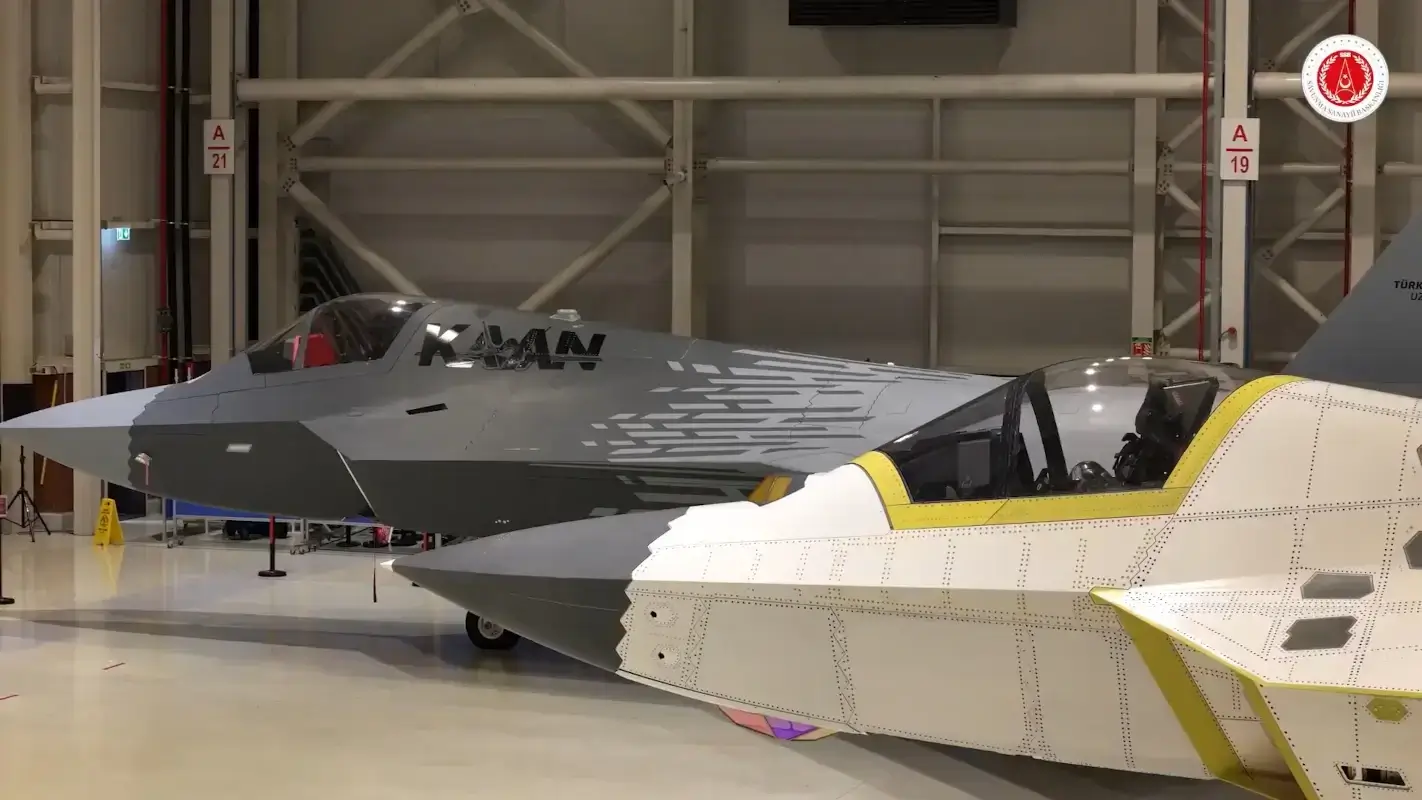
The display of the National Combat Aircraft KAAN with a Saudi Arabian flag at the World Defense Show (WDS 2026) in Riyadh, coupled with ongoing joint production talks, has caused alarm bells to ring in Washington. According to an analysis by the UK-based Middle East Eye (MEE) citing US officials, the Trump administration views Saudi Arabia's interest in KAAN as a threat to the US's monopolistic position in the arms market. While the US asks Riyadh, "Why go to Türkiye?", the Saudis view KAAN as a strategic lever and a gateway to technology transfer.
The rise of the Turkish defense industry continues to shake the established balances of the global arms market. The partnership and procurement talks conducted by Saudi Arabia with TUSAŞ (TAI) for the KAAN project have unsettled the US administration. The analysis signed by Sean Mathews in Middle East Eye revealed that KAAN is not just an aircraft, but a game-changer balancing US hegemony in the Middle East.
US Pressure on Riyadh: Why KAAN?
According to the report, the US administration under Donald Trump is demanding clarity from Riyadh regarding its arms deals with regional countries, particularly Türkiye.
An unnamed US official summarized Washington's perspective with these words:
"The message to the Saudis has been, ‘What need do you feel is not being met by the US, that you need to go to Türkiye for the Kaan?' This administration wants to be the sole provider, putting American exports first."
US officials state that while they blocked Saudi Arabia's purchase of the JF-17 from Pakistan, they have not received a similar guarantee to abandon from Riyadh regarding the ongoing KAAN talks with Türkiye.
The Saudi Answer: Vision 2030 and Tech Transfer
While US analysts interpret Saudi Arabia's interest in KAAN as a bargaining chip against the US, Türkiye puts an offer on the table that the US does not: Joint Production and Technology Transfer.
Saudi Crown Prince Mohammed bin Salman's "Vision 2030" requires the localization of 50% of defense spending. While the US sells platforms like the F-35 as black boxes, Türkiye offers Saudi Arabia the opportunity to be a production partner and develop technology in the KAAN project.
Hesham Alghannam, Director General of Strategic Studies at Naif Arab University, emphasized this difference to MEE:
"The pace of US engagement on deep, structured co-production and transfer remains perceived as slower than Saudi aspirations, which will certainly prompt Riyadh to continue exploring partnerships that are often more flexible on local production and knowledge sharing."
KAAN and F-35: Competitors or Complements?
The analysis focuses on the scenario where Saudi Arabia could buy both the F-35 from the US and the KAAN from Türkiye. Referencing TUSAŞ (TAI) General Manager Mehmet Demiroğlu's statement that "between 20 and 50 warplanes could be made for the kingdom," it is noted that KAAN would serve as a strategic insurance policy diversifying Saudi air power rather than replacing the F-35.
Furthermore, the pressure from the Israeli lobby to restrict the features of the F-35s to be sold to Saudi Arabia (an inferior version) brings Riyadh even closer to KAAN, a fully independent platform.
The New Star of a Multipolar Middle East
The Middle East Eye analysis demonstrates that the US's all or nothing imposition no longer finds resonance in the Middle East. It highlights that Saudi Arabia is seeking a new balance with Türkiye, Egypt, and Pakistan against the UAE and Israel axis, and KAAN has become one of the strongest symbols of this new geopolitical equation.
