


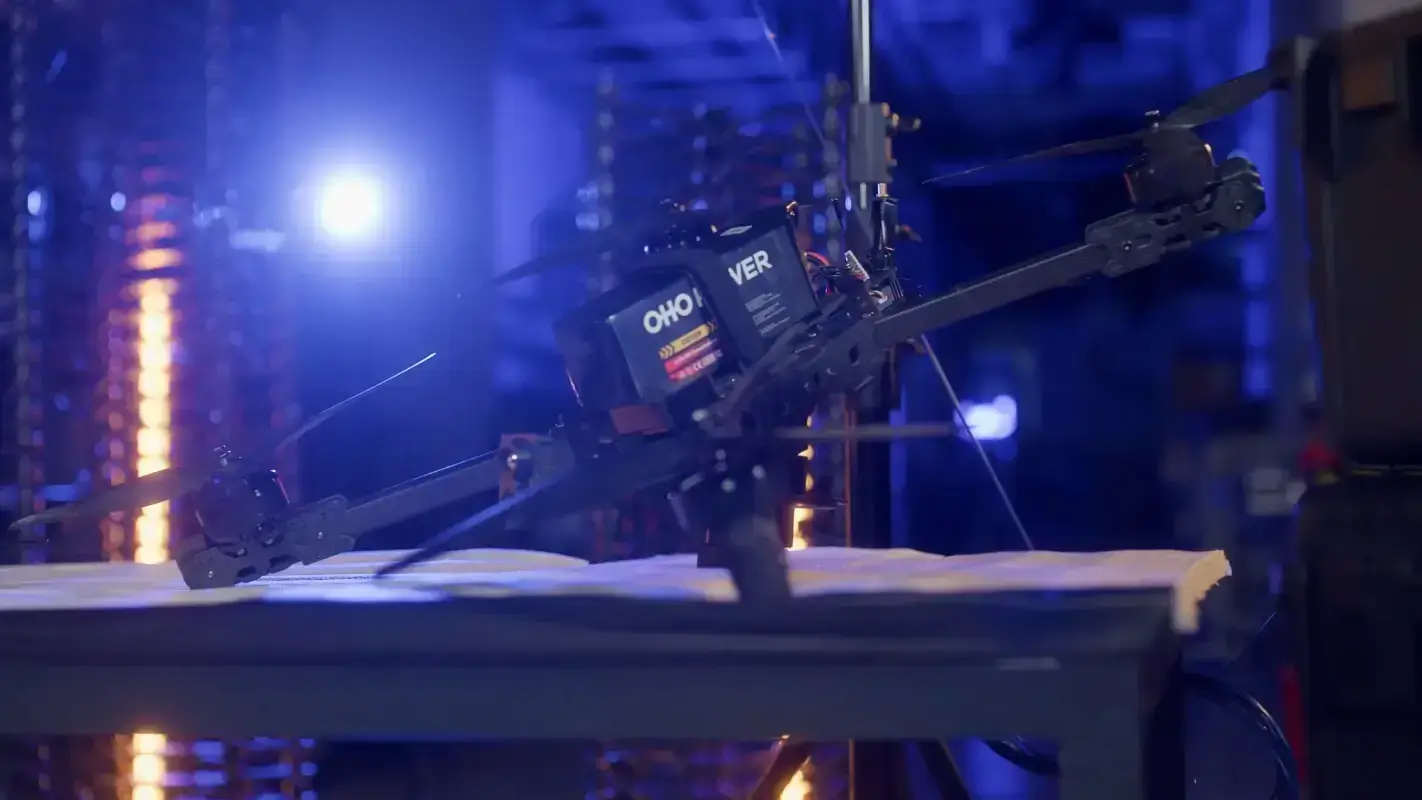
In FPV (First Person View) kamikaze drone systems, a game-changer in the modern battlefield, Turkey has transitioned from "workshop-type" production to "industrial mass production." Haluk Bayraktar announced that the annual capacity of drones produced under the Skydagger brand has reached 120,000 units. The production line, built with full vertical integration from motor to warhead, marks a new era in Türkiye's asymmetric warfare capabilities.
Recent conflicts, most notably the Ukraine-Russia war, have proven the strategic importance of low-cost FPV drones capable of neutralizing multi-million dollar air defense systems or armored vehicles. Developed to meet this need... Skydagger, With shared production line images and technical data, Türkiye demonstrated its ambition in this field.
The production data shared by Haluk Bayraktar, emphasizing that "every component is domestic, national, and original," points not just to an assembly line, but to a deep-rooted technology ecosystem.
Production Capacity in Numbers: 10,000 Drones per Month
Based on the published production line data, it appears that the Skydagger facilities are designed as a 24/7 operational factory. According to the technical data, the plant's monthly capacity is as follows:
- Drone Manufacturing: 10,000 units per month (120,000 units per year). This figure represents a production capacity close to the rate of conventional ammunition stockpiling.
- Engine Manufacturing: 20,000 units per month. (Producing engines twice the drone capacity indicates that spare parts logistics are also being considered, or that there is infrastructure for twin-engine/fixed-wing variations.)
- Ground Control Unit (GCU): 300 units per month. (This difference between drone production and GCU production illustrates the operational cycle where the ammunition is “expendable” and the command unit is “reusable.” This figure means that 300 new FPV teams or stations can be deployed each month.)
- Battery Pack: 10,000 units per month.
- Fiber Optic Line: 2,500 units per month. (This detail is a critical technical metric indicating that the drones may also have a wired guidance option, making them resistant to electronic jamming.)
Vertical Integration and Complete Independence
The most critical point in Haluk Bayraktar's statement is..., “"From electric motor to warhead"” This is the statement. While the general trend in FPV drone production worldwide is to assemble ready-made parts (motor, ESC, control board) of Chinese origin, the nationalization of these components is a strategic necessity in the Skydagger project.
The images show “"Motor Production Line"” The details show that even the motor windings (coiling) and magnet placements are manufactured in-house using robotic arms and precision machinery. The fact that the flight control computer (FC) and video communication modules are domestically produced is vital for the security of frequency hopping communication and encrypted data transfer in the field.
Fixed Wing and Training Simulation
Another detail that stands out in the video is that it's not just quadcopter kamikaze pilots, “"Fixwing Production Line"” This statement also includes the production of fixed-wing models. Fixed-wing platforms offer longer range and flight duration, increasing operational depth.
Also integrated into the production line “Skydagger FPV Simulator” The stations prove that operator training is as much a part of the project as hardware production. Presented under the motto "Drones of War," the simulation enables cost-effective operator training using realistic physics engines.
Asymmetric Deterrence
An annual capacity of 120,000 units demonstrates that Türkiye has acquired the capability to conduct "swarm attacks" or maintain continuous pressure on the front line in a potential conventional conflict.
Alongside multi-million dollar aircraft, systems like Skydagger, which are cost-effective and easy to transport, are proof that the Turkish defense industry has overcome both the "quality" and "quantity" challenges through technological solutions.
Note
If you have any photos or video footage to support our news story, please share them with us using the information provided on our contact us page.
