


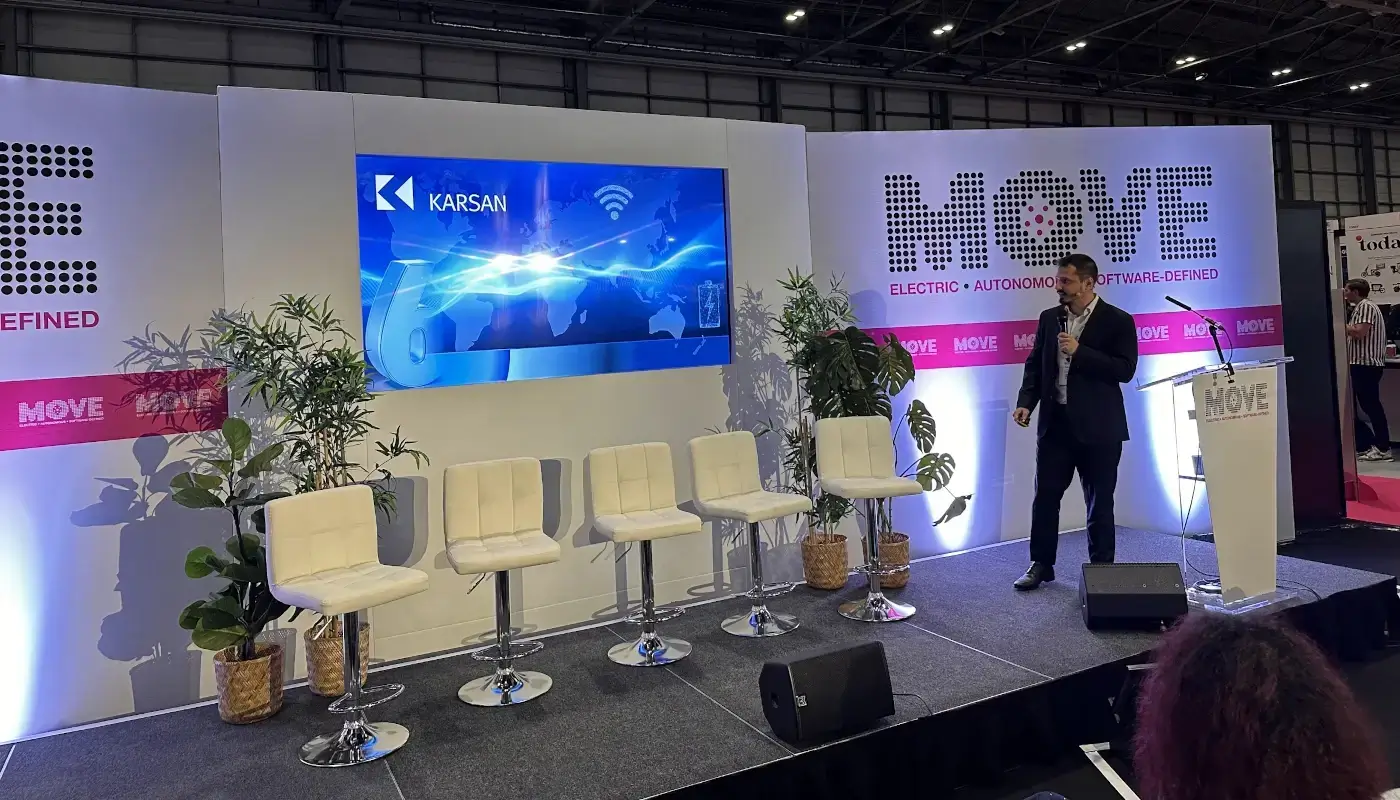
Karsan, which serves with over 2,400 electric buses in 29 countries, shared the future of autonomous driving technologies at the MOVE 2026 event held in London. The company announced that its autonomous vehicles have covered enough distance to circle the globe three times in the last five years, achieving a 99.5 percent autonomous usage success rate during this period. Kaan Aydın, Karsan's Regional Sales Manager, announced at his presentation at MOVE 2026 London that they aim to completely remove safety drivers from vehicles by the first quarter of 2028, reducing costs by 34 percent and producing a new platform designed from scratch to be autonomous.
Circled the Globe 3 Times, Achieved 99.5 Percent Success
Kaan Aydın, Karsan's Regional Sales Manager, presented the company's concrete achievements in the autonomous field with figures in his presentation. Autonomous vehicles, which carried 60,000 passengers in the last five years, achieved 99.5 percent driverless operation. The rate requiring intervention in autonomous driving remained at only 0.5 percent. Aydın said, "These are not just ideas, these are real. These vehicles are already operating on public roads."
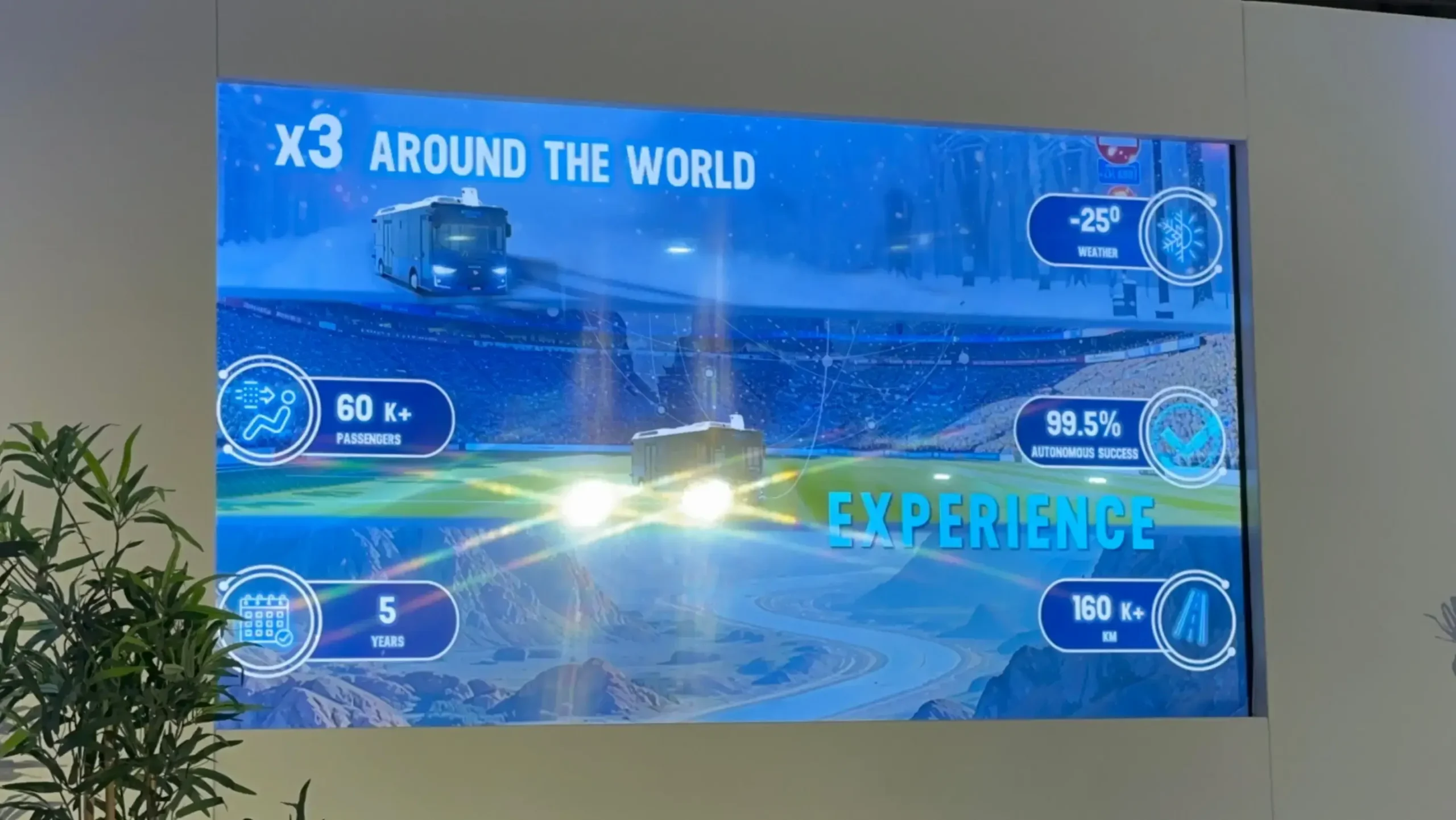
The most striking example of this success is in Stavanger, Norway. The Autonomous e-ATAK, which operates there despite challenging winter conditions and 800-metre tunnels, has received approval for fully driverless operation in traffic according to Norwegian laws. In the US, the Autonomous e-JESTs, which transport passengers from the city centre to stadiums during the World Cup in Atlanta, have become Karsan's flagship in North America. The company will deliver 2 e-JESTs to Liverpool this week and will start a new autonomous project in Madrid in July.
An End to Human Error and the Driver Crisis
Aydın listed the three main reasons for the world's shift to autonomous driving: driver shortage, total cost of ownership (TCO), and accidents caused by human error. "It's really hard to find drivers today. When you receive bad news or get angry with someone in traffic, it affects your driving. This increases the likelihood of you and others getting into accidents," said Aydın, emphasising that autonomous systems are not affected by emotional fluctuations.
Stating that the mindset is shifting from driver-centric to passenger-centric with autonomous vehicles, Aydın noted that monitors and display panels inside buses are now being adapted for passenger comfort.
Karsan is the Only Company in Europe with Type Approval
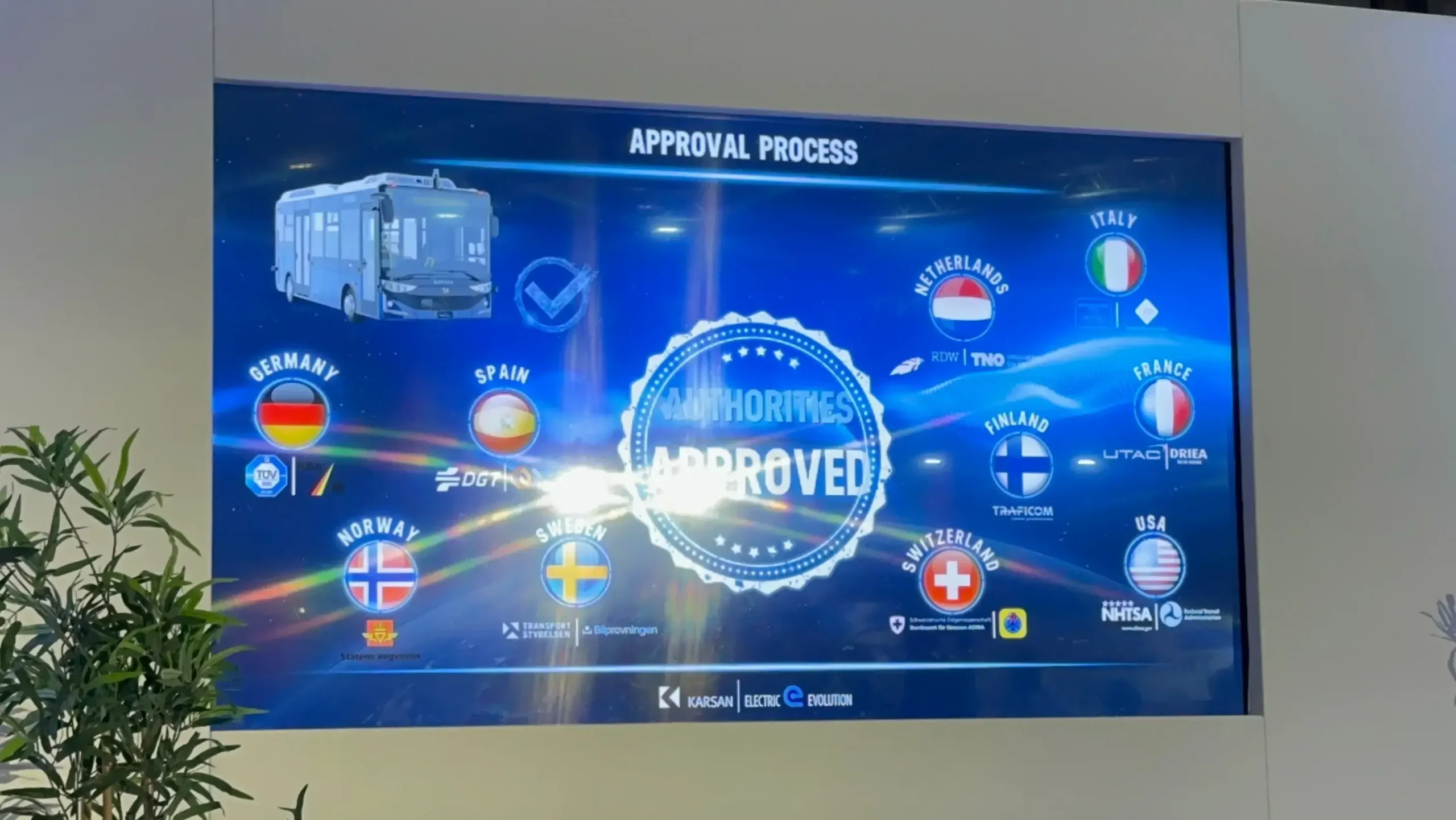
One of the biggest obstacles to the scalability of autonomous vehicles is the lack of common regulations. In the European Union, obtaining full type approval for an autonomous bus involves 6 different stages. Aydın stated, "There is no reference yet to standardise type approval in the EU; it is still in the negotiation phase. However, as Karsan, we are the only company in the world to have received the European Type Approved Basic Vehicle certificate." The goal is to complete all remaining approvals by the first quarter of 2027.
Karsan provides end-to-end support to customers in collaboration with ADASTEC and Applied Autonomy. Aydın emphasised the integrated service model, saying, "The job doesn't end with just selling the bus. We try to offer everything in a single package."
A Global Autonomous Mobilisation with 9 Projects in One Year
Karsan presented a striking summary of its global expansion in just one year (2025-2026). Developing 9 different autonomous projects across Europe, Karsan successfully transitioned from pilot applications to commercialisation during this record-breaking one-year period. Within this scope, the "on-demand" operations, carried out jointly with the Madrid government and commercialised last year, will begin in early July. The 2 autonomous buses delivered to Rotterdam Airport in the Netherlands continue to serve as apron vehicles.
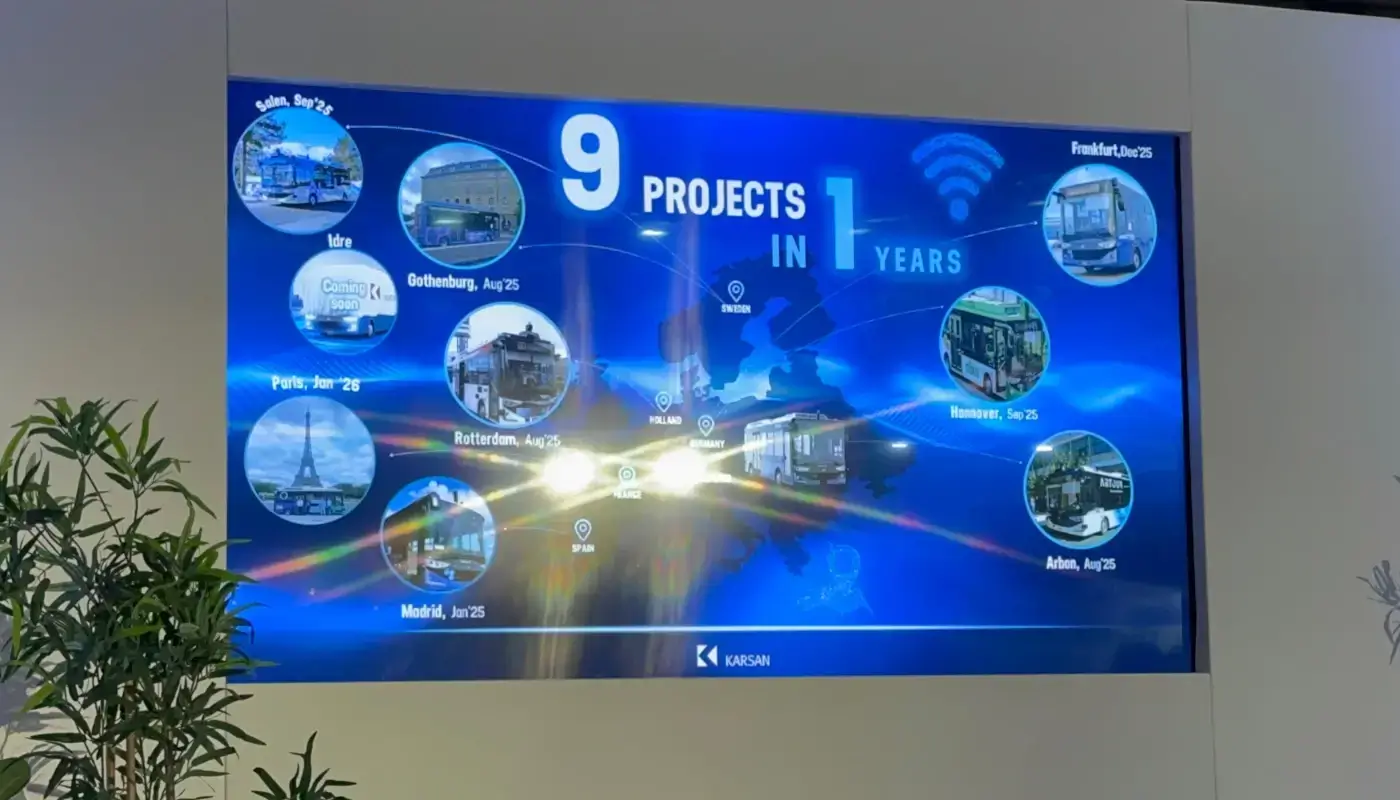
Extending its autonomous vision to the US, Karsan has put the first 5 of its 10-vehicle autonomous electric minibus tender won in Atlanta on the roads; these vehicles are currently transporting passengers from the city centre to stadiums during the World Cup. In Stavanger, Norway, drivers have begun to be completely removed from the system in autonomous vehicles that provide flawless service in freezing temperatures and through 800-metre tunnels. All these projects show that Karsan has successfully moved its autonomous technology from the idea stage to the centre of commercial operations.
Karsan's Signature in the UK Market: e-JEST Delivery to Liverpool
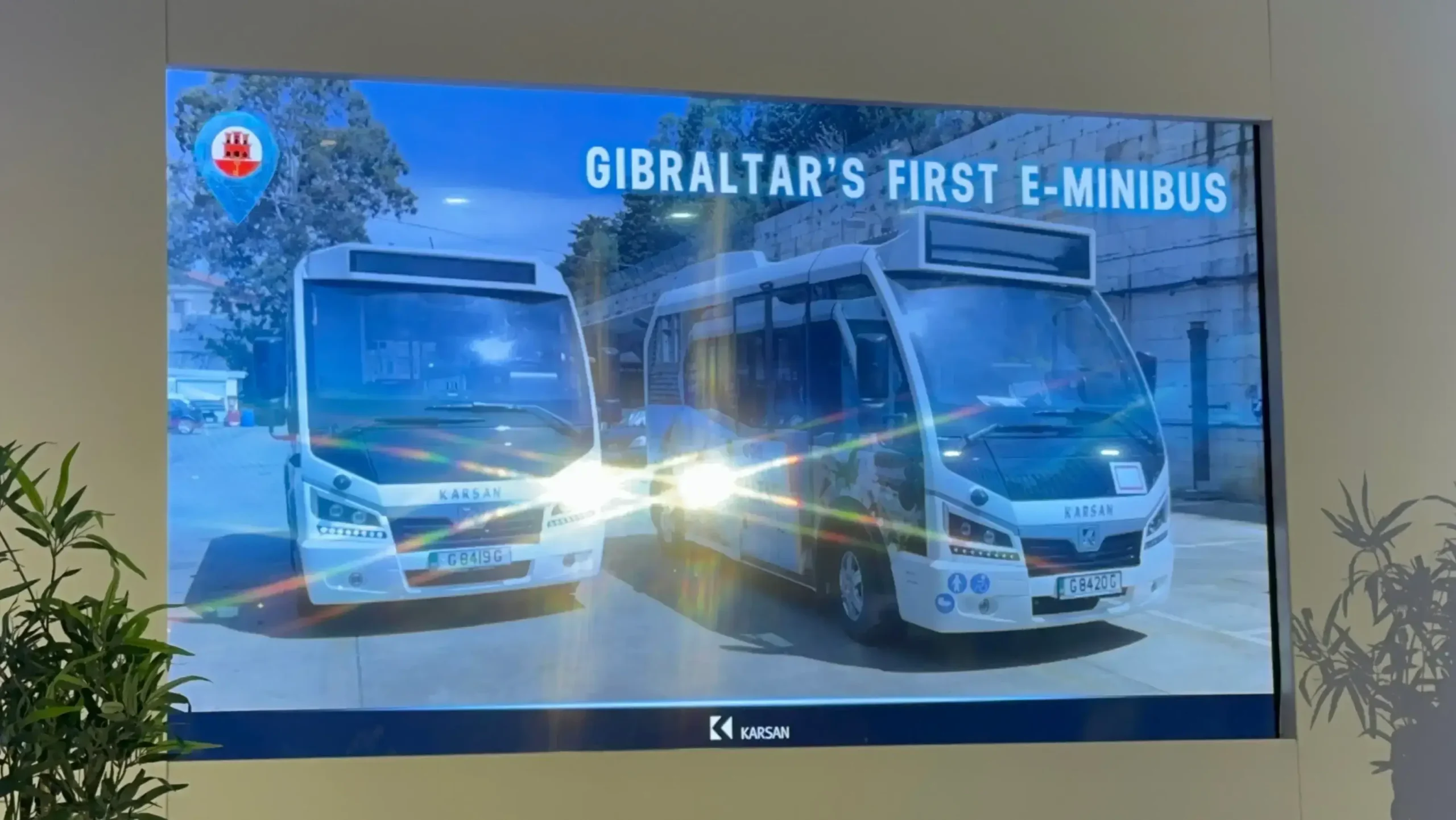
Karsan, which is the leader of the electric minibus market in Europe, continues to grow in the UK, one of the world's most challenging markets. Announcing that they have started commercial operations in London, Kaan Aydın stated that they delivered 2 electric e-JESTs to Liverpool this week. Pointing out that they have taken to UK roads with the e-JEST, Europe's most preferred born-electric model in its class, Aydın also added that a total of 8 buses will be delivered to Gibraltar by the end of the year and that they are the only manufacturer supplying electric buses in the region.
2028 Target: Drivers Are Leaving, Costs Are Dropping
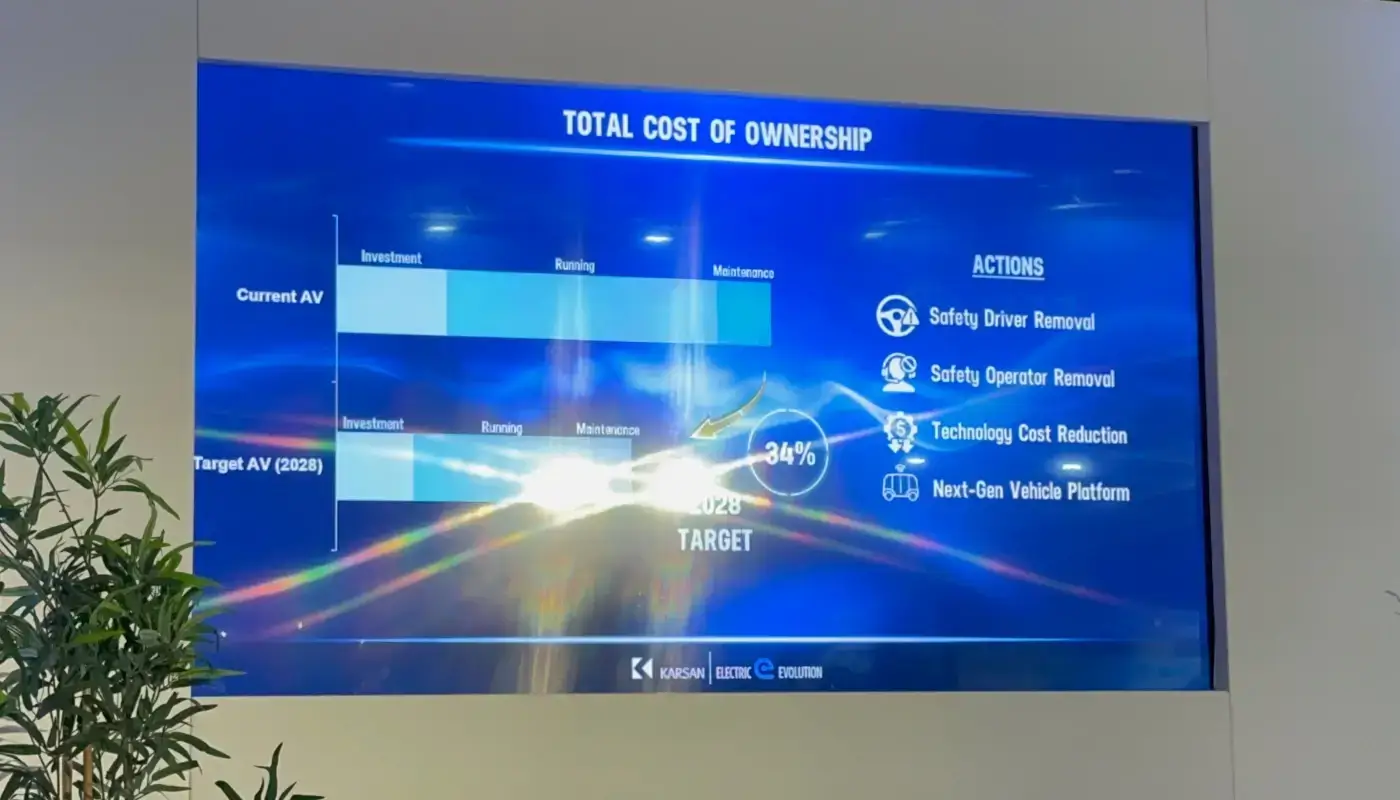
Karsan's most ambitious goal will materialise in the first quarter of 2028. The company plans to reduce the cost of autonomous vehicles by 34 percent. Behind this reduction are four strategic steps: the elimination of three-shift salary costs by completely removing the safety driver from the vehicle, one person from the command centre controlling 10 buses simultaneously instead of an in-vehicle safety operator, switching to camera and integrated lidar systems instead of expensive radars, and most importantly, creating a new "born-autonomous" platform from scratch instead of converting existing electric vehicles.
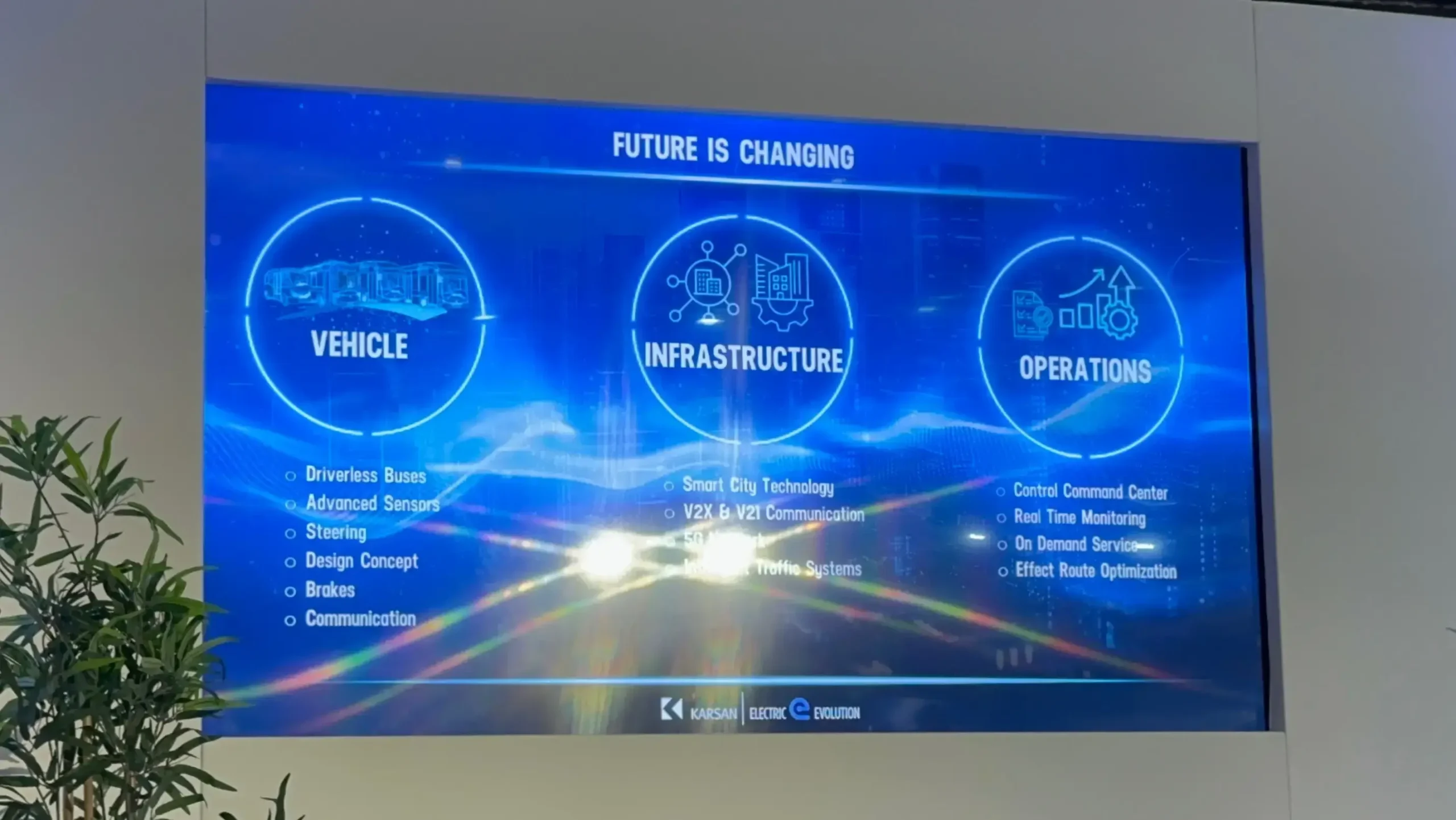
Aydın explained, "If I were a municipality, I might prefer to buy 5 electric buses instead of one autonomous bus with the same money. However, when we consider the lifetime cost of the bus, autonomous vehicles become more advantageous than electric ones in the long term due to the elimination of driver salaries, the disappearance of emotional driving errors, and energy savings."
Note
If you have any photos or video footage to support our news story, please share them with us using the information provided on our contact us page.
