


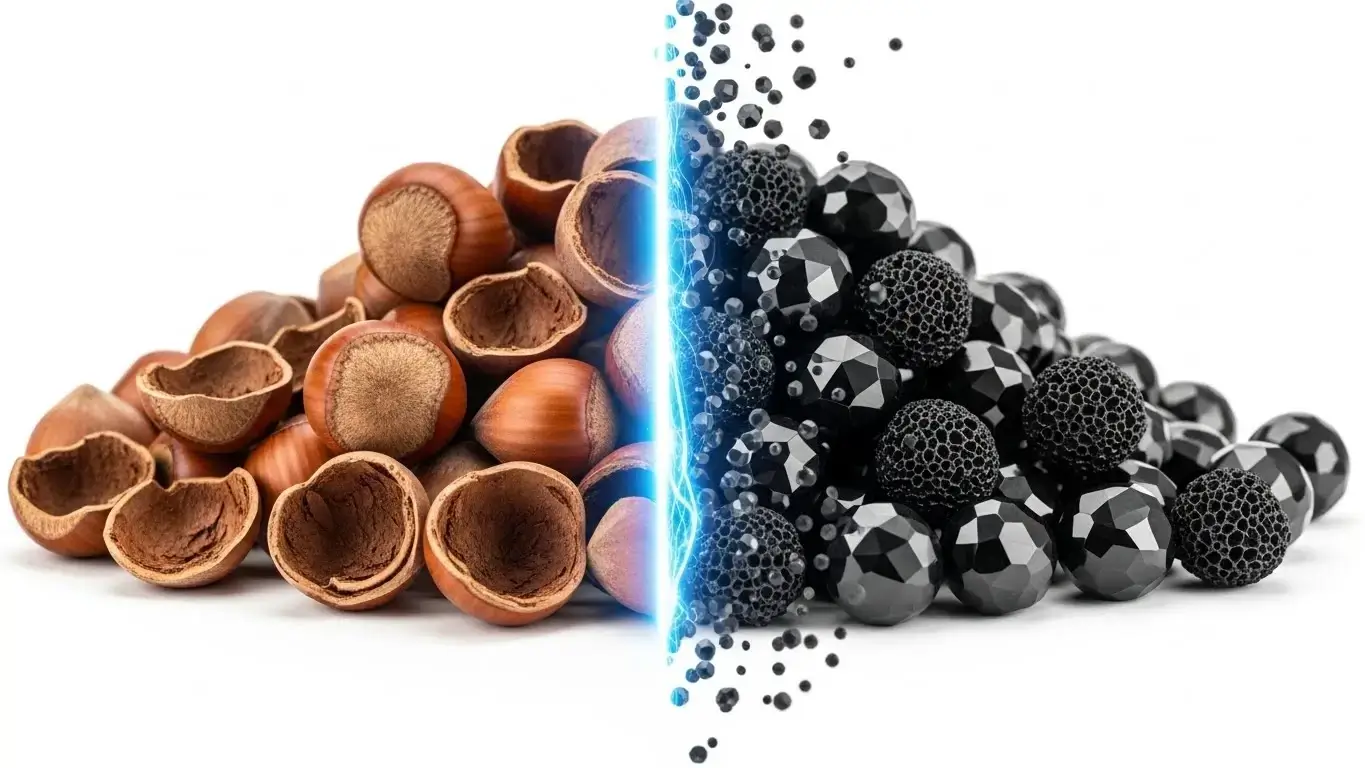
Balsu Gıda, one of the world's largest hazelnut suppliers, is filling a strategic gap in Türkiye with its $52 million high-tech investment in Sakarya. Hazelnut shells, which have been burned in stoves for years, are now being transformed into activated carbon, an "invisible shield" for critical sectors ranging from the defense industry to nuclear power plants.
Türkiye is the undisputed leader of the world hazelnut market with an annual production of approximately 740,000 tons. However, this leadership has so far been limited to the food sector. Balsu Gıda's newly commissioned hazelnut plant in Hendek, Sakarya... Hendex Prototype Production Facility, This fundamentally changes the equation. The facility is making a groundbreaking industrial leap by transforming hazelnut shells, an agricultural byproduct, into a high-tech material whose value is measured in dollars per kilogram.
More Than a Factory: “Biorefinery”
The production technology developed and patented by Balsu Gıda operates on the principle of an integrated biorefinery rather than a classic production line. The facility, with an investment of $52 million, has the following technical capacity and operating principle:
- Massive Processing Capacity: The facility, annually Over 100,000 tons It has the capacity to process hazelnut shells.
- Zero Waste Cycle: Hazelnut shells don't just turn into carbon. Carbon is released during the process. Synthesis Gas (Syngas) It is converted into electricity to power the facility. The pyrolysis oil and soil additives produced as by-products are utilized in the chemical and agricultural industries.
- High Surface Area: Activated carbon produced from hazelnut shells exhibits properties that rival, and even surpass in some parameters, coconut shell-based carbons, especially in gas phase filtration (gas masks, etc.), thanks to its rigid structure and high microporosity.
Activated Carbon is of Critical Importance for the Defense Industry.
Activated carbon is not just an industrial input; it is of vital importance in times of crisis and in the defense industry. Until now, Turkey has met almost all of its needs through imports. The Hendex project will achieve localization in the following critical areas:
- Defense Industry (CBRN): Military gas masks, bunker ventilation systems, and CBRN (Chemical, Biological, Radiological, Nuclear) filters will now have their most basic raw materials domestically produced.
- Energy Storage: The door is being opened for the production of "Super Activated Carbon," which is used in supercapacitors, the heart of electric vehicles and renewable energy systems.
- Industrial Wastewater Treatment: From nuclear power plants to petrochemical facilities, dependence on foreign sources for water and air filtration in critical infrastructure is coming to an end.
A Potential of $5 Billion
The data shared by the Minister of Industry and Technology, Mehmet Fatih Kacır, at the facility's launch reveals the project's vision. Türkiye's annual hazelnut shell potential of 350,000 tons creates a market worth $160 million when processed as raw material alone. However, when this carbon is transformed into end products (filters, masks, capacitors)... $5 billion It carries enormous potential for added value.
“From "Shell to be Burned" to "Technological Mind"
Balsu Gıda's investment in Hendex marks a milestone in the integration of Turkish agriculture and industry. This process, in which hazelnut shells have transformed from "fuel" to "strategic power," is the most concrete example of Türkiye's rise from a country that sells raw materials to a country that processes those raw materials and sells technology.
Entering the market at full capacity by 2026, Hendex branded activated carbon will very soon take its place in the global market, especially in the defense industry supply chains of Europe and the USA, with the "Made in Turkey" label.
Who is Balsu Gıda?
Founded in 1978, Balsu Gıda, now one of the most established players in the global hazelnut market, is a strategic supplier to global food giants with its extensive export network stretching from the USA to China. However, the company's vision is not limited to hazelnut supply alone. With its strong R&D infrastructure established in its facilities in Sakarya, Balsu is a pioneer in "sustainable agriculture" and "upcycling" models, aiming to transform every part of the hazelnut into high added value. Through its Hendex project, the company is evolving from a traditional food manufacturer into a global technology company that produces solutions in the fields of biochemistry, energy, and materials science.
Keywords: Balsu Food, Activated Carbon, Hendex, Hazelnut Shell, Defense Industry, CBRN Filter, Mehmet Fatih Kacır, Sakarya Investment, Advanced Materials.
Note
If you have any photos or video footage to support our news story, please share them with us using the information provided on our contact us page.
