


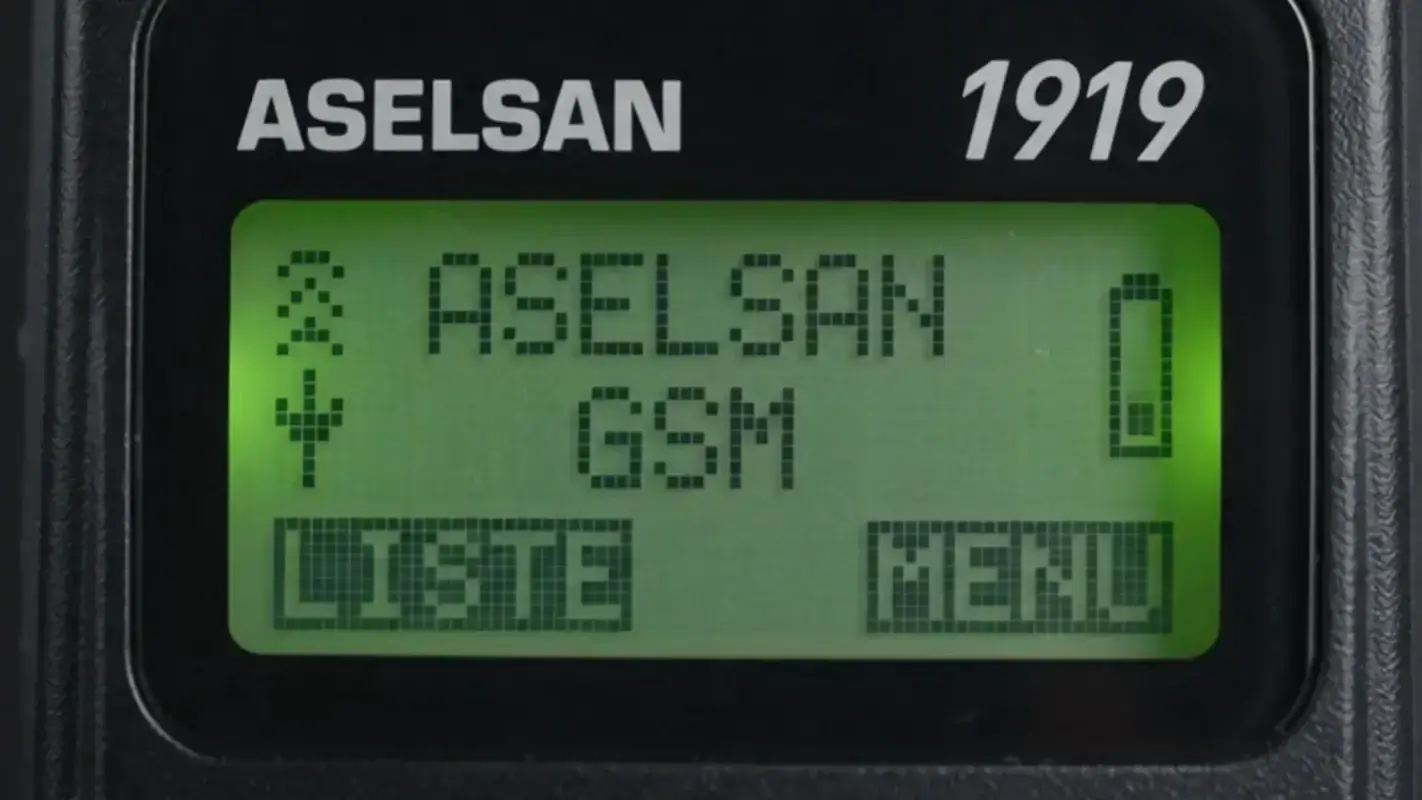
The domestic communication device project of Türk Telekom and ASELSAN inevitably brings to mind the company's first and brave venture in this field from 30 years ago. In April 1994, when today's technology ecosystem was still unimaginable, the company set out with a team of approximately 80 people to develop a mobile phone entirely with domestic engineering. After three years of intensive R&D and an investment of nearly $5 million, the ASELSAN 1919 model was launched in March 1997.
Named after the date Mustafa Kemal Atatürk landed in Samsun to start the War of Independence, this phone was not just a device but a declaration of Türkiye's vision for technological independence. Today, amidst the excitement of the new partnership signed with Türk Telekom in 2026, the story of these two legendary devices comes back to the agenda as both a source of inspiration and a case study full of lessons to be learned.
The Technological Revolution of the 90s: Why GSM?
To properly evaluate ASELSAN's major initiative, it is essential to understand the technological landscape of the early 1990s. Until those years, mobile communication was conducted with different analog standards such as NMT 450, NMT 900, TACS, and AMPS, and the incompatibility between these systems posed a major problem for users. A user travelling from one country to another could not use their mobile phone on the network of the country they visited. To end this chaos, a new digital standard called "Global System for Mobile Communications" (GSM) was developed within CEPT starting in 1982. Being fully digital, this standard not only allowed for short messaging, fax, and data communication alongside voice but also paved the way for phones to become increasingly smaller and lighter thanks to silicon integrated chips. The first GSM network became operational in Germany in 1992; Türkiye adapted to this transformation by establishing its first GSM network in 1993. The number of subscribers, exceeding 600,000 by the end of 1996, was growing at a pace that challenged even the 2 million estimates for the year 2000. It was at this critical juncture that ASELSAN decided to transfer its decades-long expertise in communication technologies to the civilian market, taking that famous step we all talk about today.
ASELSAN's Strategic Vision: More Than Just a Phone
ASELSAN's preparation for this project had started well in advance and with strategic depth. The company had become a full member of the European Telecommunications Standards Institute (ETSI) as early as 1991 and had begun closely monitoring the activities of its SMG Technical Committee. What did this mean? ASELSAN was not merely an implementer of a market standard but an actor sitting at the table where the rules of the game were shaped, contributing to the standard's development. This is the greatest proof that the ASELSAN 1919 and 1920 were not licensed assembly jobs but original engineering projects carried out from the ground up.
This expertise would later manifest itself within the project. With an active design period exceeding two years, over 30 designers directly took part in the project, and a total effort of over 80 engineer-years was expended. Thanks to this project, computer-aided mechanical design was introduced at ASELSAN for the first time, and rapid prototyping techniques were also utilised for the first time. The competencies gained would form a foundation not only for the mobile phone but also for all of ASELSAN's future digital communication projects.
Technical Specifications and Design Philosophy of the ASELSAN 1919
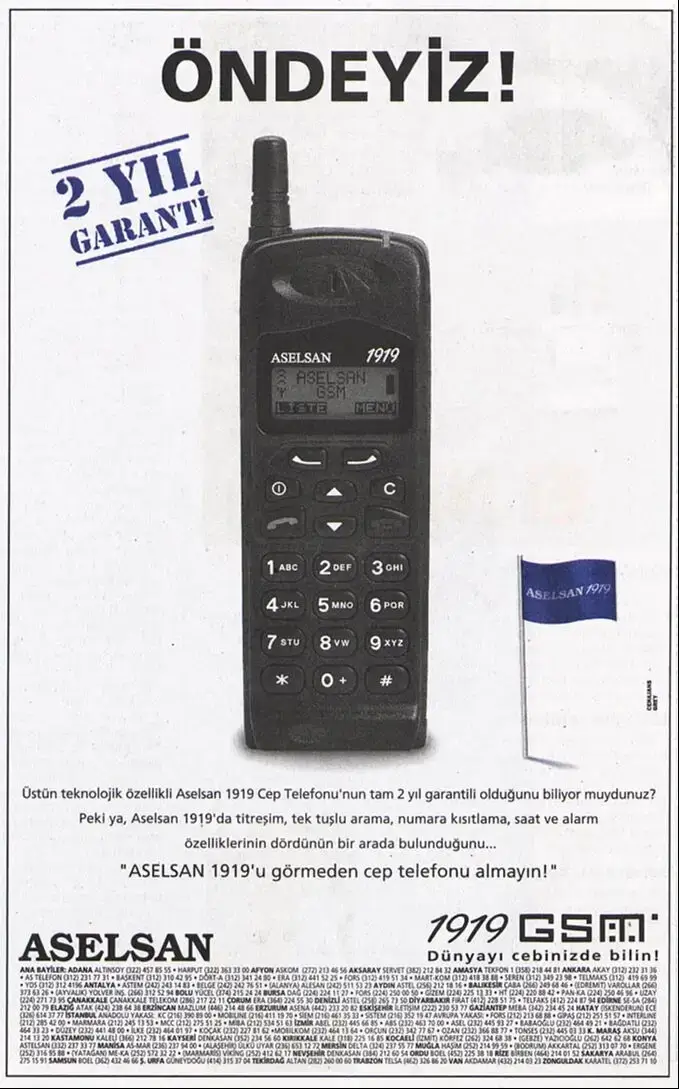
All this strategic preparation and engineering expertise materialised into a concrete product with the ASELSAN 1919 in March 1997. Possessing technical features that would place it among the most ambitious devices of its era, the phone weighed only 185 grams with its standard battery and measured 12.9 cm in length, 4.7 cm in width, and 2.5 cm in thickness. These dimensions made it small enough to fit even in a shirt pocket. Its standard 550 mAh nickel-metal hydride battery, similar to its competitors, promised 1.5 hours of talk time and 40 hours of standby. With an optional high-capacity battery, these times extended to 2.5 hours of talk time and 70 hours of standby. It distinguished itself from its counterparts with its illuminated 3-line, 36-character graphic display for night use, detailed security layers such as PIN control and programmable security passwords, and most importantly, specially developed security protocols against eavesdropping.
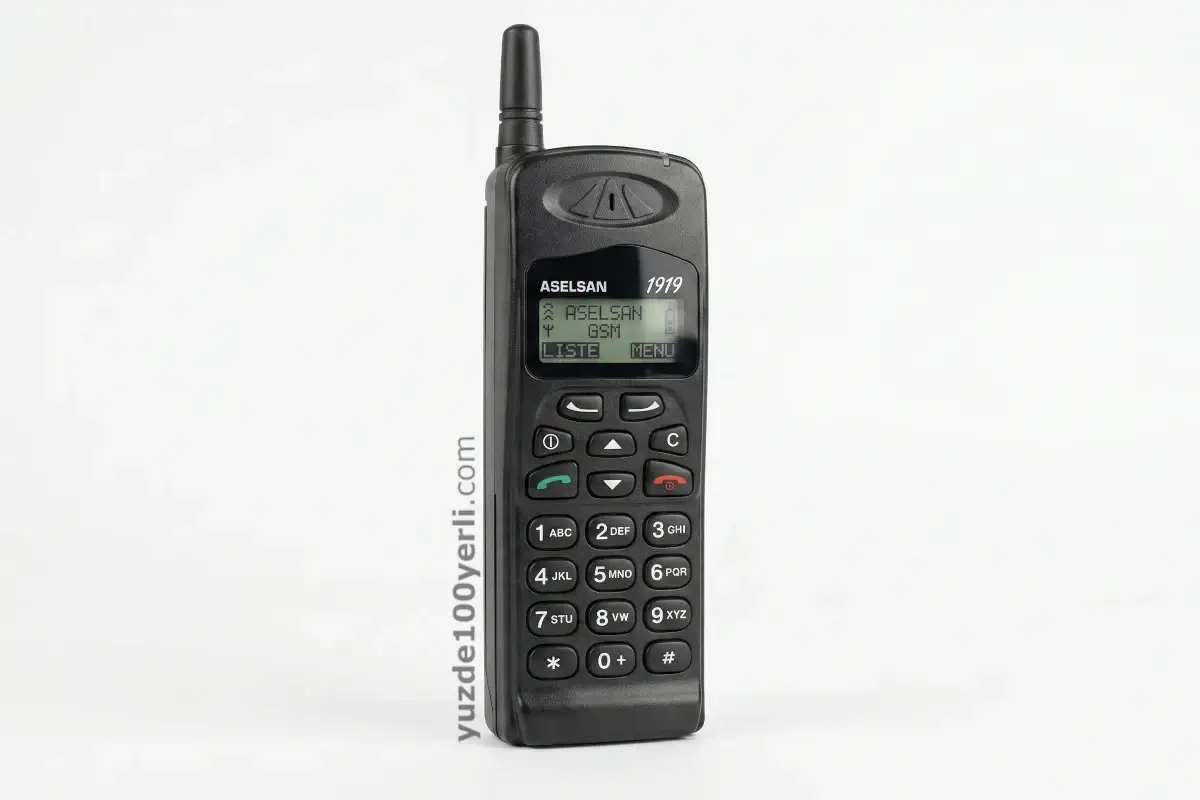
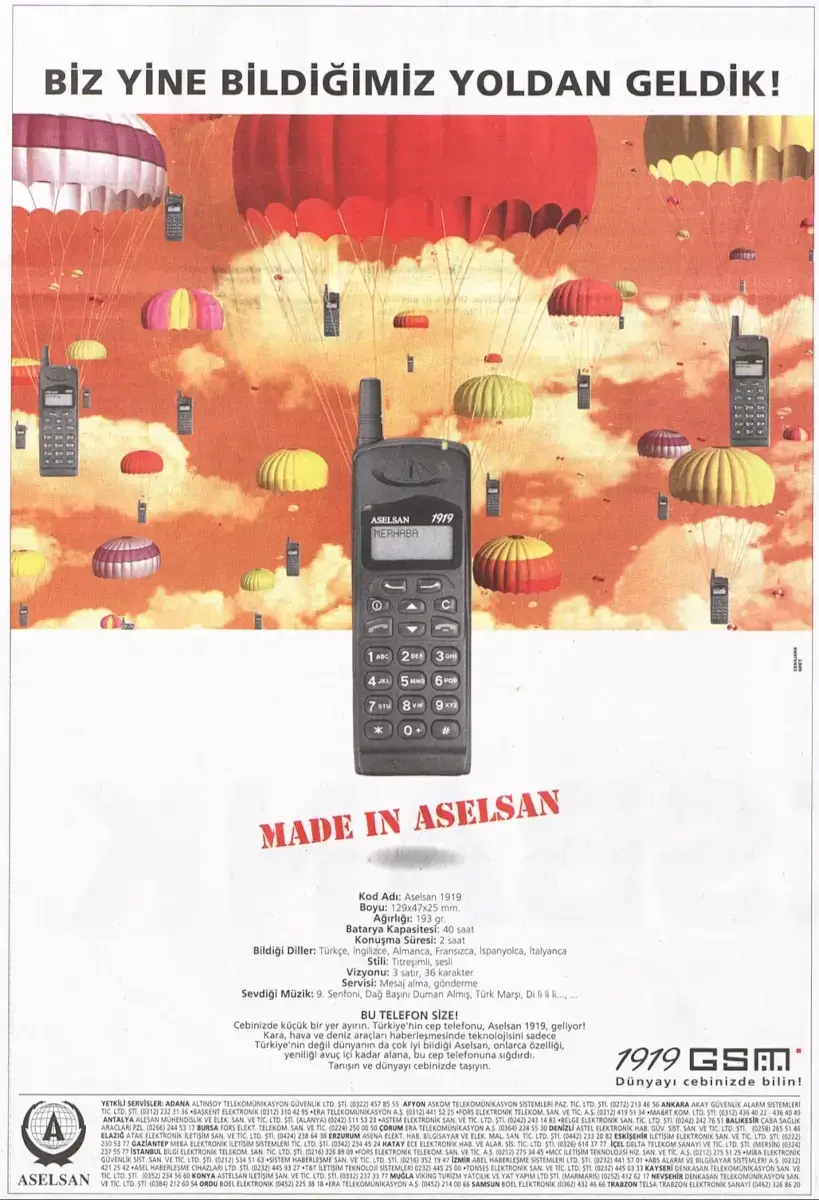
The user experience of the device was also highly advanced. Up to 315 contacts could be stored in the phonebook, depending on the SIM card capacity, and operations such as one-touch dialling and sending/receiving short messages were managed via a very simple menu system. The vibrating alert feature offered a level of comfort not found in many competitors of the time, while details like call forwarding, caller ID, and real-time tracking of the last call and total call charges took functionality to the top. Moreover, offering 6 different language support (Turkish, English, German, French, Spanish, Italian) showed that it was a product of a global vision. A rich family of accessories, including a desktop charger, car cigarette lighter adapter, hands-free kit, and external antenna, transformed the device into a professional solution for office and in-car use. Furthermore, the ability to connect to a computer via an optional PCMCIA card for fax and data communication was planned as one of the first examples of the mobile office concept.
ASELSAN 1920: A True Leap in User Experience
The interest shown in the first model encouraged ASELSAN for a second generation, and in 1998, the ASELSAN 1920 model took its place on the shelves. This time, engineers had practically recreated the device by centring user feedback. The biggest revolution was in battery technology; by switching to a Lithium-Ion battery, the device's weight was dramatically reduced to 117 grams, and its thickness to 2.0 centimetres. With its volume reduced from 135 cubic centimetres in its predecessor to 97 cubic centimetres, the ASELSAN 1920, while drawing attention with its slim and elegant structure, had lost none of its technical capacity.
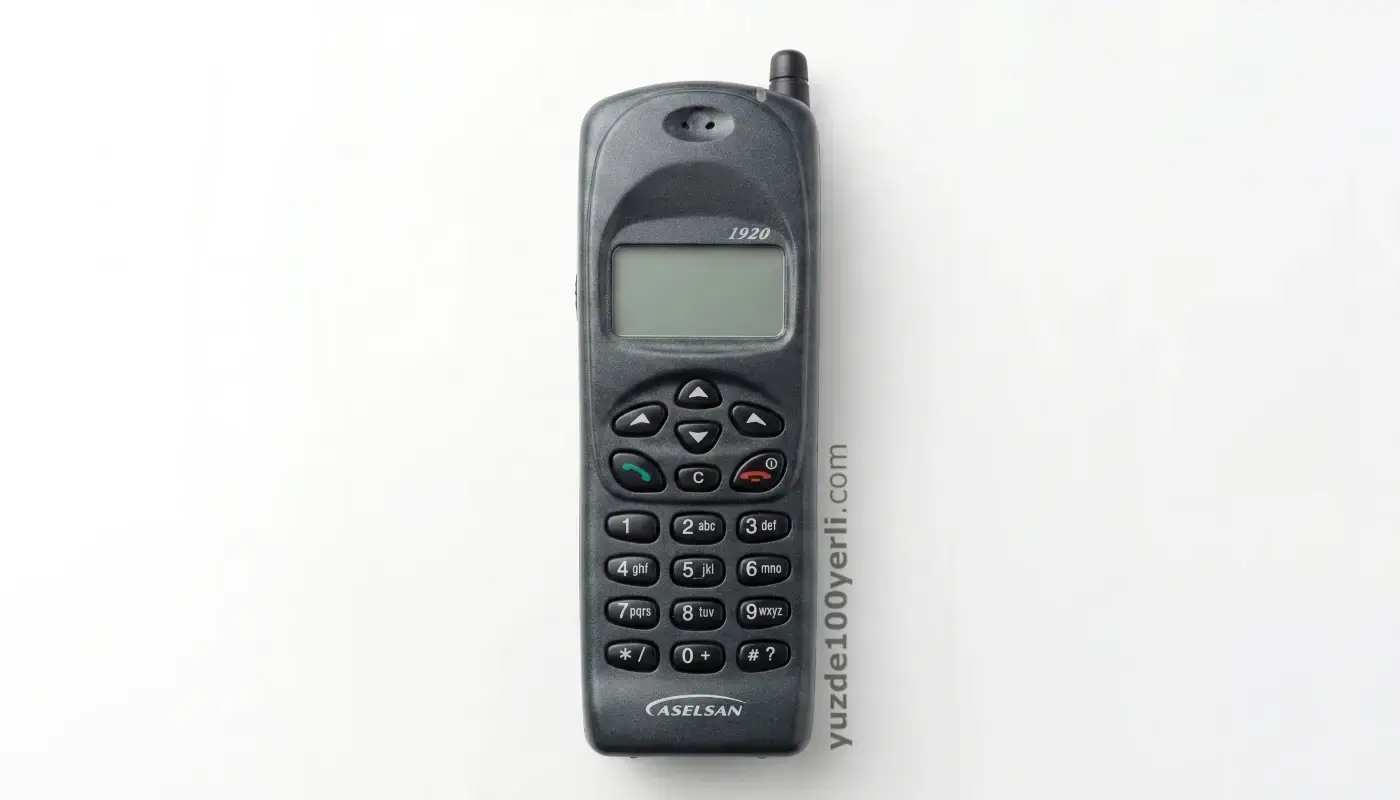
Its standard 600 mAh battery offered 120 minutes of talk time and 70 to 120 hours of standby time; with the high-capacity 1300 mAh battery, these values reached an impressive 250 minutes of talk time and up to 240 hours of standby. Its advanced 85x40 dot resolution LCD display, 24 different ringtones and melodies, a hybrid alert mode that switched to audible ringing after vibration, and personal assistant functions like a built-in organiser, alarm, and clock made it a marvel of technology. Users could personalise the main menu structure and even upload their own logos to the device. Alongside all these advanced features, the phone also had professional functions such as conference call support and calling to fixed numbers. Initially offered in dark grey, the device was soon made available in dark blue and light grey options due to high demand.
The Voice Dialling Feature with ASELSAN 1920: The Ancestor of Smart Assistants
Undoubtedly, the most striking innovation of the ASELSAN 1920 was its voice recognition technology. With a special kit developed for in-car use, the phone could detect spoken digits and make calls without pressing any buttons. Going even further, it could remember 32 pre-trained names and their associated numbers, automatically dialling the relevant person when the driver spoke the name. In 1998, in a world still far from the concept of smartphones, where AI-powered systems like Siri or Google Assistant would enter our lives perhaps more than a decade later, this feature dramatically demonstrates the level of vision and R&D capacity of ASELSAN engineers. This was not just a convenience, but a pioneering step in human-machine interaction in Türkiye.
A Turkish Phone on the Global Stage: Export to 10 Countries
Commercial success followed quickly. Not limited to the domestic market, over 5,000 units of the devices were exported to 10 different countries in a short time. This figure placed Türkiye among the 9 countries in the world capable of producing mobile phones, achieving a symbolic success in the country's technology exports. Expanding into many markets, primarily Azerbaijan and Northern Cyprus, the ASELSAN 1919 and 1920 became concrete evidence of Turkish engineering on the international stage. Behind this success lay ASELSAN's general corporate strength at the time. With a total of 2,440 personnel, including 610 engineers, and an annual turnover of around $145 million, the company was one of Türkiye's largest and most modern organisations. It generated approximately 25% of its turnover from exports to 18 countries and allocated about 8% of its turnover to R&D each year. Work was carried out in 35 different areas across its two ISO 9001-certified factories in Ankara, and approximately 350,000 people working in nearly 2,500 institutions were using one of ASELSAN's products. The mobile phone project was built upon this very knowledge and infrastructure.
Why Did the Project End? An In-Depth Case Analysis
However, this success story did not last long. By 1999, the convergence of several critical factors brought the project to an end. The first and biggest obstacle was the fierce patent wars of the era. The strict patent protections of industry giants like Motorola, Nokia, and Ericsson created difficult legal and financial barriers to overcome, especially in international markets. This was a situation faced not only by ASELSAN but by many small and medium-sized manufacturers worldwide. The second critical factor was the inability to achieve the necessary economies of scale for mass production. The mobile phone market was dominated by large players who could reduce costs thanks to high production volumes. For ASELSAN to reach this scale, it needed much larger investments and an aggressive market strategy. The third and perhaps most decisive factor was the lack of sufficient investment support from the government and private sector of the period. Meanwhile, European and Far Eastern competitors were receiving millions of dollars in incentives from their own governments.
Added to all this were the relentless aggressive price-cutting and marketing campaigns of global rivals, rendering ASELSAN's limited civilian market experience insufficient. Finally, the company's primary field of activity, defence industry projects, which were considered far more strategic, required the re-prioritisation of resources. With the combination of all these factors, Türkiye's first domestic mobile phone adventure quietly ended in 1999. However, it should not be forgotten that significant know-how was accumulated. The engineers who worked on the project and all the technical skills gained provided immense knowledge transfer to ASELSAN's defence projects in many areas, from radio frequency design to digital signal processing. In this sense, although the project ended commercially, it turned into a complete gain in terms of technological accumulation.
A New Beginning 30 Years Later: The Legacy of ASELSAN 1919 and 1920
Approximately 30 years later, the new strategic partnership signed between Türk Telekom and ASELSAN in 2026 holds the potential to restart this unfinished story at a completely different level. The goal this time is not merely to assemble a mobile phone. The aim is to build an end-to-end domestic and secure communication ecosystem, from its processor to its operating system, from its security layer to its compatibility with network infrastructure.
ASELSAN's half-century of field experience in military communication now combines with the over 70 international patents of Türk Telekom's subsidiaries, Argela and Netsia. This new partnership is seen as a continuation of the brave steps taken in the 1990s, but with a much stronger ecosystem and a much larger vision. Although their production has ceased and they have been placed on the dusty shelves of history, ASELSAN 1919 and 1920 will continue to be remembered as concrete, proud sources of inspiration, proving what Turkish engineering can achieve at the point we have reached today. These two devices will always be remembered as the first brave steps on the path to technological independence.
Note
If you have any photos or video footage to support our news story, please share them with us using the information provided on our contact us page.
