


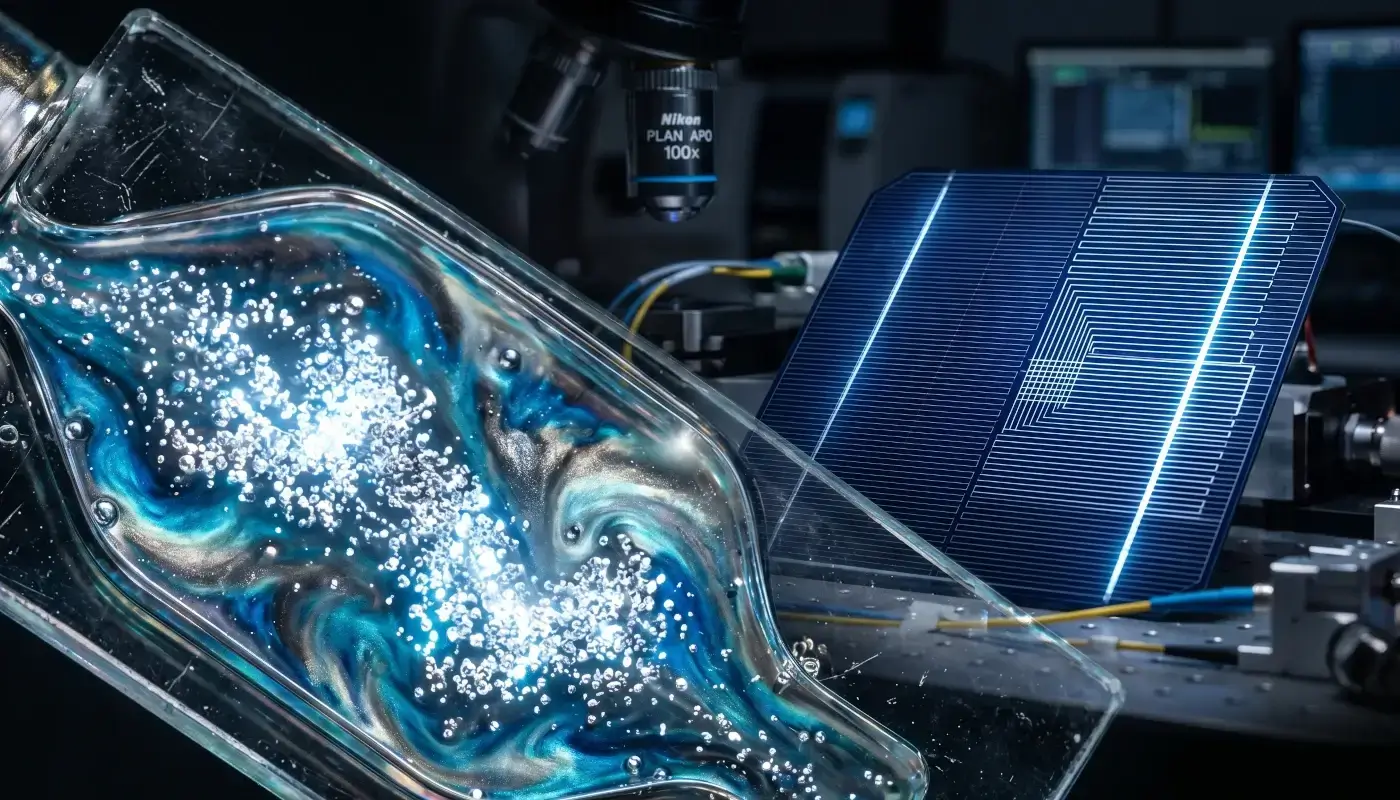
The Turkish technology ecosystem has successfully completed another strategic step that ends foreign dependency in the renewable energy and electronics industry. Nanografi, a developer of advanced material technologies, announced on April 13 that it has fully developed Silver Paste technology using domestic resources. Engineers have now made this critical raw material, which provides electrical conductivity across a wide range from solar panels to wearable technologies, available for direct use by Turkish industry.
What is Silver Paste Technology and Why is it Important?
Silver paste technology essentially involves homogeneously mixing nano or micro-sized silver particles with special binders and solvents. Manufacturers apply this high-tech paste onto solar (photovoltaic) cells using screen printing method in very fine lines.
When a solar cell converts light into electricity, this electric current is collected via the silver lines on the cell's surface and transferred to the external circuit. In other words, this material perfectly acts as the capillaries carrying the energy produced by the panel. Silver being one of the best electrical conductors in nature makes this paste absolutely indispensable for energy harvesting and high-tech production. If the silver paste is of poor quality, the solar panel loses a significant portion of the electricity it generates as heat before it can be transferred out.
The Strategic Role of Silver Paste Technology in Different Sectors
This highly conductive material developed by Nanografi is not limited to the solar energy sector. Many different disciplines in the technology world have a massive need for this conductive raw material:
- Automotive Industry: Companies intensively use silver paste in the production of heating grids on vehicle windows, smart sensors in autonomous driving, and flexible electronic circuits.
- Consumer Electronics: This conductive paste provides data transmission for touchscreens on smartphones, RFID tags, and printed circuit boards (PCBs).
- Wearable Technologies: Manufacturers directly produce flexible sensors and smart fabrics that adapt to the movements of the human body using this paste.
Full Independence in the Supply Chain
In past years, despite making multi-billion dollar investments in solar panels, Türkiye entirely imported critical raw materials like silver paste from the Asian or European markets. The slightest logistical disruption in the supply chain or fluctuation in exchange rates risked halting production lines in factories.
Thanks to Nanografi's domestic production, industrialists now have a much faster and more secure procurement process. Furthermore, the elimination of shipping and customs costs directly optimises the final product cost for manufacturers. Thus, Turkish industrialists gain a price advantage in the global market.
The Multiplier Effect in Deep Technology
Nanografi's indigenisation of silver paste technology represents one of the most tangible fruits of Türkiye's deep technology vision. Our country is no longer just an assembly base producing solar panels by combining imported parts. On the contrary, Türkiye is transforming into a technology developer that produces the high value-added chemical and nanotechnological raw materials inside these panels in its own laboratories. As the use of domestic silver paste becomes widespread on an industrial scale in the coming period, Turkish companies will rise to a much more independent and competitive position in the global electronics and renewable energy market.
Note
If you have any photos or video footage to support our news story, please share them with us using the information provided on our contact us page.
