


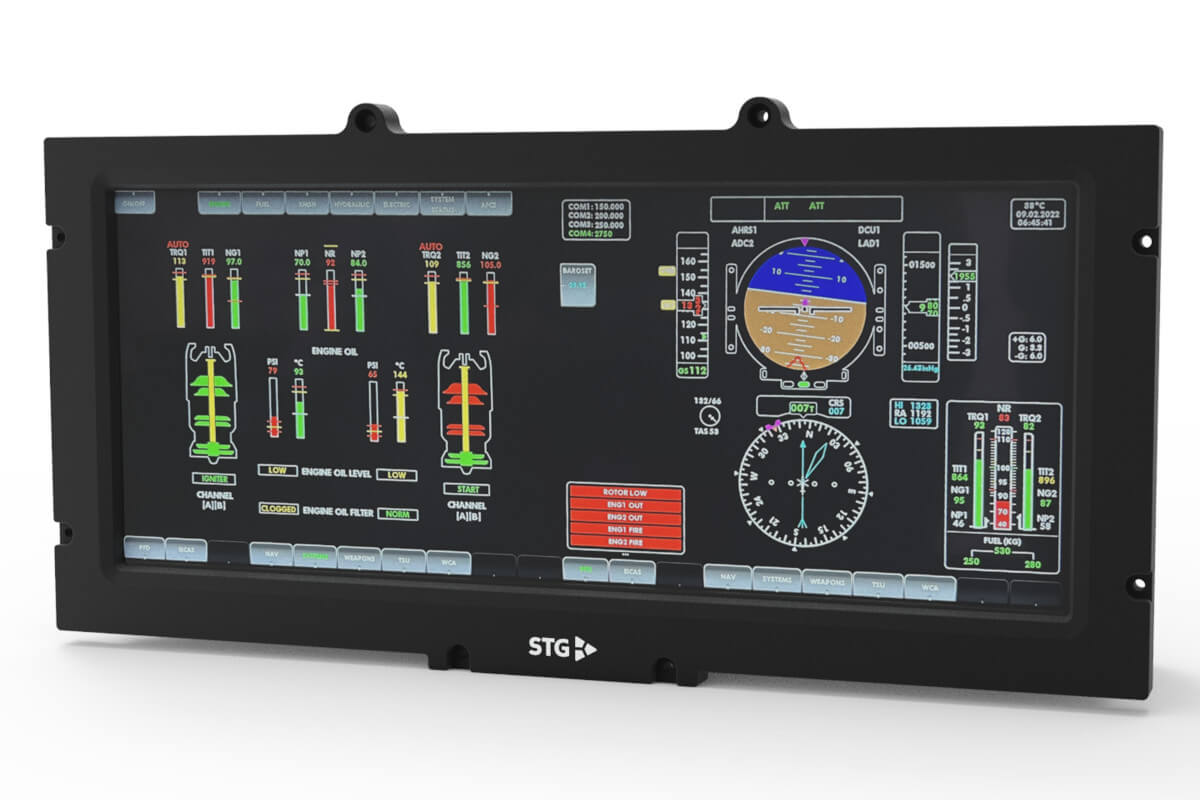
KAAN (National Combat Aircraft) and Hürjet, the pride of the Turkish defense industry in the skies, are becoming localized not only in their fuselages but also in their avionics systems. Developed by STG Engineering to military aviation standards, the “LAD-208 Wide Area Display” is ushering in a new era in cockpit technology by offering pilots the ability to manage critical data on the battlefield from a single panel.
One of the most distinctive features of first-generation fighter jets is the replacement of dozens of analog instruments in the cockpit with single, touch-sensitive, massive screens. This "Large Area Display" (LAD) trend, which began with the F-35, has also been joined by Turkey with its own domestic solution. Developed by STG Engineering... LAD-208, By visualizing the "brain" function in the cockpit of KAAN and Hürjet, it maximizes the pilot's situational awareness.
Here is a technical analysis and field significance of this critical avionics component, designed by Turkish engineers.
Technical Depth: Not Just a Screen, but a “Mission Computer Interface”
LAD-208 uses technology very different from the tablets or monitors we have at home. Designed to operate in harsh military conditions such as high G-forces, vibration, extreme temperature variations, and electromagnetic interference, this system stands out with its hardware architecture.
- Redundant Multi-Touch Technology: There is no room for error in a fighter jet cockpit. STG engineers, using a "redundant multi-touch panel" in the LAD-208, ensured that the system continues to function even if a single point of error occurs on the screen. This is a vital safety layer to prevent the pilot from losing control of the touchscreen.
- Night Vision and NVIS Compatibility: The system uses highly efficient LED backlighting technology. But the real critical detail is, NVIS (Night Vision Imaging System) This feature ensures compatibility. It allows the screen to not blind the pilot's night vision goggles when wearing them, meaning the light spectrum can be adjusted to suit military operations.
- Data Flow Protocols: LAD-208 is the standard for high-speed video transmission in aviation. ARINC 818-2 It supports the protocol. It can also deliver data from the radar, targeting pod, or mission computer to the pilot with low latency via interfaces such as DVI and HD-SDI.
Split Screen and Situational Awareness
First-generation fighter piloting is the art of "information management." The LAD-208, dual screen (split-screen) This feature simplifies management. The pilot can see radar data and threat analysis on one half of the screen, while simultaneously monitoring engine data, navigation charts, or weapon/ammunition status on the other half.
This flexibility allows KAAN and Hürjet pilots to customize the display according to their needs in complex mission profiles (air-to-air or air-to-ground).
The risk of a "closed box" in the cockpit is ending.
Cockpit displays and mission computers are among the most strategic components of an aircraft. Domestic production of these systems provides Türkiye with two critical advantages:
- Freedom of Integration: When it comes to integrating domestically produced munitions (Gökdoğan, Bozdoğan, SOM, etc.) or new radar systems into the aircraft, instead of waiting for a foreign manufacturer to update the screen software, STG Engineering can instantly update the interface using domestic resources.
- Supply Security: In the event of embargoes or restrictions, the localization of critical subsystems is essential to ensure that the aircraft production line does not stop. STG's move provides significant assurance for the serial production schedule of KAAN and Hürjet.
The Cockpit of the Future is Ready
STG Engineering's LAD-208 project demonstrates that the Turkish defense industry has reached world standards not only in the outer shell but also in the high-tech avionics within that shell. These screens, which will be the pilot's eyes and ears as the KAAN soars through the sky, take their place in the cockpit as a tangible reflection of the "National Technology Initiative.".
Note
If you have any photos or video footage to support our news story, please share them with us using the information provided on our contact us page.
