


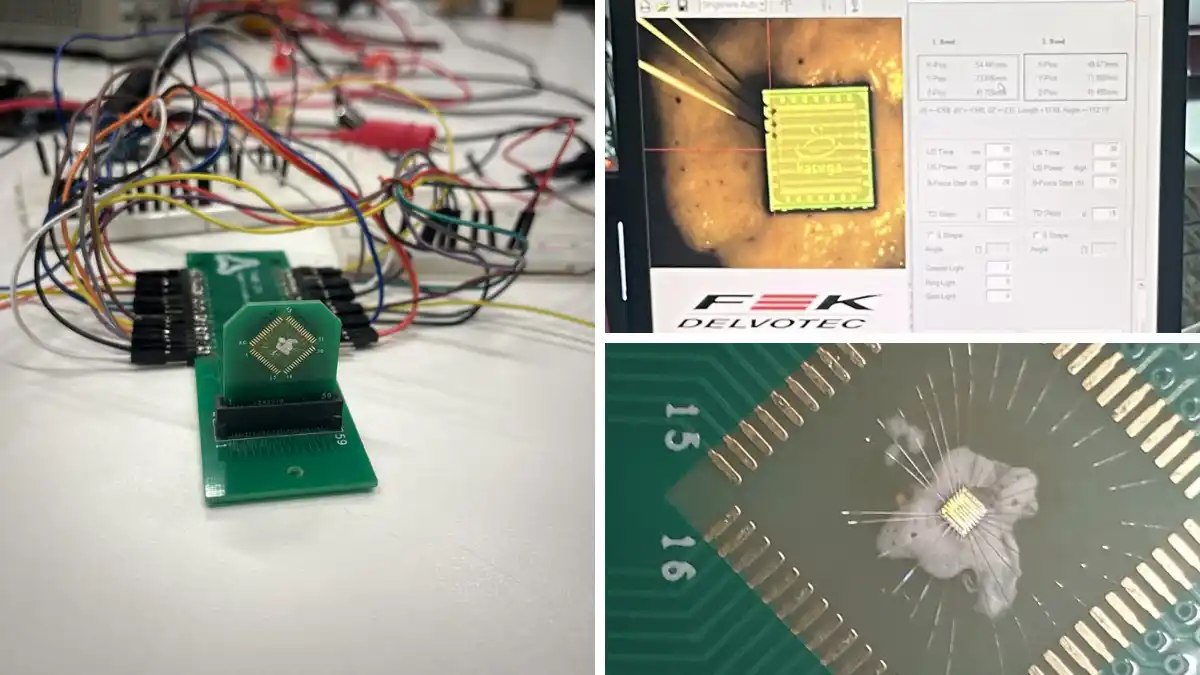
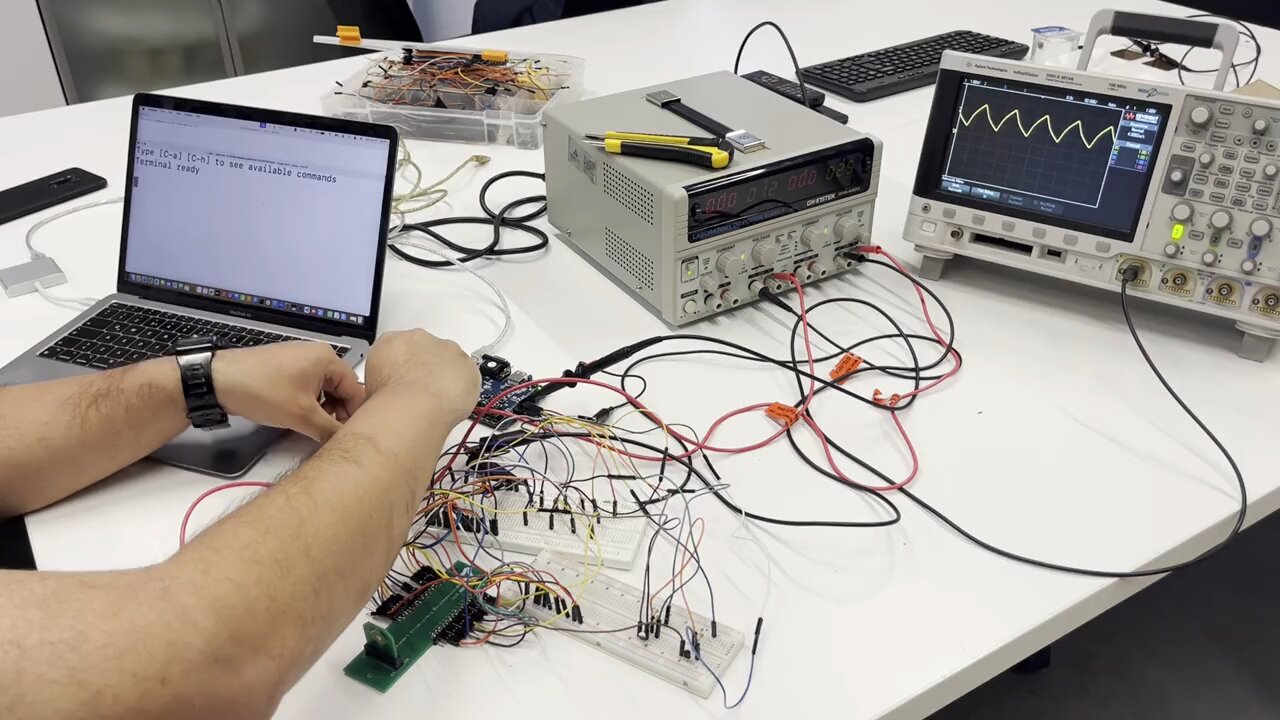
The Turkish RISC-V processor designed at the Kasırga Laboratory has successfully completed its first power-on test. According to a post by Oğuz Ergin on his X account, the processor, which was sent for production in the final days of 2024, was powered up for the first time in June and completed the booting process. Ergin said of this successful procedure: "Our processor, which we announced we had sent for production in the final days of 2024, was switched on in June and spoke its first word. 'Booting...'"
The One-Square-Millimetre Die Designed at the Kasırga Laboratory
The processor was designed at the Kasırga Laboratory within METU and produced at TSMC's 65-nanometre technology through Europractice. According to the information provided by Ergin, the chip is only one square millimetre in die size. The project was supported within the scope of the TÜBİTAK 1505 programme and realised with the facilities provided by Rovenma.
The Bare Die Was Connected to the Board with Wires the Thickness of a Hair
Ergin noted that, in order to test the processor coming from production, the bare die had to be connected to the board with wires thinner than a hair before packaging. Reporting that the attempts made in this process resulted in short circuits, Ergin stated that the connection was successfully established with the support of Dr. Murat Artuç from the METU MEMS Centre, and that the startup code inside the processor ran successfully the moment power was applied.
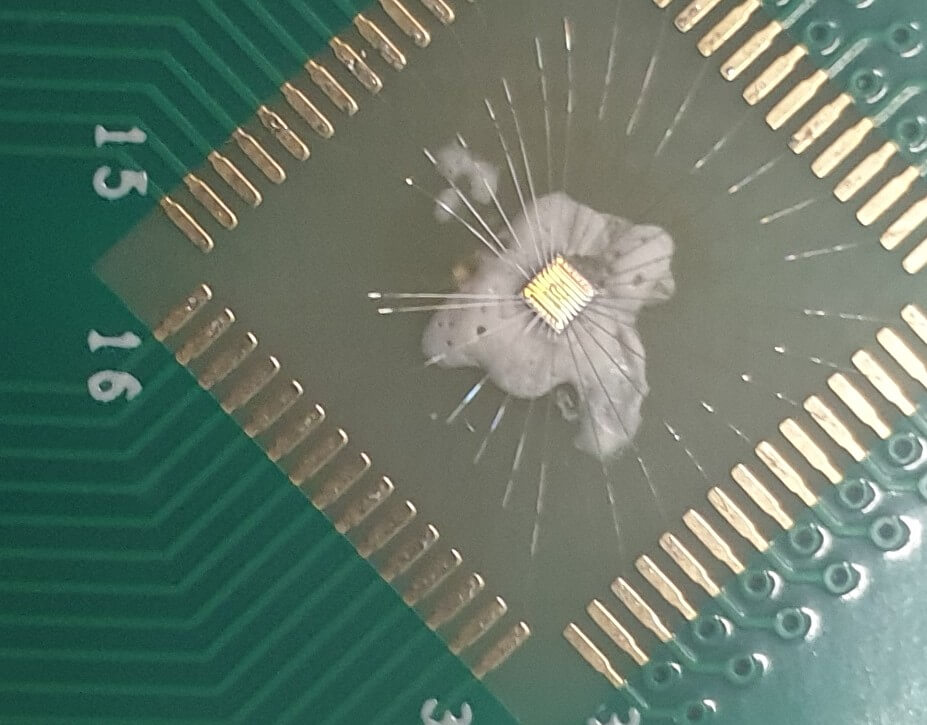
Ergin remembered those who contributed to the project, including Seyyid Hikmet Çelik, Ali Bozbey for laboratory support, Dr. Murat Artuç for the connection process, and the entire Kasırga team. In the next stage of the project, the aim is to load and run their own programs on the processor.
What Is TÜBİTAK 1505?
TÜBİTAK 1505 is known as a funding programme that enables knowledge produced at universities to be used in industry. To apply to the programme, a company and a university (or public research centre) must come together and prepare a joint project. While the university side undertakes the research and development, the company side commits to applying the project's results to its own production. The project carried out is funded by TÜBİTAK and the company.
Through the TÜBİTAK 1505 support programme, academic accumulation at universities is transformed into a product, a process or a production technique instead of being shelved. For this reason, projects supported under 1505 are obliged to develop a new product, improve an existing product, increase its quality or find a new technique that will reduce production costs. Producing only an academic paper or carrying out a theoretical study falls outside the scope of this programme.
The Kasırga Laboratory's processor project fits exactly within this framework. While the academic staff at METU designed the processor, the technology company Rovenma has taken its place on the industrial side of the project. TÜBİTAK's 1505 programme enables these two parties to come together and finances the process leading up to production of the chip.
Where Will the Developed Processor Be Used?
In open sources, we were unable to find an official announcement stating that the processor will be used in a commercial product. However, the nature of the project indicates that this is a research and capability development step rather than a chip belonging to a product. Oğuz Ergin's laboratory, Kasırga, has been working on computer architecture, embedded systems and low power consumption since 2007. This processor, too, produced at a relatively old but accessible technology such as 65 nanometres, proves the team's ability to turn its own design into silicon and test it.
Ergin's statement in his post, "Next up is loading and running our own programs," also shows that the process has not yet moved to the software development stage. Such academic chips are generally designed to be tested in the first instance in areas such as embedded systems, IoT devices or special-purpose computing units. Considering that the Kasırga team has developed processors focusing on low area and low power consumption in the past, it can be said that this chip also establishes a foundation for a similar goal, namely applications where energy efficiency and small size are critical.
Note
If you have any photos or video footage to support our news story, please share them with us using the information provided on our contact us page.
