


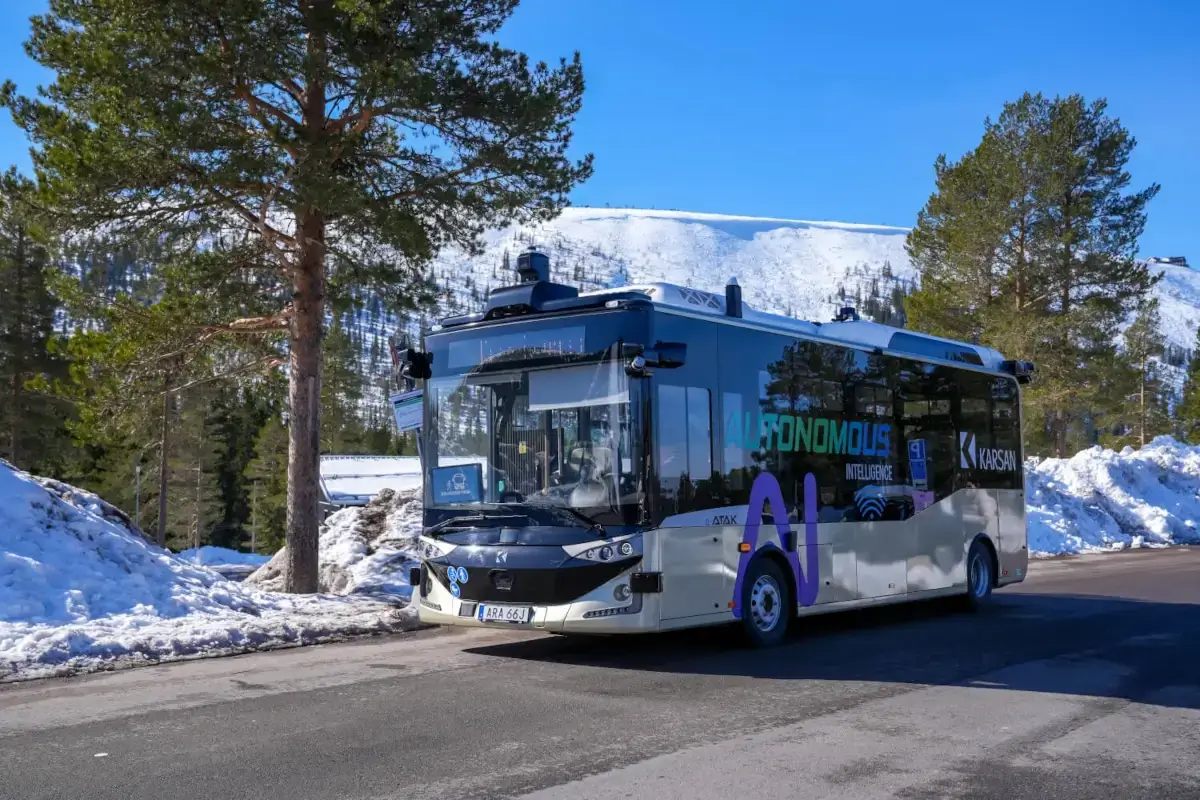
The Turkish automotive industry continues to prove its technological competence in electric and autonomous mobility in one of the world's most challenging geographies. Growing in the global market with the vision of "One Step Ahead in the Future of Mobility," Karsan has started tourist transportation in Sweden's ski resorts with its Autonomous e-ATAK model. Implemented within the scope of the Sälen–Idre Autonomous Public Transport Project, this strategic application went down in history as one of the world's first autonomous transport projects carried out with real passengers in a mountainous tourism region and harsh winter conditions. Karsan has shown the world that driverless technologies can operate safely not only in city centres but also in extreme weather conditions characterised by heavy snowfall and sub-zero temperatures.
Autonomous Navigation in Extreme Conditions
There is a tremendous engineering difference between an autonomous vehicle travelling in a sunny, orderly city centre and one navigating a mountainous terrain where blizzards cover the roads. Snow and ice significantly challenge the LiDAR sensors and cameras on the vehicle to perceive the environment. Furthermore, lane markings on the road disappearing under the snow directly test the vehicle's positioning algorithms.
Thanks to the Level 4 autonomous software infrastructure developed by Turkish technology company ADASTEC, the Karsan Autonomous e-ATAK flawlessly overcomes these challenging physical obstacles. During the testing process that started in Sweden in January 2026, the vehicle operated seamlessly in shared road scenarios with pedestrians, amateur skiers, and other civilian vehicles. While the vehicle's thermal management system ensured the batteries performed optimally even in freezing cold, advanced radar and LiDAR systems instantly detected environmental obstacles and guided the vehicle safely. Following these demanding tests, the e-ATAK received official passenger transport approval from the Swedish Transport Agency, Transportstyrelsen, on March 9, 2026, and officially commenced commercial operation (tourist transport) on a 4.8-kilometre route.
Scalable Model in Tourism Mobility
Tourism regions, especially ski resorts, experience suddenly surging intense passenger traffic during specific times of the year. Finding extra drivers and vehicles to manage this seasonal density is always a major logistical and financial problem for local authorities. Sweden's Malung-Sälen Municipality initiated the SIKTA project with Karsan and ADASTEC to solve this chronic problem.
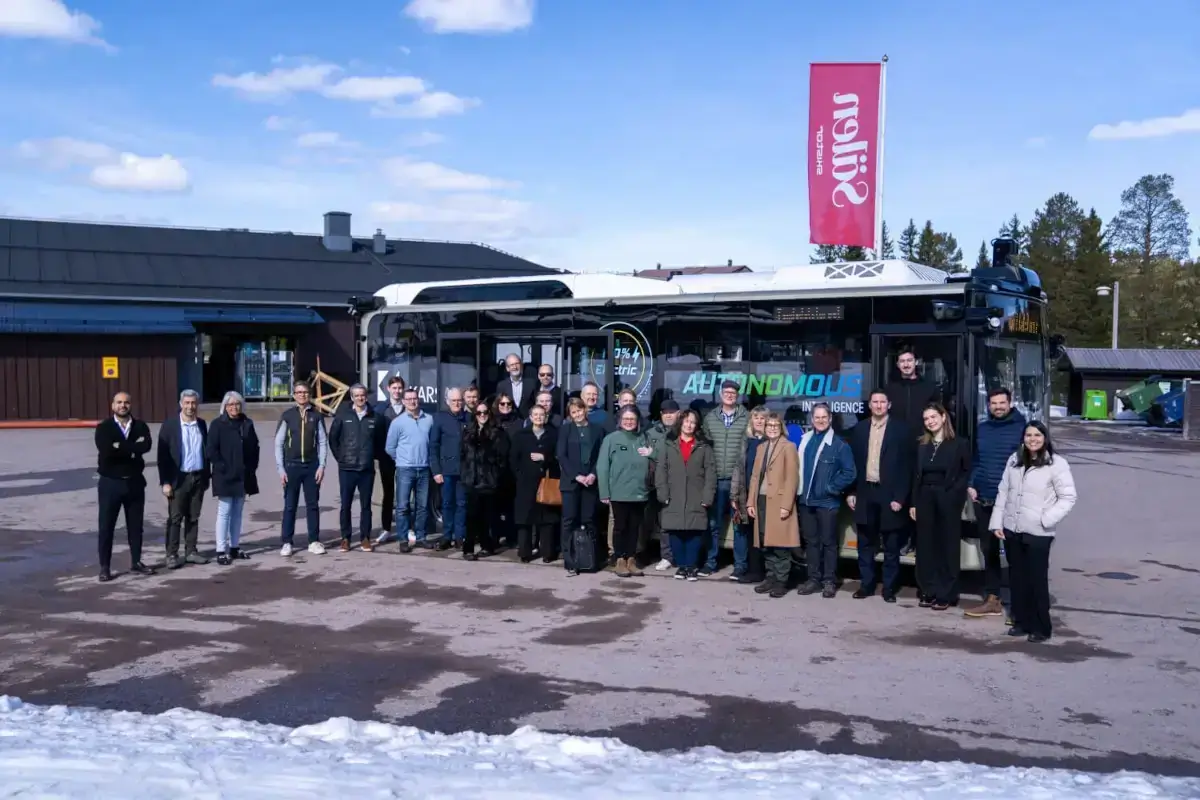
As highlighted by Malung-Sälen Mayor Hans Unander, finding bus drivers is becoming increasingly difficult in Sweden. The Autonomous e-ATAK offers a sustainable, environmentally friendly, and 24/7 operational permanent solution to these tourist regions by eliminating driver costs and human-induced accidents. In the second phase of the project, Karsan Autonomous e-ATAK is planned to also serve in Idre, another important winter tourism destination in Sweden. This expansion clearly proves that the project is not just an experimental endeavour but a scalable business model.
Targeting Fully Autonomous (Driverless) Operation
According to assessments by Karsan CEO Okan Baş, the field data obtained from the Sälen project has significantly accelerated the company's global autonomous roadmap. The Autonomous e-ATAK proving its mettle in such a complex environment demonstrates that autonomous public transport is no longer a science fiction fantasy but has become an integral part of daily life.
The company's next strategic step represents an even more radical threshold for the automotive industry. Within 2026, Karsan plans to completely remove the safety driver, currently present in the vehicle for emergencies due to legal regulations, from the system. The company aims to implement this fully autonomous operation model first in the city of Stavanger, Norway. Ultimately, Karsan, by combining the software and hardware power of Turkish engineering, is transforming into a global technology giant fundamentally changing the public transport habits of Europe.
Note
If you have any photos or video footage to support our news story, please share them with us using the information provided on our contact us page.
