


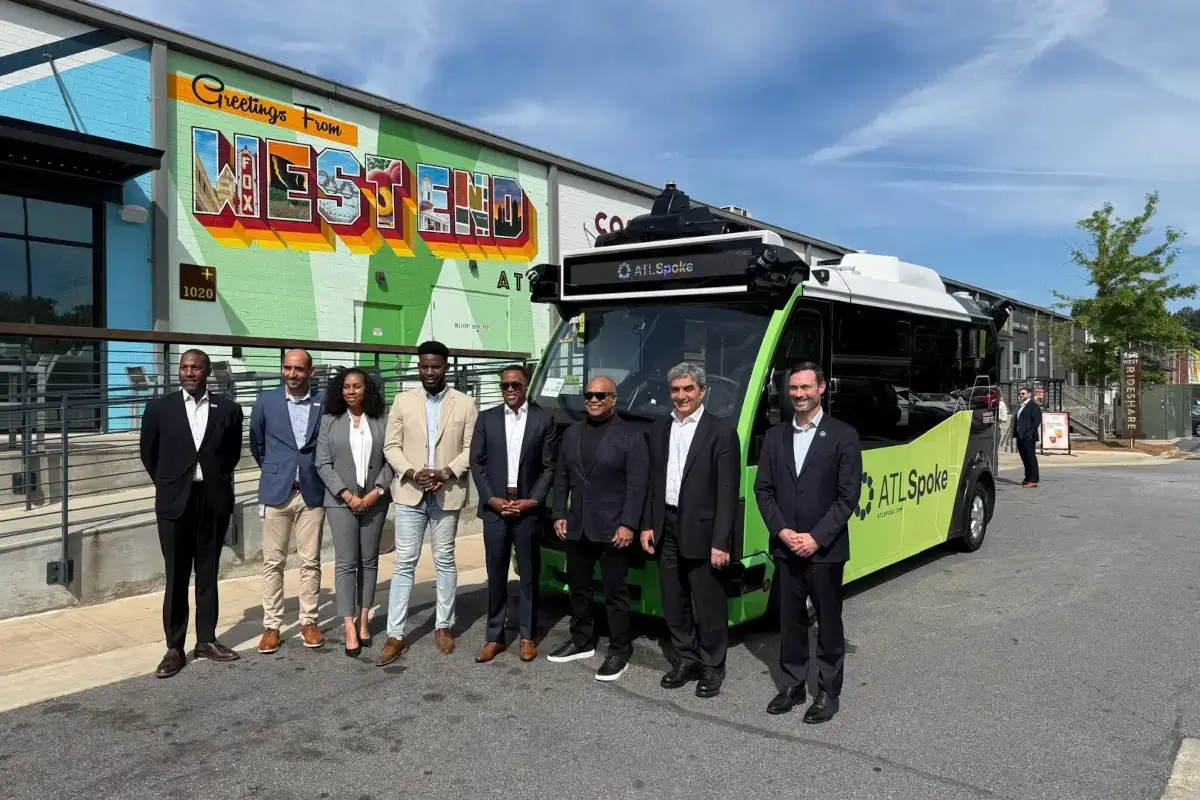
Atlanta, one of the host cities for the 2026 FIFA World Cup, has trusted Turkish engineering to strengthen its transport infrastructure ahead of the tournament. Karsan, Türkiye's autonomous mobility brand, has started carrying football fans with its Autonomous Electric Minibus e-JEST as part of ATL Spoke, Atlanta's first autonomous public transport pilot project. The project, which started on June 5, will be a critical part of transport solutions supporting the intense fan mobility that will occur in the city during World Cup 2026.
World Cup Preparation: Autonomous Transport Mobilisation in Atlanta
The 2026 World Cup will be organised jointly by the USA, Canada, and Mexico, and Atlanta will be one of the tournament's most critical hubs. Transport is one of the biggest challenges of the organisation in the city, which millions of football fans will flock to. At this point, Karsan Autonomous e-JEST steps in. The vehicles, which carry free passengers between the MARTA West End Station and the Atlanta Beltline Southwestern Corridor, will facilitate access to stadiums, fan zones, and important points in the city throughout the World Cup.
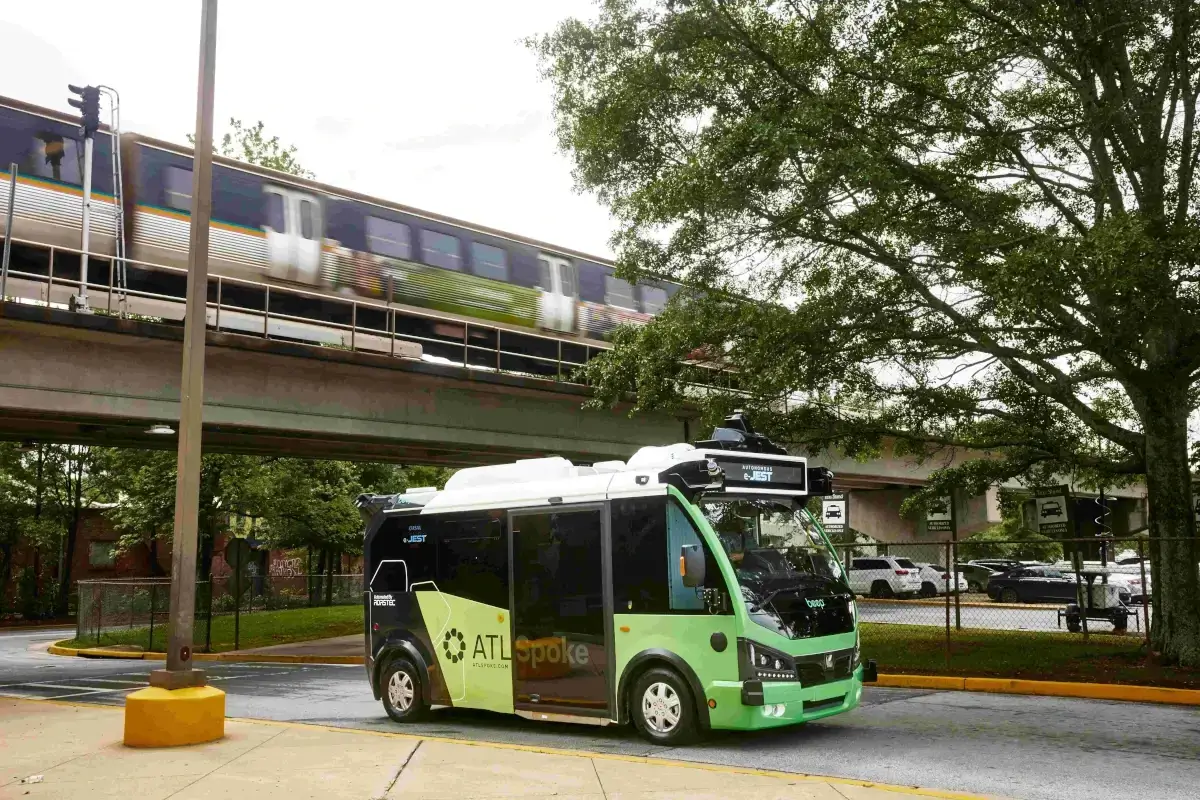
The Autonomous e-JESTs operating under the ATL Spoke project run seven days a week, with service intervals of approximately 12-15 minutes. The route facilitates access to important destinations such as health centres, restaurants, social areas, and educational institutions, while a connection to the Atlanta University Center is also planned to be added by the end of summer. The vehicles operate in compliance with ADA (Americans with Disabilities Act) standards, contributing to the transport of football fans with different mobility needs coming to Atlanta for the World Cup.
The World Cup Will Be a Reference for Autonomous Mobility
Karsan CEO Okan Baş emphasised that the 2026 World Cup offers a unique testing ground for autonomous mobility. Stating that "The ATL Spoke project is a significant milestone in demonstrating how autonomous technologies create value in real passenger transport operations," Baş continued:
"This project, which offers the opportunity to observe the performance of autonomous systems in first and last-mile transport solutions and their impact on user experience in real-life scenarios, will also shape the future of urban mobility. The Autonomous e-JEST will demonstrate the contribution autonomous mobility can provide under real operational conditions during periods of high visitor and passenger traffic like the World Cup. In this respect, the project is an important reference for the use of autonomous public transport solutions in large-scale events like the World Cup."
Four Vehicles, Thousands of Fans: Scalable Autonomous Transport
One of the most notable aspects of the ATL Spoke project is the operation of four Autonomous e-JEST vehicles together in the same operation. This structure acts as a living laboratory testing how autonomous fleets can be scaled in massive events like the World Cup. The intense fan traffic around the stadium on match days will test the coordination capability of this four-vehicle fleet.
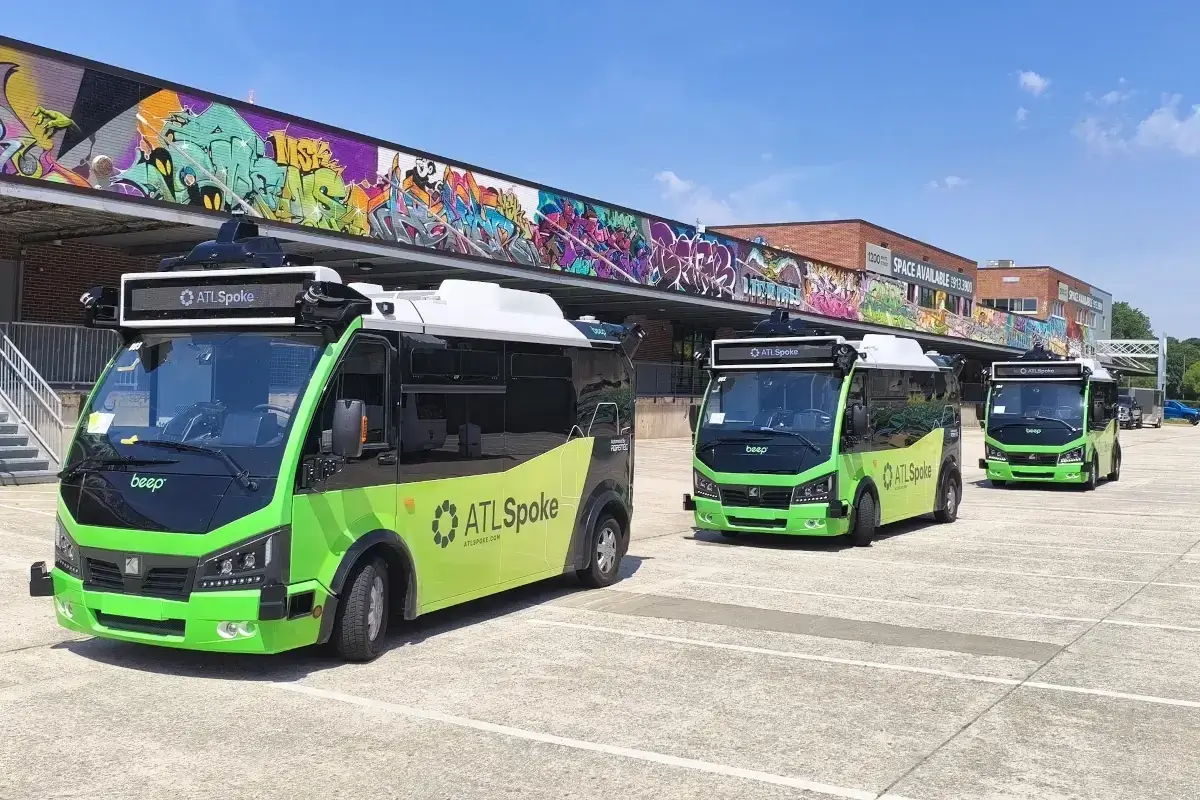
ADASTEC CEO Dr. Ali Peker said, "ATL Spoke is an important milestone in demonstrating how SAE Level-4 autonomous bus technology can move from individual applications to coordinated fleet operations within a real public transport network. The operation of four Autonomous e-JEST vehicles within the same project reveals the scalability of autonomous public transport solutions in complex urban environments."
Beep President and COO Clayton Tino stated that Atlanta is the right testing ground as a city hosting the World Cup: "Atlanta has a forward-thinking community; it's also an ideal place to showcase the potential impact of autonomous transport in a dynamic urban environment. While individual autonomous vehicles can move safely on their own, they lack the capacity to collectively manage a network of autonomous vehicles. Our AutonomOS platform fills this operational gap by enabling customers to manage an autonomous transport network from a single interface, even in complex service areas."
The Autonomous Journey from Europe to America
Karsan plays a leading role in the transformation of public transport worldwide with its vision of "One Step Ahead in the Future of Mobility". The company has been operating under real road conditions since 2021 with the Autonomous e-ATAK, the world's first Level-4 autonomous public transport vehicle. The Autonomous e-ATAK has successfully carried passengers in Norway, Romania, the Netherlands (Rotterdam Airport), the USA (Michigan State University), Sweden, and Türkiye (iGA Istanbul Airport).
The Autonomous e-JEST was launched in 2025 and, as the newest member of the Karsan AI family, immediately received an order for 10 units from North America. Okan Baş said, "The Autonomous e-JEST, which we brought to life by combining e-JEST, which has become a global reference in urban public transport for 7 years, with autonomous technology, is one of the newest and strongest members of the Karsan AI family. Our vehicles, which will take part in Atlanta's first autonomous public transport pilot project, will not only provide solutions to daily transport needs but will also constitute an important reference for the integration of autonomous mobility into city life and the shaping of future public transport systems in a global organisation like the World Cup."
Atlanta Beltline President and CEO Clyde Higgs summarised the project, saying, "This project is a pilot application for the future of regional mobility, with an approach that will improve access to public transport and opportunities."
Note
If you have any photos or video footage to support our news story, please share them with us using the information provided on our contact us page.
