


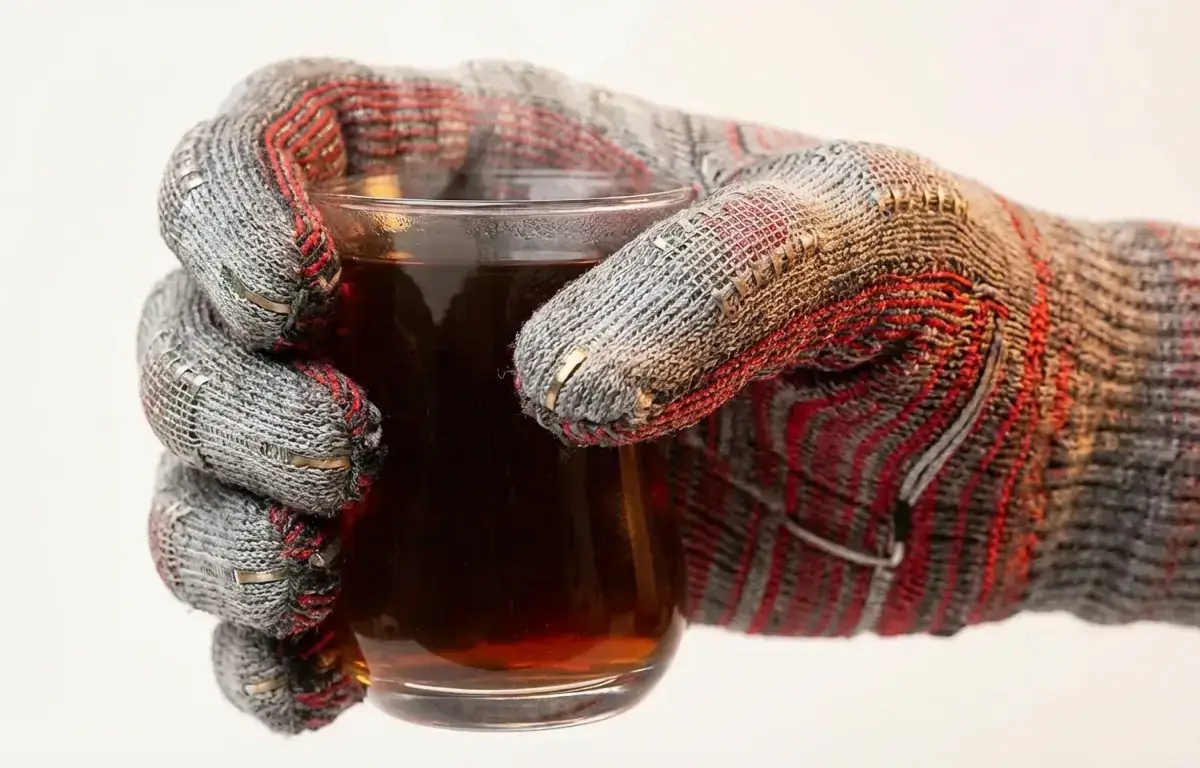
Istanbul Technical University (ITU), Türkiye's engineering powerhouse, has achieved a groundbreaking innovation in the field of wearable technologies that has entered the world literature. This innovation was developed within the ITU Faculty of Textile Technologies and Design. Soft Sensors Lab The team, led by Prof. Dr. Özgür Atalay, developed a device that can move without the need for bulky motors. “"Textile-Based Robotic Exoskeleton"” He developed it.
Supported by the European Research Council (ERC) TEXWEAROTS Project This study, which emerged within this scope, is one of the most prestigious publications in its field. Advanced Science The technology was published in the journal. With its low energy consumption, safe operating temperature, and high response speed, the developed technology surpassed its global competitors and set a new standard in the field of "soft robotics".
The Transition from Iron Piles to "Smart Fabrics"
Traditional robotic exoskeletons are commonly used in the rehabilitation of paralyzed patients or to support heavy industrial workers. However, these systems are not suitable for everyday use due to their use of hard metals, heavy motors, and noisy compressors.
The system developed by researchers from Istanbul Technical University (ITU) is changing this paradigm. Seamless digital knitting technology The glove produced using this system resembles a stylish and comfortable winter glove more than a robotic device. The magic of the system lies in the microscopic mechanisms (actuators) hidden within the fabric, which are activated by heat.
Why is it better than its competitors?
Data published in Advanced Science proves that this system, developed by Turkish engineers, is more efficient than the best existing academic and commercial examples. Here are the technical advantages that set ITU's robotic glove apart:
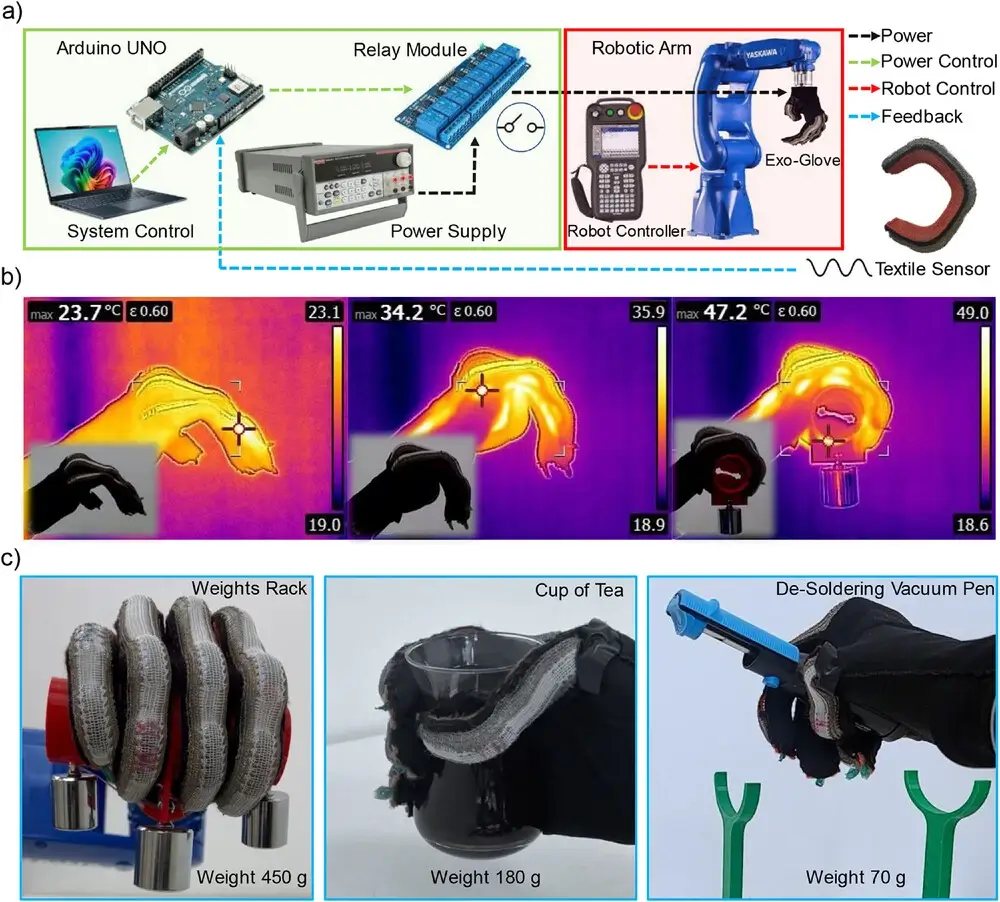
- Skin-Friendly Temperature: Similar thermal robotic systems can generate motion. 95-100 °C While it is necessary to reach dangerously high temperatures, the glove developed by ITU is not only 48 °C It operates at full performance at this level. This is a revolutionary development that eliminates the "risk of burns" in wearable technology.
- Speed and Power: System, Under 12 seconds tam kavrama hareketini tamamlayabiliyor. Önceki en hızlı sistemler benzer hıza ulaşmak için %50 daha fazla enerji harcıyordu.
- Energy Efficiency: Only 10.8 Watt Powered by a battery, the glove can perform its function for an extended period.
- Grip Strength: Fingers of the glove 270-degree bending capable and 2 Newton It can generate gripping force. This force is ideal for a patient to hold a glass of water or carry an object.
How does it work? “Phase Change” Liquid Technology
The system's operating principle is based on the laws of thermodynamics. Special actuators integrated into the fabric contain a special liquid with a low boiling point.
- The slight heat generated when electricity passes through the glove's fibers warms the liquid.
- The heated liquid rapidly vapor phase It expands (increases in volume) as it passes through.
- This expansion pushes against the special knitted structure at the finger joints of the glove, allowing the finger to bend (the gripping action).
- When the power is cut off, the system cools down and the glove automatically returns to its starting position (open hand).
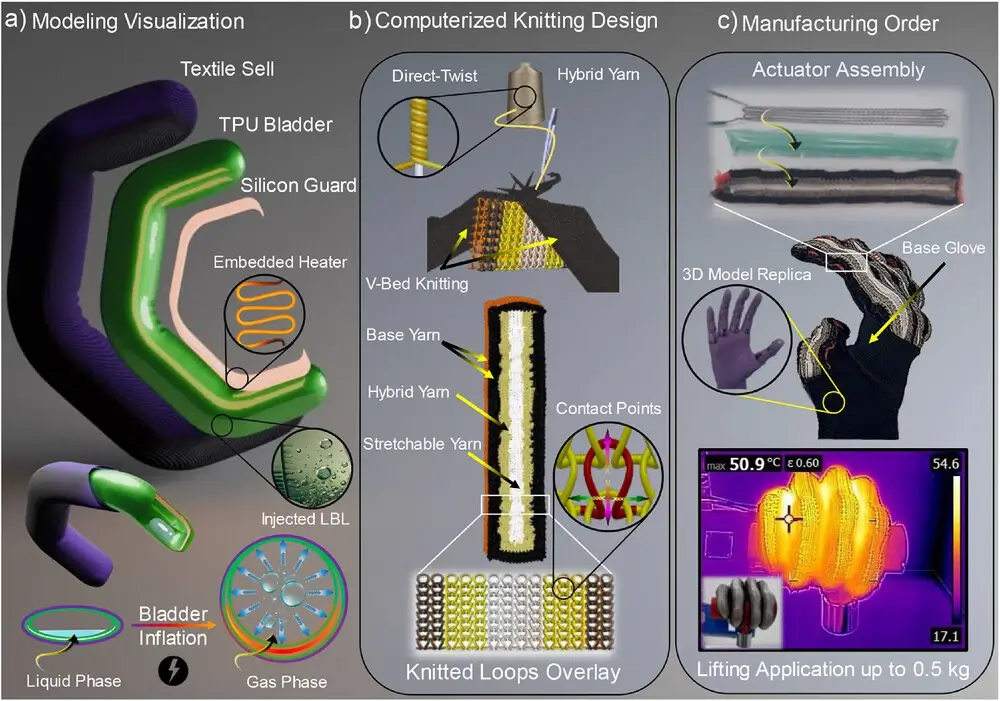
This method provides completely silent and smooth movement without the need for a motor, gears, or pump.
From Healthcare to Industry: The Solution of the Future
This study by Prof. Dr. Özgür Atalay and his team holds great promise, particularly for the home rehabilitation of patients who have lost hand function due to neurological disorders. Instead of bulky devices, patients wearing this soft glove will be able to perform their daily exercises comfortably. Furthermore, the study demonstrated that the glove can be integrated into industrial robot arms and can handle delicate objects (eggs, fruit, etc.) without breaking them.
Textiles maintain their position as a traditional export strength for Türkiye. However, this study by Istanbul Technical University demonstrates that textiles are not just "clothing" but also "engineering materials." This product, resulting from an interdisciplinary approach (Textiles + Robotics + Materials Science), is one of the finest examples of value-added production in a laboratory setting.
Source and License Information (Citation):
The technical data, images, and analyses included in this news report; Advanced Science published in the journal “High-Performance and Low-Temperature Thermal Actuation of Textile-Based Exoskeletons” This is compiled from a scientific article titled [title of article]. The original work, Creative Commons Attribution (CC BY 4.0) It is offered as open access under license.
Original Article: Atalay, O., et al. (2025). High-Performance and Low-Temperature Thermal Actuation of Textile-Based Exoskeletons. Advanced Science.
Access Link: https://doi.org/10.1002/advs.202509870
Keywords: ITU Soft Sensors Lab, robotic glove, textile exoskeleton, Prof. Dr. Özgür Atalay, wearable technology, soft robotics, rehabilitation technologies, Advanced Science article, smart fabrics
Note
If you have any photos or video footage to support our news story, please share them with us using the information provided on our contact us page.
