


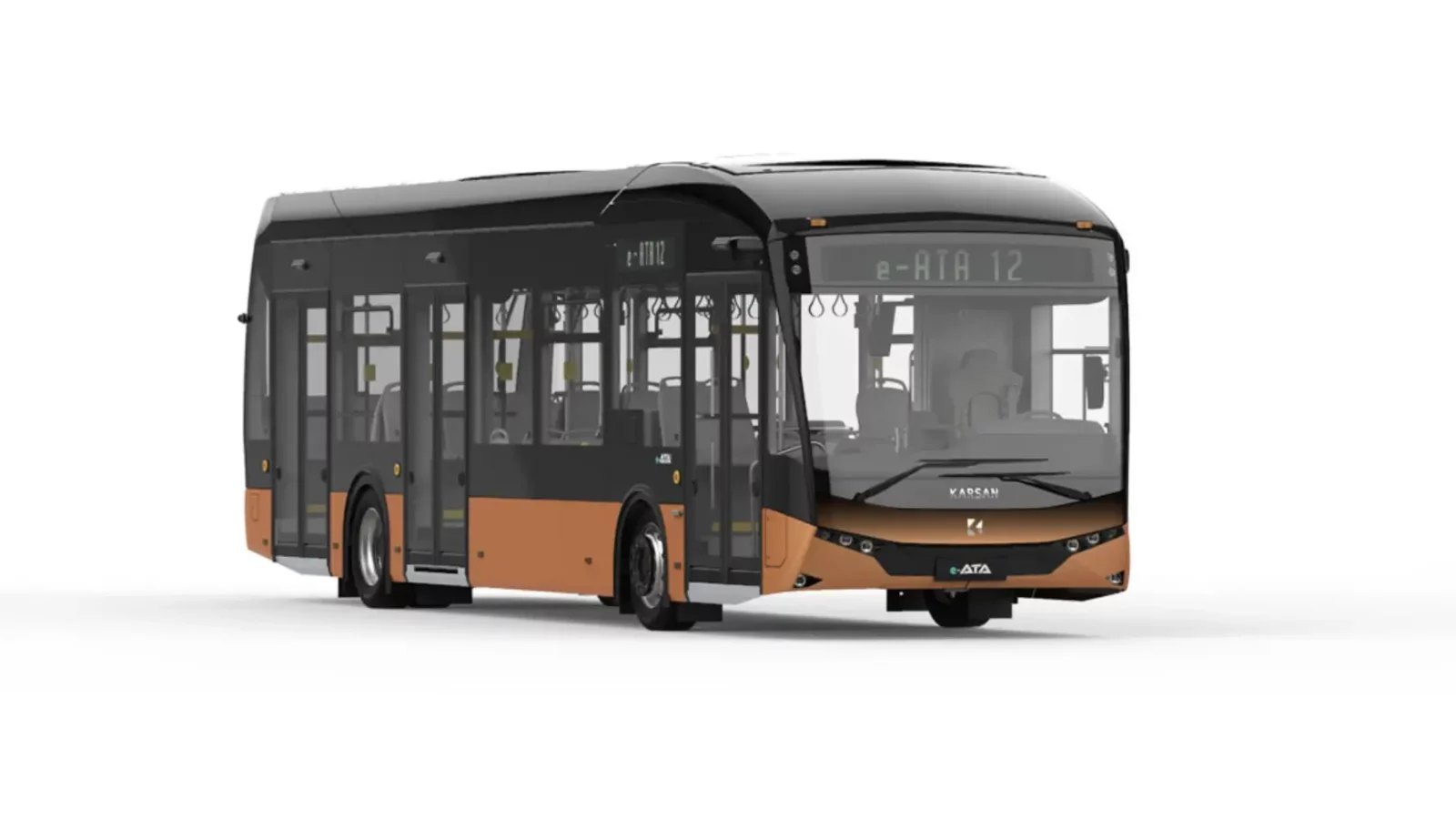
Bursa, Turkey – Karsan Automotive Industry and Trade Inc., a pioneer in sustainability and innovation in the automotive sector, has published the comprehensive life cycle analysis report of its e-ATA Chitila 12-meter electric bus.
Prepared on March 22, 2024, this report provides an in-depth examination of the bus's environmental impact, revealing the company to be a leader in environmentally friendly transportation.
The lifecycle assessment of Karsan's e-ATA model covers all processes, from raw material extraction to production, distribution, use, and waste disposal. According to Karsan, this report and analysis were calculated using SimaPro 9.5.0.2, impact categories were evaluated using EN 15804 and IPCC 2021 standards, and the report was prepared referencing ISO 14040-14044. The aim of the report is to evaluate the environmental performance of the e-ATA product, identify sustainability challenges, and determine opportunities for improvement in business processes. The focus of the analysis is stated as identifying the environmental impacts that occur throughout the entire lifecycle of the product and developing strategies to mitigate these impacts.
Environmental Impact: Carbon Footprint and Energy Efficiency
According to the report, e-ATA stands out among electric vehicles in terms of carbon footprint and energy efficiency. With a passenger capacity of 83 people and a service life of 1,000,000 km, the bus has a total functional unit of 83,000,000 person/km. This means the bus can carry more passengers while consuming less energy per kilometer.
Sustainable Production and Waste Management
Karsan prioritizes minimizing environmental impact in the production process of the e-ATA bus. The amounts of electricity, natural gas, and water used in production have been optimized in accordance with environmental sustainability standards. Furthermore, the bus's waste management process follows best practices in industrial waste management, with a 95% recycling rate and a 5% landfill rate.
Investing in the Future: Karsan's Vision
With e-ATA, Karsan aims to meet not only today's but also tomorrow's transportation needs. Using these analysis results, the company plans to develop strategies to further improve production processes, increase the use of renewable energy, and enhance waste management.
Karsan Automotive's e-ATA electric bus is seen as a milestone in sustainability and environmentally friendly transportation. This report transparently demonstrates the company's environmental performance and serves as an example for other players in the automotive industry.
Karsan e-ATA Chitila Life Cycle Analysis Report (LCA) https://cdn.karsan.com/Delivery/Public/File/KARSAN_LCA_e-ATA_12m_V3.pdf You can reach us at this address.
e-ATA Electric Vehicle Information
Developed as a fully electric vehicle from the outset, this bus is designed to offer environmentally friendly transportation solutions. The e-ATA series is available in various sizes from 6 meters to 18 meters, thus providing solutions suitable for diverse transportation needs. Distinguished by its modern design, low energy consumption, and high passenger capacity, the e-ATA is designed to contribute to the sustainable future of cities. Furthermore, it aims to increase operational efficiency with flexible charging options and a long range. With the e-ATA, Karsan aims to lead the transition to electric mobility in the public transportation sector and offer innovative solutions in this field.
Note
If you have any photos or video footage to support our news story, please share them with us using the information provided on our contact us page.
