


Germany, Europe’s leading economic power, is rebuilding its strategic deterrence against the continent's evolving security architecture. According to a striking claim by the German newspaper Die Welt, based on German government and NATO diplomatic sources, the Berlin administration has abandoned plans to deploy US-origin Tomahawk cruise missiles on its territory and has instead turned its focus toward the Turkish defence industry.
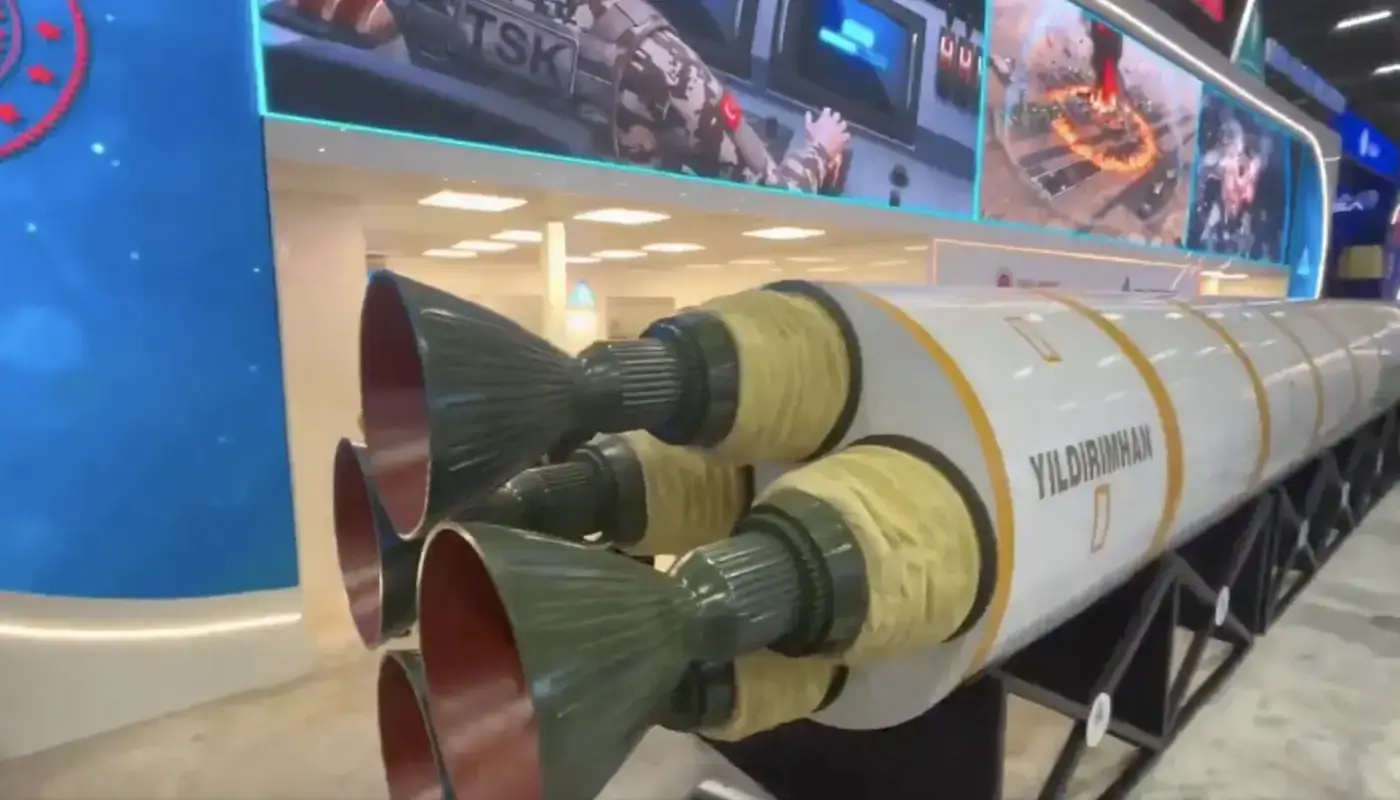
The report suggests that Germany has reviewed the option of procuring the YILDIRIMHAN Intercontinental Ballistic Missile (ICBM), developed by Türkiye with a range of 6,000 kilometres, and the TAYFUN Block-4 systems capable of reaching hypersonic speeds, to meet its deep-strike and high-deterrence requirements. Should the ongoing technical and diplomatic consultations between the two countries yield positive results, this historic procurement agreement is planned to be officially announced to the public at the NATO Summit to be held in Ankara in July 2026.
Turkish Technology Over the US: Why Was the Tomahawk Plan Cancelled?
Since the end of the Cold War, Germany has largely built its defence doctrine upon the nuclear and strategic umbrella of the United States. In recent years, Berlin has focused on the concept of European Strategic Autonomy to reduce this dependency. Initially, the deployment of US-manufactured Tomahawk cruise missiles in Germany was planned to counter Russia’s increasing military manoeuvres. However, according to analyses in Die Welt, the fact that these systems remain under direct US control, their high costs, and the potential for internal political fluctuations in Washington to risk European security have pushed Berlin to seek alternative and more independent solutions.
At this juncture, the strategic missile systems developed by Türkiye, NATO’s strongest ally on the eastern flank, emerge as a rational solution for Germany. A potential procurement from Türkiye would allow Germany to establish a deterrence network under its own inventory and direct command and control. Furthermore, the ability of these systems to operate in full compatibility with NATO data networks provides a critical technical advantage that eliminates integration risks for German decision-makers.
New Multipliers of Deterrence: YILDIRIMHAN and TAYFUN Block-4
If this agreement is realised according to the claims, the German Armed Forces (Bundeswehr) will possess intercontinental and hypersonic strike capabilities for the first time in its history. The technical capacities of the systems at the heart of this strategic equation are at a level that could shift global balances:
- YILDIRIMHAN Intercontinental Ballistic Missile (ICBM): The details of this massive system were recently shared by the MoND R&D Centre at SAHA EXPO 2026. With a range of 6,000 kilometres, it offers Germany a shield covering all potential threat vectors. Utilizing special liquid fuel (Nitrogen Tetroxide/UDMH) to reach speeds of Mach 25, YILDIRIMHAN completely neutralises enemy air defence shields thanks to its manoeuvrability in space via micro-thrusters. Its 3-tonne warhead capacity makes it a candidate for Europe’s heaviest conventional deterrent force.
- TAYFUN Block-4 Hypersonic Missile: Developed by ROKETSAN for the destruction of tactical and strategic targets with millimetric precision, Block-4 is the most advanced version of the TAYFUN family, possessing hypersonic (Mach 5 and above) glide capabilities. Capable of high-speed manoeuvres within the atmosphere, these missiles cannot be intercepted by contemporary modern air defence systems such as Patriot, SAMP/T, or S-400.
Defence Procurement Shifts Within NATO
In the past, European countries viewed Türkiye primarily as a forward post ensuring their security and sold defence products to Ankara. However, the paradigm shift in recent years has reversed this one-way trade. The Strategic Partnership Framework Document signed with the UK, Spain’s interest in HÜRJET procurement, and finally Germany’s search for ballistic missiles are the most concrete international reflections of Türkiye’s technological transformation.
The fact that an advanced engineering and industrial giant like Germany is applying to Turkish R&D for its most strategic military needs certifies that Turkish defence industry quality standards and system reliability have reached the highest levels within European Union norms.
New Procurement Models in the Global Defence Market
The claims brought to the agenda by Die Welt indicate that the US monopoly in Europe’s defence supply chain is gradually breaking, with alternative NATO allies stepping in. Germany’s departure from Tomahawk missiles in favour of YILDIRIMHAN and TAYFUN is not merely a military acquisition but a quest by the continent to establish more rational, cost-effective, and flexible partnerships to stand on its own feet.
Consultations between the ministries of national defence and technical delegations of both countries are expected to intensify. If the process culminates in an official signing at the Ankara NATO Summit in July 2026, it will position Türkiye as one of the most strategic actors defining the rules in the global ballistic and hypersonic weapons export market.
Note
If you have any photos or video footage to support our news story, please share them with us using the information provided on our contact us page.
