


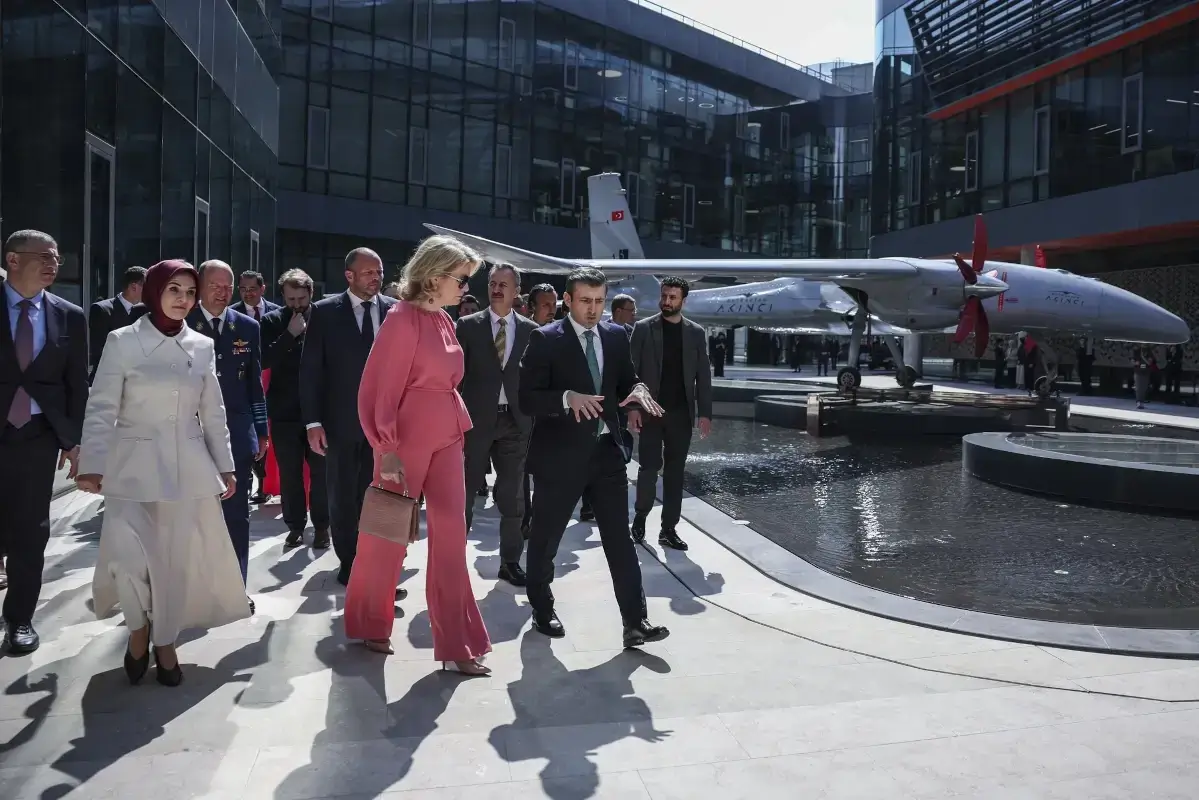
As the global security architecture is reshaped, Belgium, host to NATO's political and administrative headquarters, continues to review its defence procurement networks with a focus on Türkiye. As part of the "Economic Mission" programme, Queen Mathilde of Belgium and an accompanying high-level delegation conducted an official visit to Türkiye, including a strategic visit to the Özdemir Bayraktar National Technology Centre in Istanbul. The critical engagement was hosted by Baykar Chairman Selçuk Bayraktar and CEO Haluk Bayraktar, with the President of the Presidency of Defence Industries (SSB), Prof. Dr. Haluk Görgün, personally accompanying the delegation. Consequently, this high-level contact demonstrates at a diplomatic level that EU-member NATO countries are turning towards the Turkish defence ecosystem in their search for production capacity and combat-proven systems.
Beyond a Royal Visit: A Heavyweight Political and Military Delegation
While appearing to be a standard diplomatic tour by the royal family, the participant list of this visit actually contains deep-seated defence and economic diplomacy. Alongside Queen Mathilde, the delegation included Belgian Deputy Prime Minister and Minister of Foreign Affairs Maxime Prévot, Minister of Defence Theo Francken, Minister-President of Flanders Matthias Diependaele, Vice-President of Wallonia Pierre-Yves Jeholet, and President of the Brussels-Capital Region Boris Dilliès.
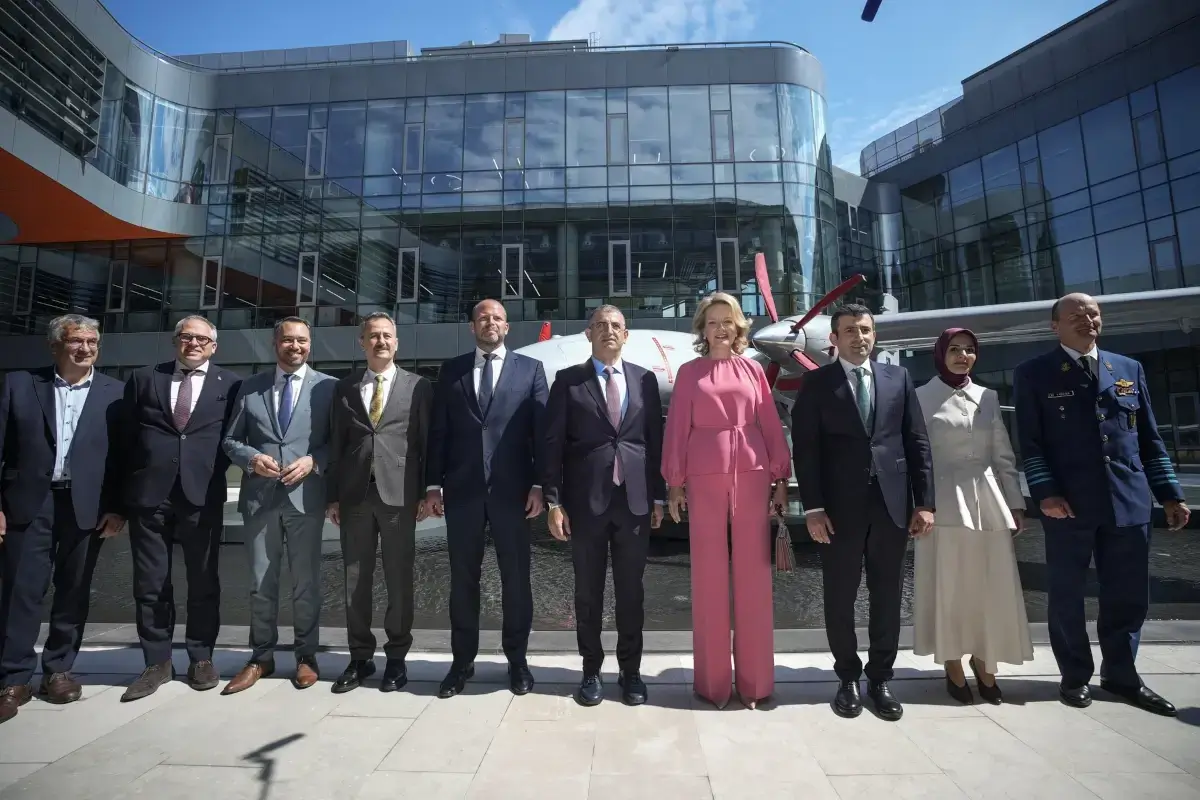
The simultaneous visit of the Ministers of Defence and Foreign Affairs to an R&D and production centre manufacturing unmanned aerial vehicles represents a direct pursuit of procurement and technological cooperation. Following the engagements, SSB President Prof. Dr. Haluk Görgün shared an assessment via his official social media account, particularly emphasizing that Türkiye possesses one of the most dynamic defence industry ecosystems among NATO member states. Görgün underlined that the Turkish industry has reached the production competence and capacity to provide platforms required by all countries within the alliance. These statements reflect Türkiye's strategy to consolidate its role as a complementary and reliable supplier within the European security architecture.
Europe's Requirement for Unmanned Systems
The European continent is rapidly revising its own defence doctrines and equipment inventories due to conventional conflicts occurring on its borders in recent years. However, many European countries face structural bottlenecks in meeting urgent requirements for unmanned aerial vehicles (UAV/UCAV) and smart munitions due to the slow-moving bureaucracy of multinational consortia.
Developed NATO countries such as Belgium are turning to platforms that can be purchased directly off-the-shelf, have proven their technological maturity on the battlefield, and offer rapid delivery guarantees to bridge this logistical gap. The Özdemir Bayraktar National Technology Centre is an integrated structure that combines design, software, and production under one roof, operating with 100 percent domestic capital and intellectual property. The delegation's on-site review of these facilities confirms once again that production speed and supply chain security are the primary reasons for preference in the international market.
A New Integration Model in the Global Defence Market
This visit by the Queen of Belgium and cabinet members to Baykar facilities objectively demonstrates the position of the Turkish defence industry within the global supply chain. Türkiye is transitioning from a manufacturer model that merely protects its own national borders to a rational solution partner model that fills the technological gaps of alliance members.
In parallel with the increase in European defence budgets, procurement of military equipment within NATO is expected to gain momentum. This comprehensive review conducted by the Belgian delegation confirms in the international arena that autonomous systems developed by Turkish engineering stand as a serious alternative on the table for the modernisation plans of European armies over the next decade.
Note
If you have any photos or video footage to support our news story, please share them with us using the information provided on our contact us page.
