


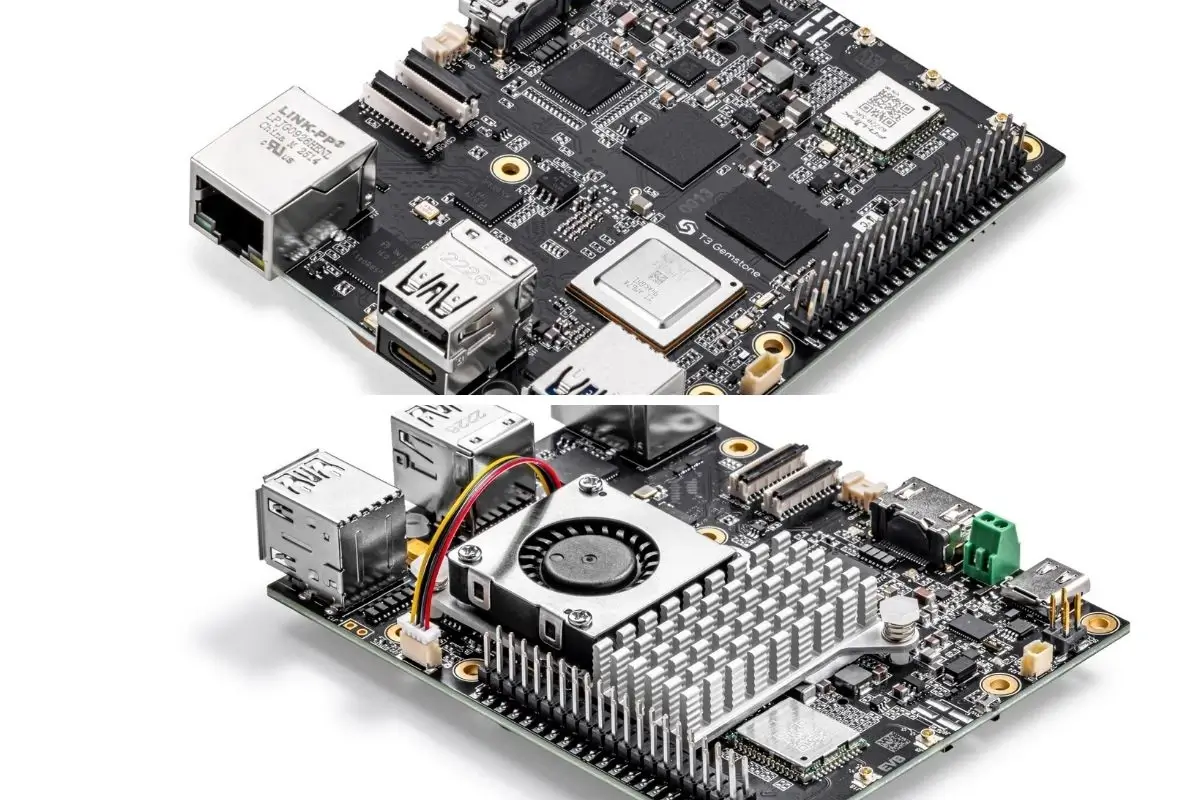
The T3 Gemstone O1, an open-source hardware, high-performance development board based on the TI AM67A platform, has been officially introduced. Positioned as the next step in the national ecosystem following the Deneyap Kart, the board is designed to meet the needs of young developers working on autonomous systems, UAVs and unmanned maritime vehicles.
Single-Board Autonomous Mission Computer
One of the T3 Gemstone O1's most notable features is its ability to function as a standalone autonomous mission computer without the need for a separate flight controller board. The onboard 9-axis IMU and barometer directly address flight control requirements, while onboard CAN FD support eliminates the need for external transceivers for ESCs, servos and subsystems.
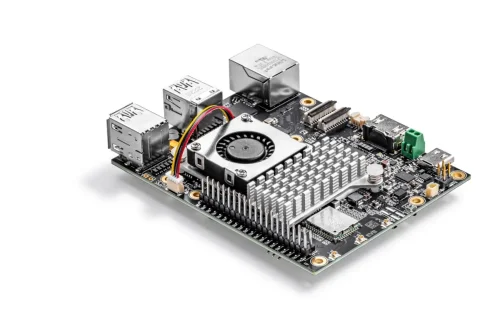
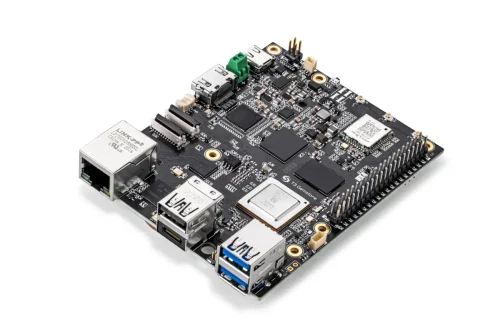
At the heart of the board lies the Texas Instruments AM67A SoC, featuring a quad-core Cortex-A53 processor and an IMG BXS-4-64 GPU. Offering 50 GFLOPS of graphics processing power alongside a 4 TOPS internal AI accelerator, the GPU provides critical infrastructure for real-time AI applications. The seventh-generation industrial ISP delivers advanced image processing capabilities with RGB-IR, WDR and dense optical flow features.
Dual-Core Architecture for Real-Time Control
Another feature distinguishing the T3 Gemstone O1 from its counterparts is its two Cortex-R5F real-time cores. Providing a deterministic control loop alongside Linux, these cores are designed for applications where timing precision is critical in autonomous systems.
The onboard M.2 2280 NVMe socket enables high-speed, more reliable data storage under vibration without requiring HAT stacking. With a 5-12V / 5A DC input, it can operate on mobile platforms without relying on USB-C. The 40-pin GPIO and camera connector being Raspberry Pi-compatible allows the existing accessories ecosystem to be used directly with the board.
On the connectivity front, the board offers 32 GB eMMC, a microSD slot, Gigabit Ethernet, Wi-Fi, dual MIPI CSI and HDMI + DSI options, providing extensive flexibility for both development and field use.
Haluk Bayraktar: "This Is Not a Commercial Venture"
Baykar Chairman Haluk Bayraktar, in a comprehensive response to price criticisms on social media regarding the T3 Gemstone O1, detailed the board's strategic importance and cost structure. "This is a technological endeavour with no profit motive and zero commercial expectations. All development costs have been covered by Baykar and the T3 Foundation," said Bayraktar, adding that mass production of 10,000 units has commenced and the boards are being distributed free of charge to TEKNOFEST teams.
Drawing attention to the fact that imported boards are backed by trillion-dollar chip giants, Bayraktar stated: "BeagleBoard works with Texas Instruments, Raspberry Pi with Broadcom, Arduino with Qualcomm, and Chinese manufacturers with Rockchip chips. These companies supply their chips to those platforms below cost, even from their marketing budgets, to grow their own ecosystems. When an independent entity wants to procure these chips, they either close the door or sell them at well above market price."
Bayraktar also explained that the primary cost increase stems from memory components: "When we started the project, LPDDR4 and eMMC memory costs were $10; today, due to global market fluctuations, they have reached $100. The majority of the price comes from this. The moment prices for these components drop in the market, the board price will be reduced accordingly."
First Step of the National Chip Roadmap
Bayraktar positions the T3 Gemstone O1 as the first link in Türkiye's long-term chip strategy. Recalling the development process of the TB2, Bayraktar said: "Remember the early days of the Bayraktar TB2 – we were importing both the engine and the data link. There were those who said, 'Why bother, when it's available ready-made abroad?' But if you base your future on components you buy ready-made from outside, the day will come when you are left stranded at the most critical moment. We chose the difficult path. Today, we develop and produce both engines and data links ourselves."
Stating that the chip journey has three phases, Bayraktar explained: "First, you design the board, write its software, document it and build its community. Then you move on to chip design. As the ecosystem grows, you invest in chip production." Emphasising that the TEKNOFEST Chip Design Competition is nurturing the next generation of experts in this field, Bayraktar said: "Today, we are designing a board whose processor is not yet ours, but we are building a great national ecosystem around it."
Baykar and the T3 Foundation are providing 100 million TL in material support and over 75 million TL in prizes to TEKNOFEST teams competing this year alone. The T3 Gemstone O1 will be delivered to educational institutions and TEKNOFEST teams as part of material support, on a not-for-profit basis.
Note
If you have any photos or video footage to support our news story, please share them with us using the information provided on our contact us page.
