


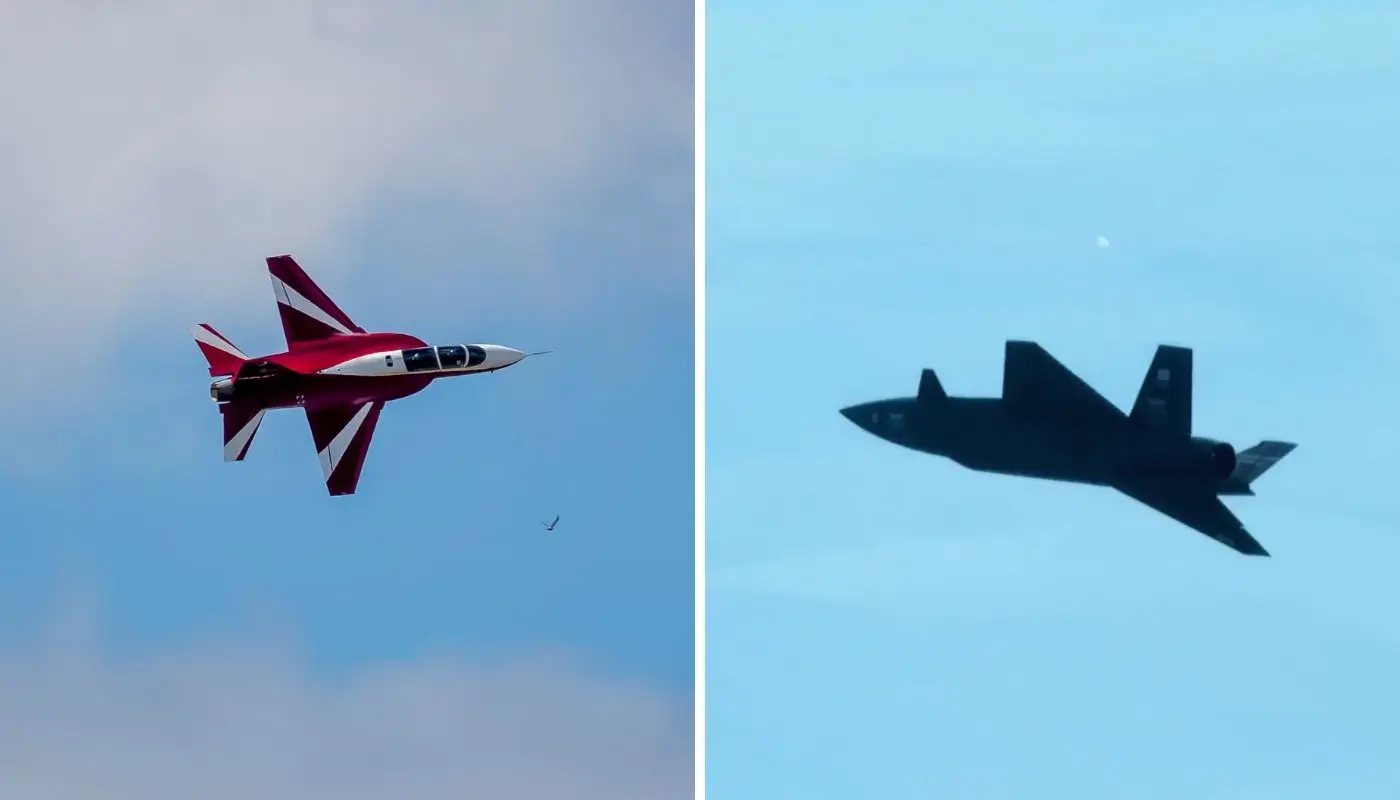
A new era of defence industry cooperation is on the horizon between Türkiye and Japan. Foreign Minister Hakan Fidan's positive statements regarding Ankara's defence cooperation with Tokyo, along with reports in the Japanese press suggesting that the HÜRJET jet trainer aircraft is among the candidates for the Japan Air Self-Defence Force's (JASDF) next-generation trainer, are seen as strong signals that robust aviation cooperation will be established between the two countries.
Fidan: "Opportunity for Joint Production in UAV and Drone Technologies"
In his assessment of defence industry cooperation between Türkiye and Japan, Foreign Minister Hakan Fidan stated that both countries have the will to act together, particularly in the field of unmanned aerial vehicles. Fidan emphasised that Türkiye's UAV and drone technologies have proven themselves in different operational environments, noting that these technologies offer valuable opportunities for joint development and production with Japan in areas such as coastal and border security.
Minister Fidan's words, "In aviation, especially regarding unmanned aerial systems and UAV countermeasure technologies, Türkiye has developed advanced and field-tested capabilities that could form a strong basis for cooperation," were read as a strong message to Tokyo. Due to its geographical location and regional security dynamics, Japan has a significant interest in UAV and anti-UAV technologies.
JASDF's Search for a T-4 Successor and HÜRJET
According to an analysis published on May 28 by Japanese military journalist Osamu Takeuchi, TUSAŞ's HÜRJET is being evaluated as a surprise candidate to replace the Japan Air Self-Defence Force's ageing T-4 trainer aircraft. HÜRJET, which has been developed since 2017 to replace T-38 Talons, was exhibited as a full-scale model at the DSA2026 fair held in Kuala Lumpur, the capital of Malaysia.
The feature that truly distinguishes HÜRJET is its supersonic speed capability. The aircraft, capable of reaching a maximum speed of Mach 1.4 (approximately 1,729 km/h), has a significant advantage over subsonic competitors like the Boeing/Saab T-7A. According to the Japanese analysis, a jet trainer does not necessarily have to be supersonic. However, when used as light combat aircraft in emergencies, higher speed is always a preferred attribute. Currently, only the South Korean-US joint venture FA-50 offers supersonic capability in this class.
If HÜRJET's development process proceeds smoothly, it is noted that it could become a strong competitor in the "light combat aircraft usable as both supersonic and trainer aircraft" market, currently dominated by the FA-50. The FA-50 has been preferred by Poland and Malaysia.
Spain's SAETA II Preference and the Airbus Partnership
HÜRJET's biggest international reference came from Spain. In October 2025, the Spanish Air Force selected HÜRJET under the name "SAETA II" as the successor to its ageing CF-101 and EF-5M jet trainer aircraft. Airbus' defence subsidiary, Airbus Defence and Space, is collaborating with TUSAŞ on the development of SAETA II. While the aircraft is being customised to the specifications of the Spanish Air Force, personnel training will be conducted at the Airbus International Training Centre in Seville.
This partnership demonstrates that HÜRJET is positioned not merely as an aircraft but as an integrated training platform, including simulators and virtual training systems. This means that even advanced training may not require flying actual aircraft, allowing combat pilots to be trained more cost-effectively and efficiently than traditional training systems.
Why Does HÜRJET Make Sense for Japan?
Japan's interest in HÜRJET is based on several strategic factors. First, the JASDF's current T-4 fleet is ageing and needs replacement. Second, the FA-50's South Korean origin carries some geopolitical sensitivities for Tokyo. Third, HÜRJET's supersonic capability makes it a versatile platform that can be used not only as a trainer but also as a light fighter aircraft when necessary.
Airbus's involvement in the project is another important factor reinforcing HÜRJET's compliance with NATO standards and its acceptance in Europe. For Japan, this means a reliable supply chain, logistical support, and training infrastructure connected to Airbus.
What Do Minister Fidan's Statements and the Japanese Press Reports Mean?
Minister Fidan's emphasis on UAV and unmanned systems, along with the simultaneous analysis of HÜRJET in the Japanese press, indicates that a multi-layered defence cooperation is taking shape between Ankara and Tokyo. This cooperation is based not merely on the procurement of ready-made systems but on a model of joint development, technology transfer, and long-term strategic partnership. Japan's interest in UAV technologies and Türkiye's proven competence in this field make the two countries strong partners with a complementary win-win relationship.
Note
If you have any photos or video footage to support our news story, please share them with us using the information provided on our contact us page.
